Solar battery storage installers in Lincolnshire
Store what your panels make in the day and use it after dark. We size storage around your actual consumption rather than selling you the biggest battery in the catalogue.
SolaX systems sized to your real usage.
- Retrofit to an existing array
- New solar and storage together
- SolaX hybrid inverters
- Commercial scale storage
- App monitoring set up on the day
How we work
- 1Free consultationWe look at what you have and what you need, with no obligation.
- 2Tailored designA written quote with the kit list and the numbers before you commit.
- 3Professional installOur own engineers, certified and notified properly.
- 4AftercareServicing and support once the job is signed off.
Matching a battery to your own usage
The useful question is not how big a battery you can fit. It is how much of your generation you currently export, and how much you import once it goes dark. A house with a modest array and nobody home through the day might push a good chunk of a summer day's output onto the grid and then buy it back in the evening. Storage earns its keep on that overlap. Buy more capacity than the overlap and the extra sits idle most of the year.
Nominal capacity and usable capacity are two different numbers. A battery sold at a headline figure keeps a reserve so the cells are never taken flat, and the round trip in and out through the inverter loses a few percent more, so plan on rather less than the label says. Sizing on nominal figures is how people end up disappointed. A smaller stack that fills and empties every day is worth more than a large one that never properly cycles.
Winter is the honest test. Between November and February a domestic array in Lincolnshire will not fill a battery at all on plenty of days, which is where a cheap overnight tariff comes in. Charging on off peak units and running the house from the battery through the expensive hours works all year round, whatever the weather does, and for a lot of households that turns out to be the larger half of the saving.
Hybrid inverters against AC coupled retrofits
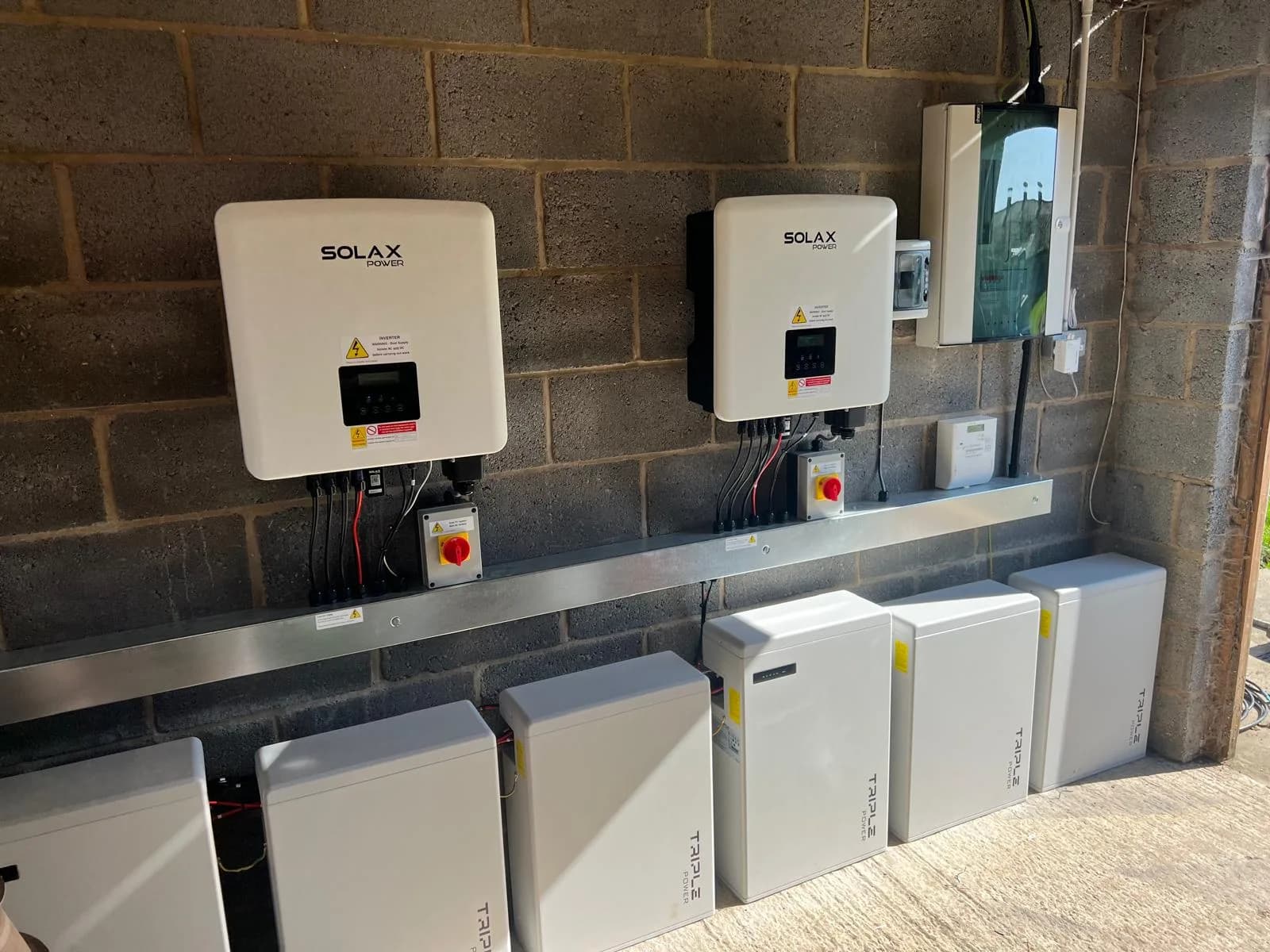
If solar and storage are going in together, a hybrid inverter is usually the neater answer. One unit handles the DC from the panels and the DC from the battery, there is a single point of conversion, and one app shows you the lot. We fit SolaX hybrid inverters, including on a 6.8kW flat roof domestic system where 9kWh of storage sits behind a 6kW hybrid, with shading optimisation across the array and monitoring set up on the day.
Retrofitting to an array somebody already owns is a different job. Usually the existing string inverter stays where it is and the battery is AC coupled through its own inverter, which gives up a little efficiency on the extra conversion but avoids scrapping equipment that works. The alternative is swapping the string inverter for a hybrid, which is worth weighing up if the original is already near the end of its life. We price both ways and explain where the numbers land.
Commercial storage and where it stops paying
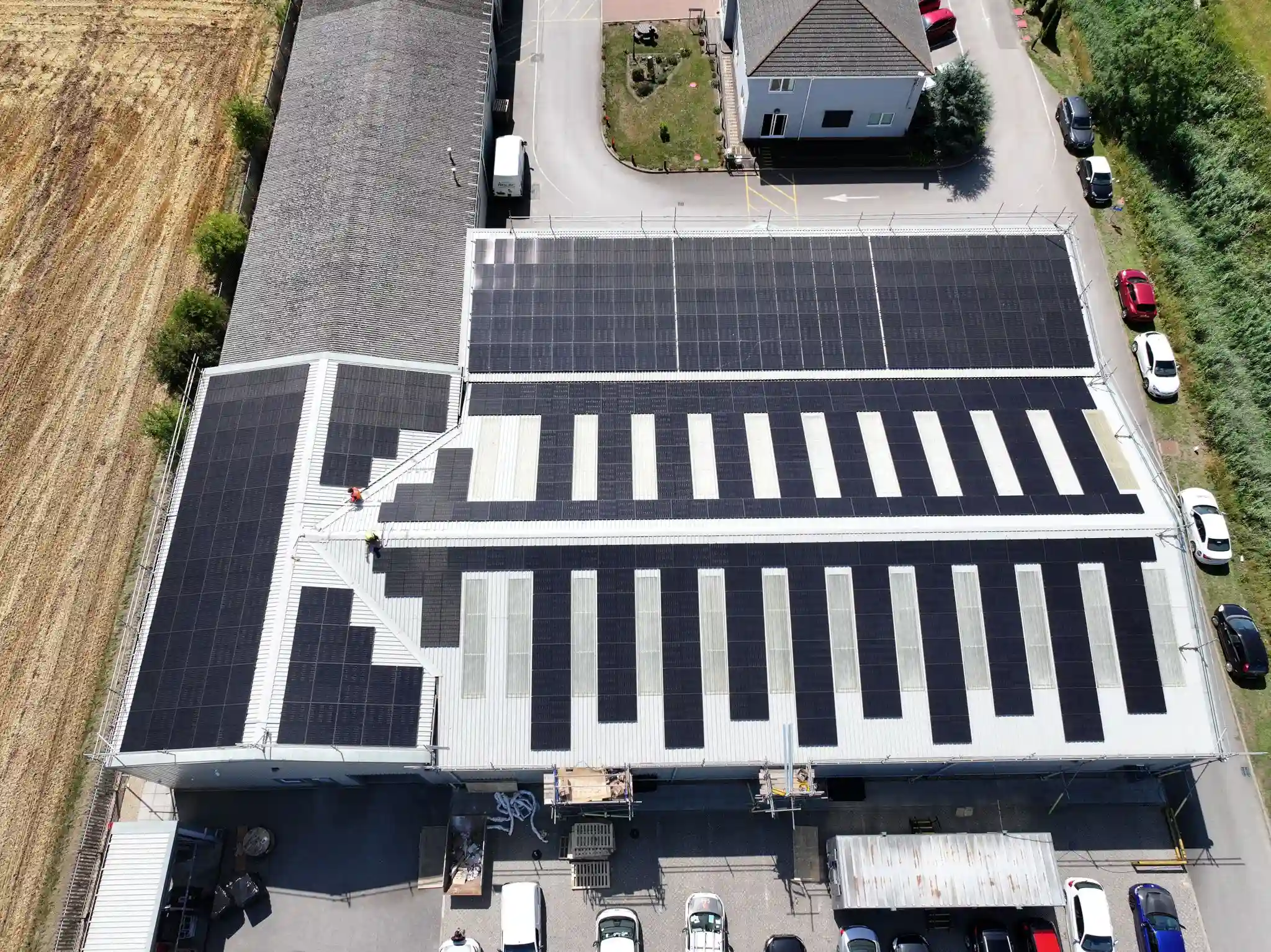
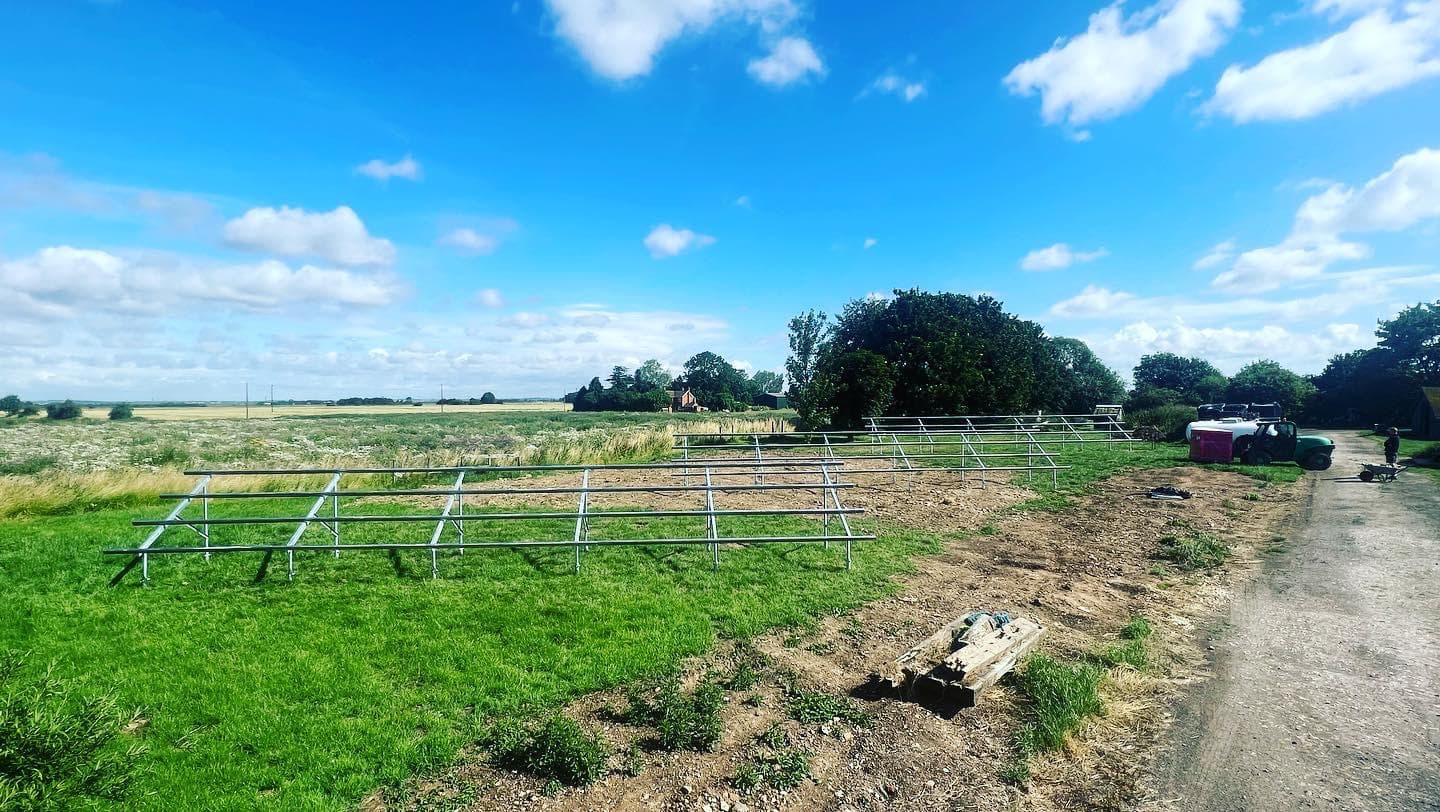
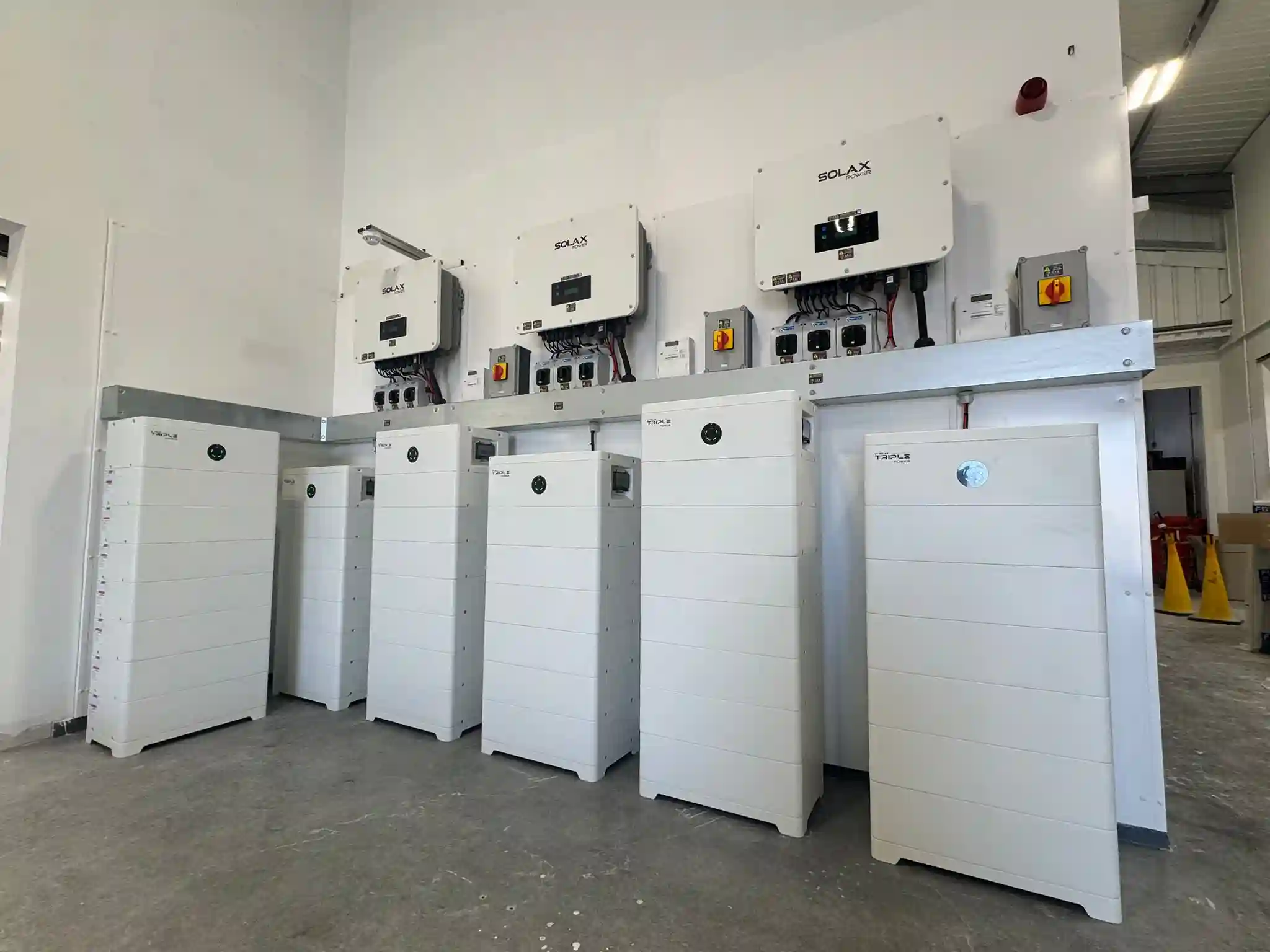
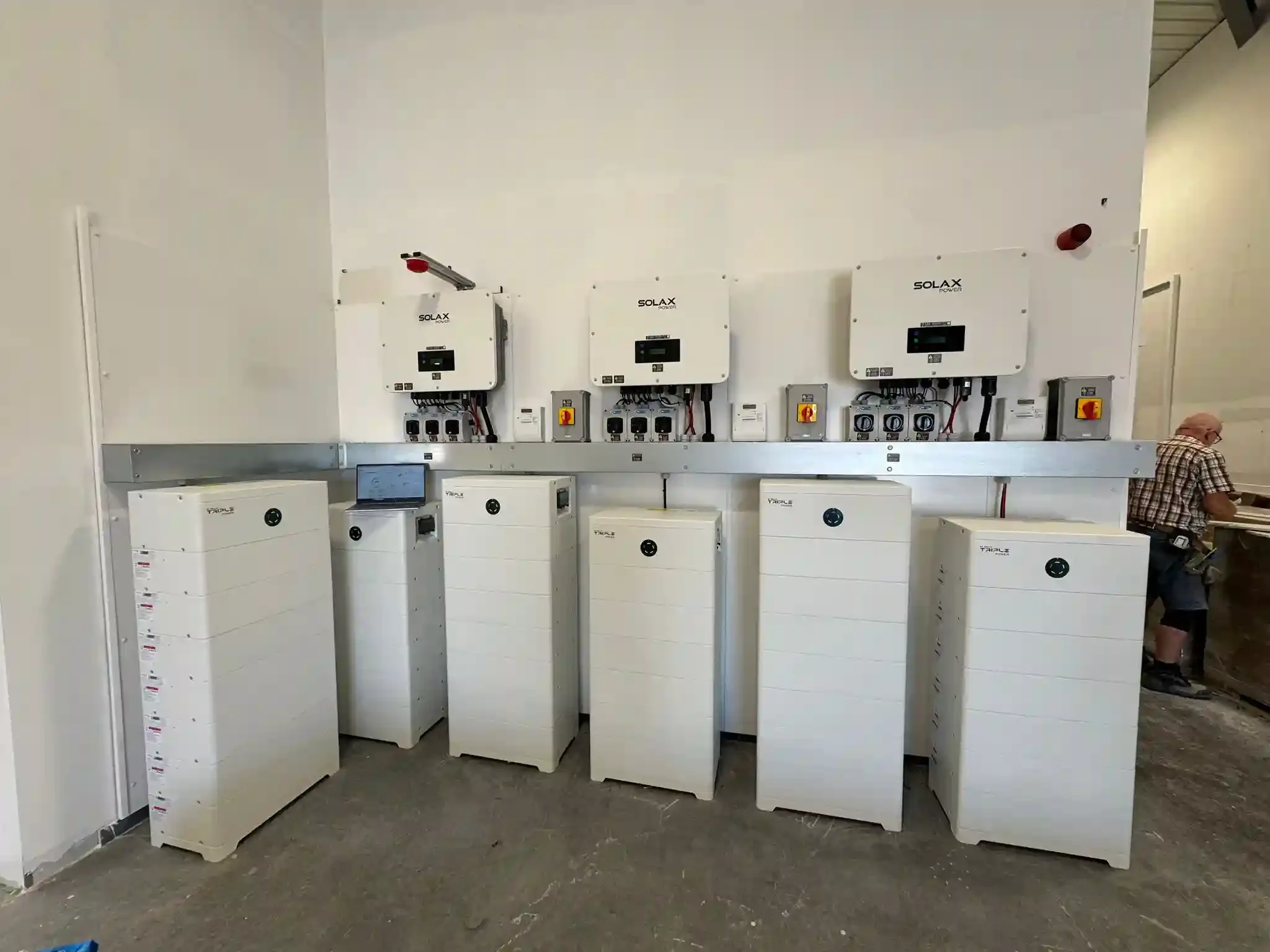
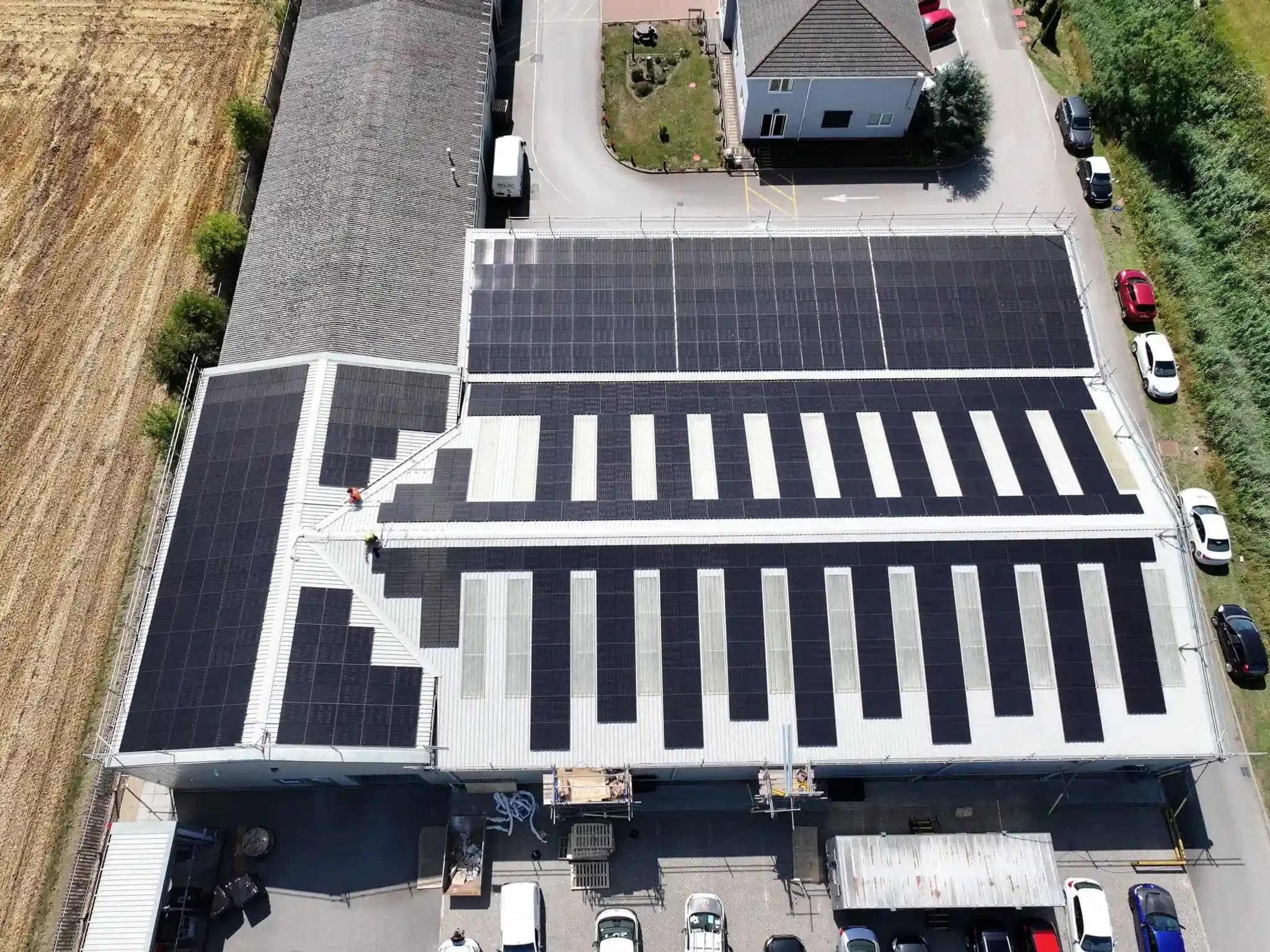
At commercial scale storage does a rather different job. It shaves peak import, carries a site through the early evening, and on the right tariff avoids the most expensive units of the day. Alongside a 200kW array at Rolec Services Ltd we installed 200kWh of storage across thirty nine battery modules behind three 30kW SolaX ultra hybrid inverters, and on a poultry farm 30kW of storage supports the evening and early morning loads.
There are cases where the answer is not to bother. A site that consumes everything it generates as it generates it has nothing left over to store. So does a household on a flat tariff with a small array and someone home all day. Storage is a way of shifting energy in time, and if your usage already lines up neatly with your generation, there is nothing much left to shift and the money goes further elsewhere.
Battery storage guides.
How Long Do Solar Batteries Last?
A good home solar battery should last well beyond ten years. The lithium iron phosphate batteries that now dominate home storage are typically warranted…
Will a Solar Battery Power My Home in a Power Cut?
Not on its own, and this is the single most misunderstood thing about home batteries. A standard solar and battery installation shuts down completely the…
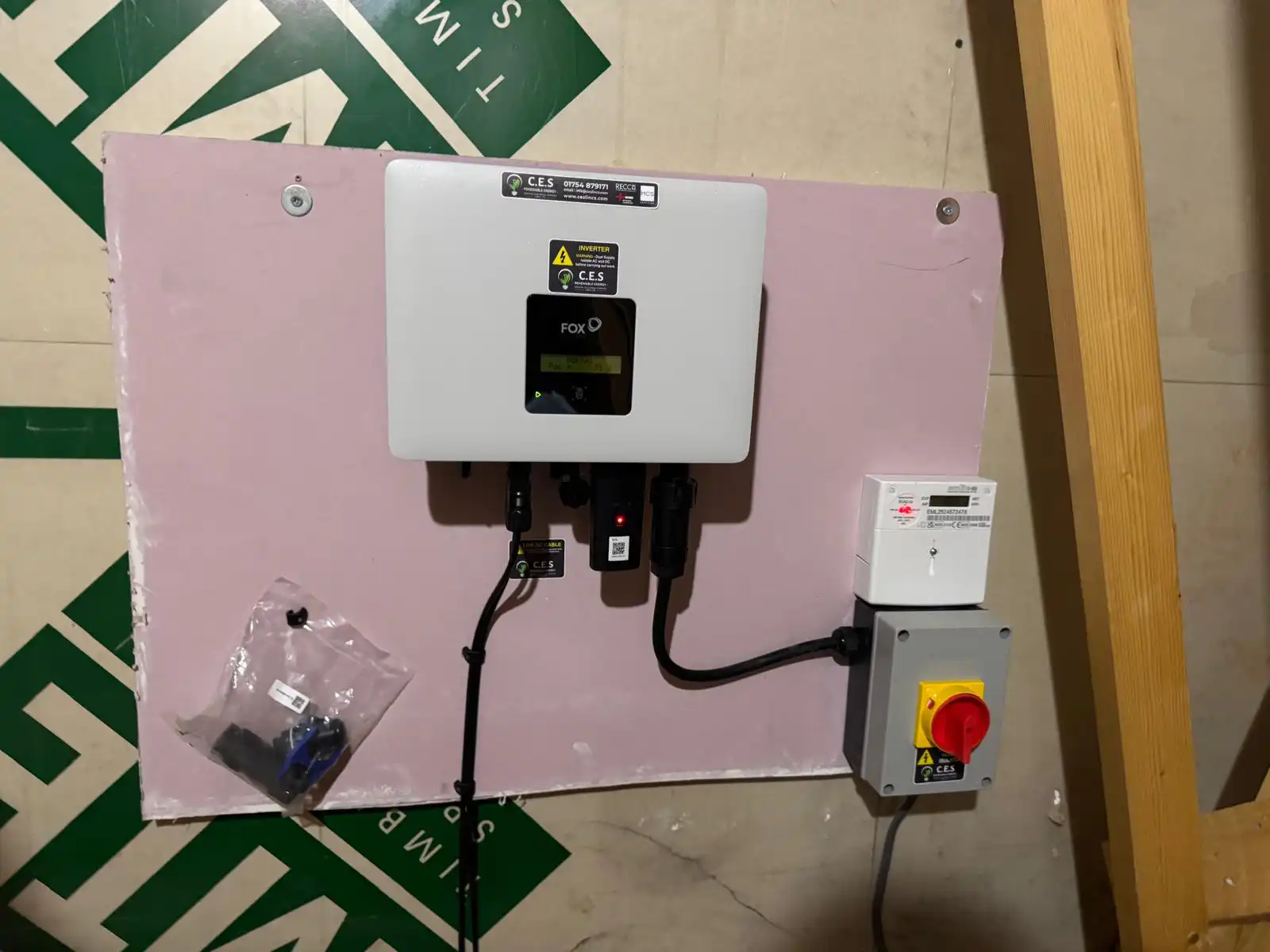
Can You Add Battery Storage to Existing Solar Panels?
Yes. In nearly every case you can add battery storage to existing solar panels, and it is one of the more straightforward jobs we take on. The panels stay…
How Much Does a Solar Battery Cost?
A home solar battery in 2026 typically costs somewhere between around £3,000 and £13,000 fully installed, with most households landing in the region of £4,000 to…
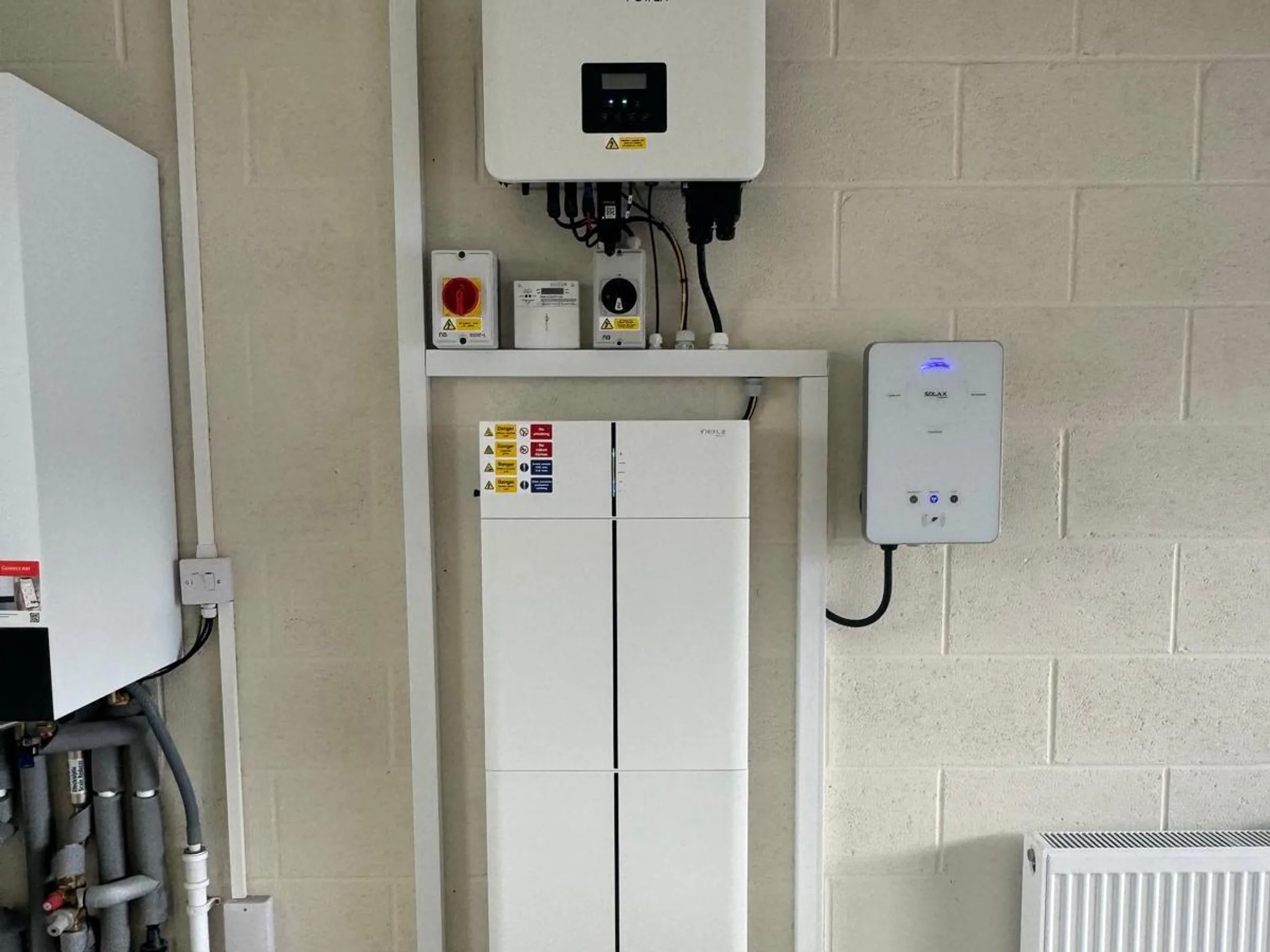
Adding Battery Storage to Your Lincolnshire Home
Adding battery storage to your Lincolnshire home lets you store electricity, whether the solar power you generate or cheaper power bought overnight, and use it later…
What Size Solar Battery Do I Need?
There is no single right answer, but for most homes a solar battery somewhere between 5 and 10 kilowatt hours covers the job well, and the right size for you depends…
Recent projects.
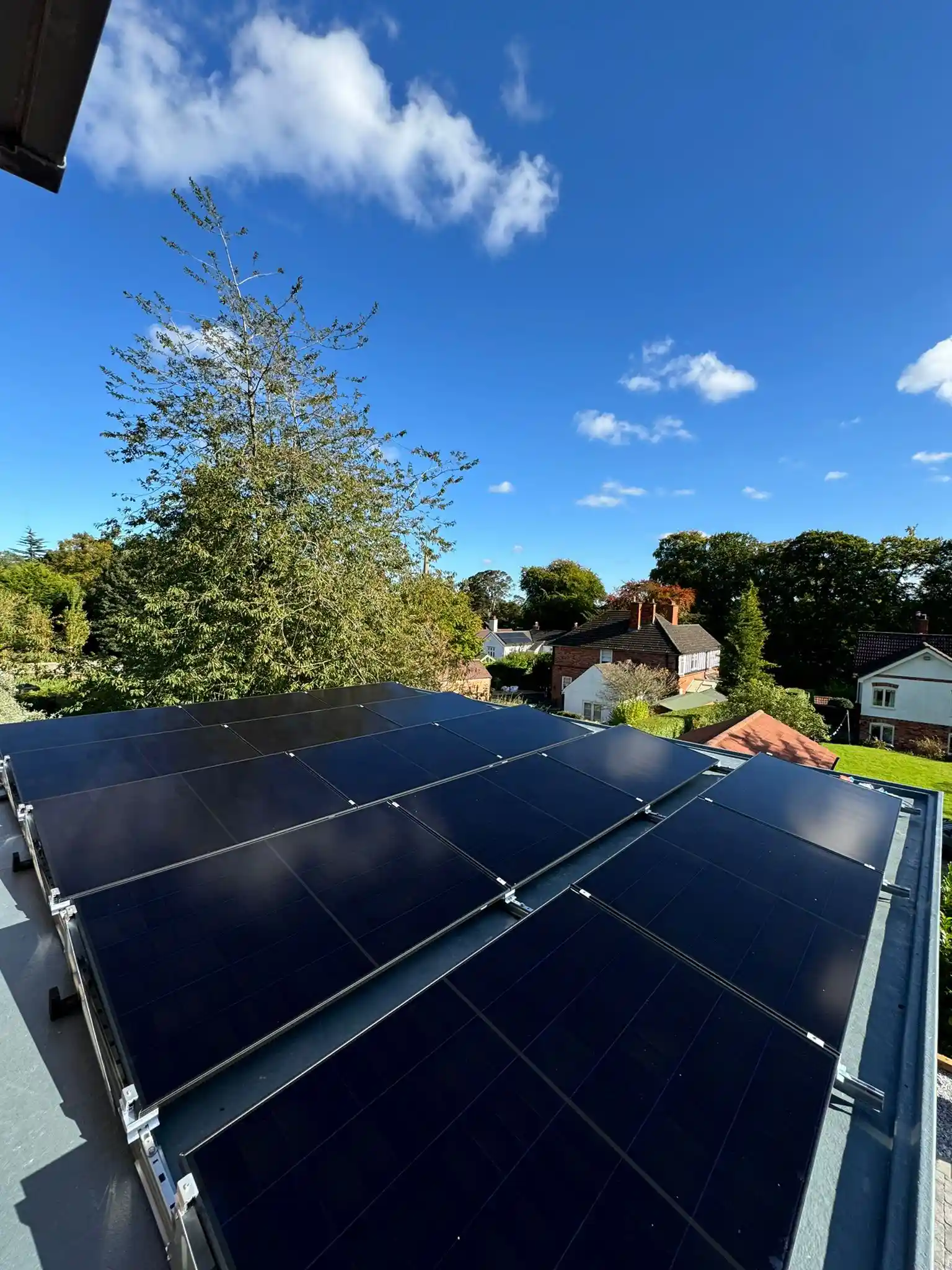 Case study6.8kW Flat Roof Solar and 9kWh Battery for a HomeA 6.8kW flat roof solar system for a home, using 15 AIKO panels, a 6kW SolaX hybrid inverter, 9kWh of battery storage and shading optimisation.
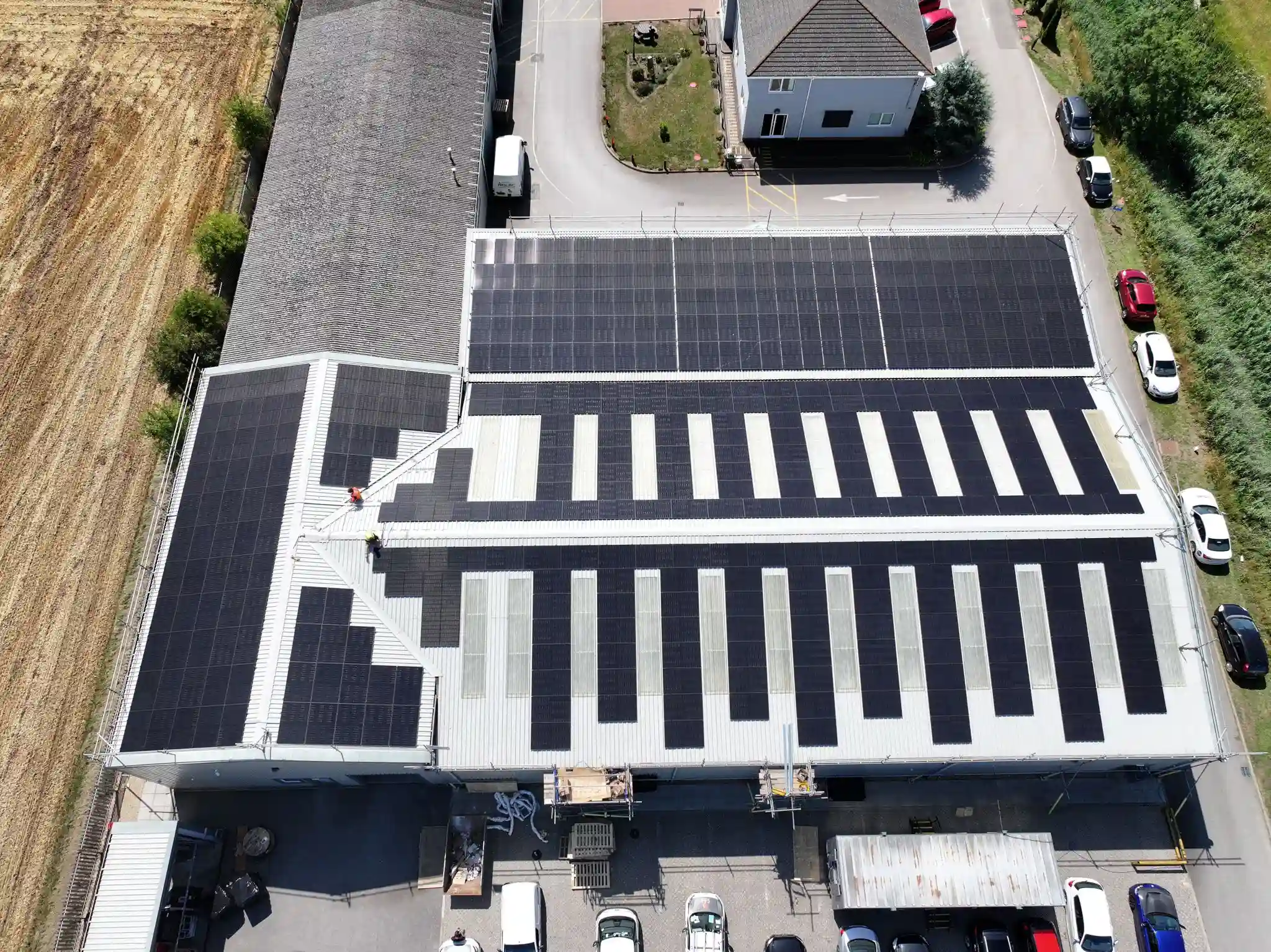 Case study200kW Solar and 200kWh Battery Storage for Rolec ServicesInside the 200kW solar PV and 200kWh battery system we built for Rolec Services, with 440 panels, three SolaX hybrid inverters and 39 batteries.
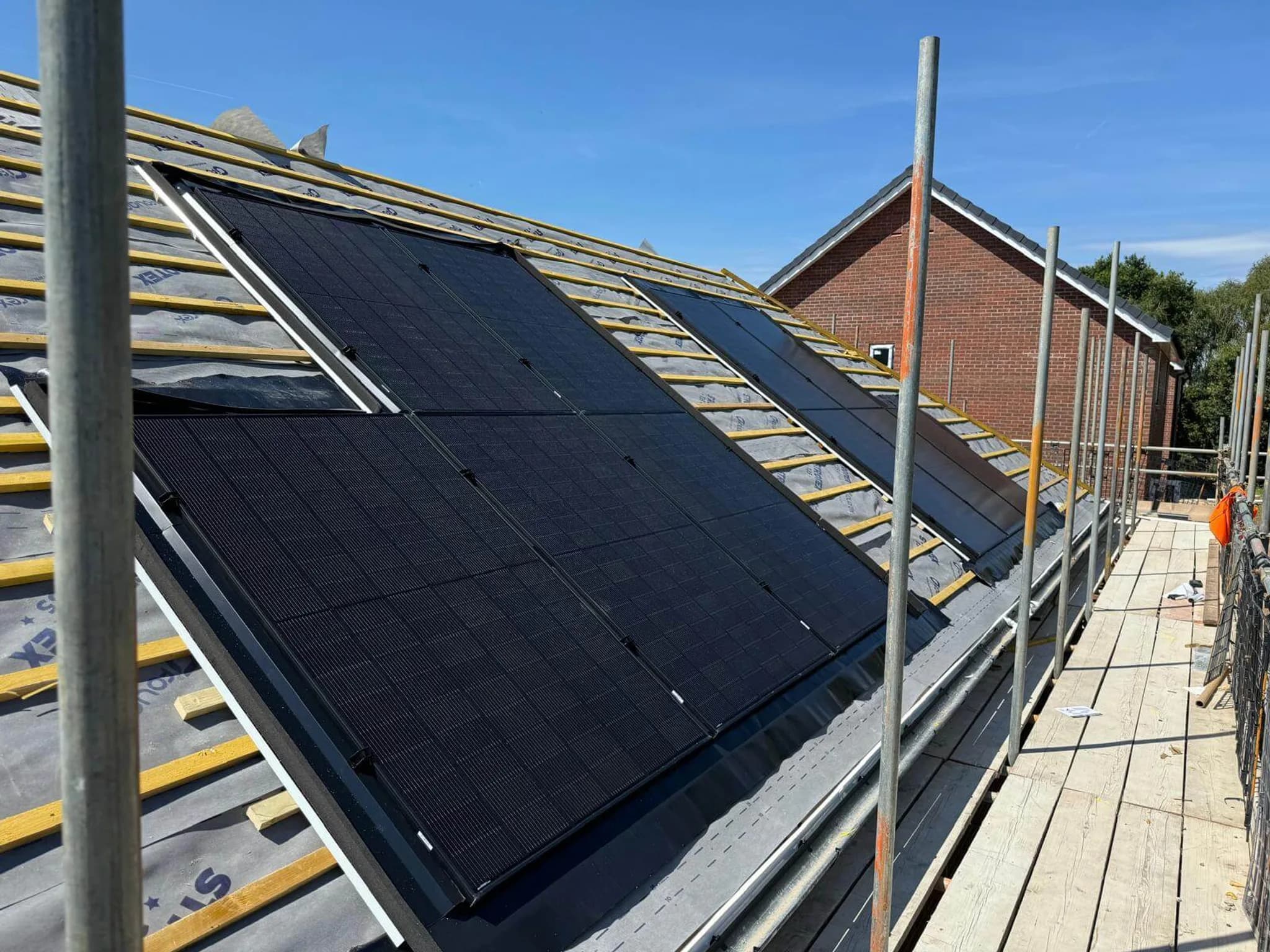
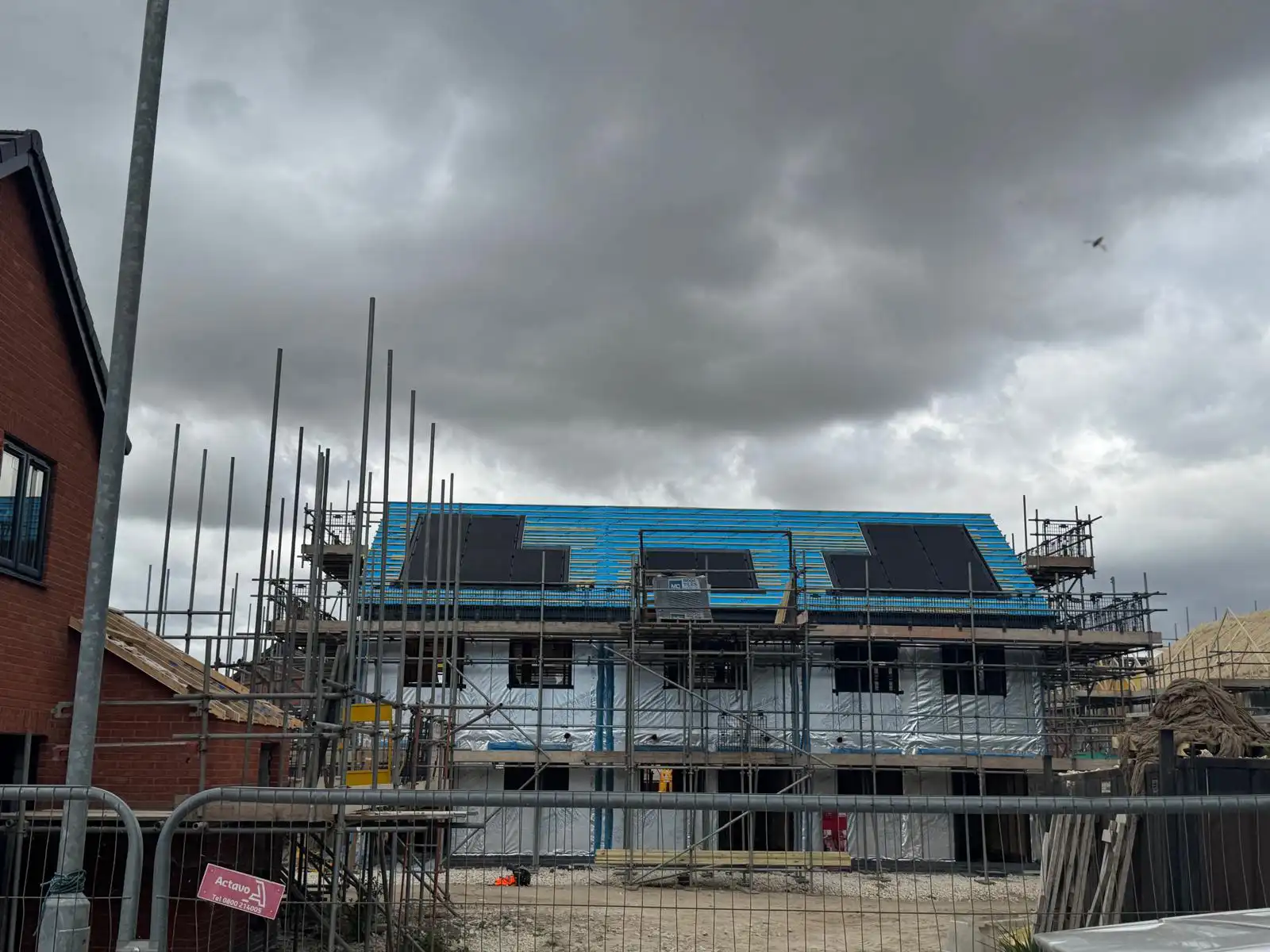 Case studySix In-Roof Solar Systems on a New Build DevelopmentSix GSE in-roof solar PV systems fitted across a new build housing site, all-black panels to MCS and NICEIC standards, live before the owners moved in.
Other CES Renewables services.
Battery storage across Lincolnshire.
Based in Skegness and covering the county. If you are not sure whether we reach you, just ask.