
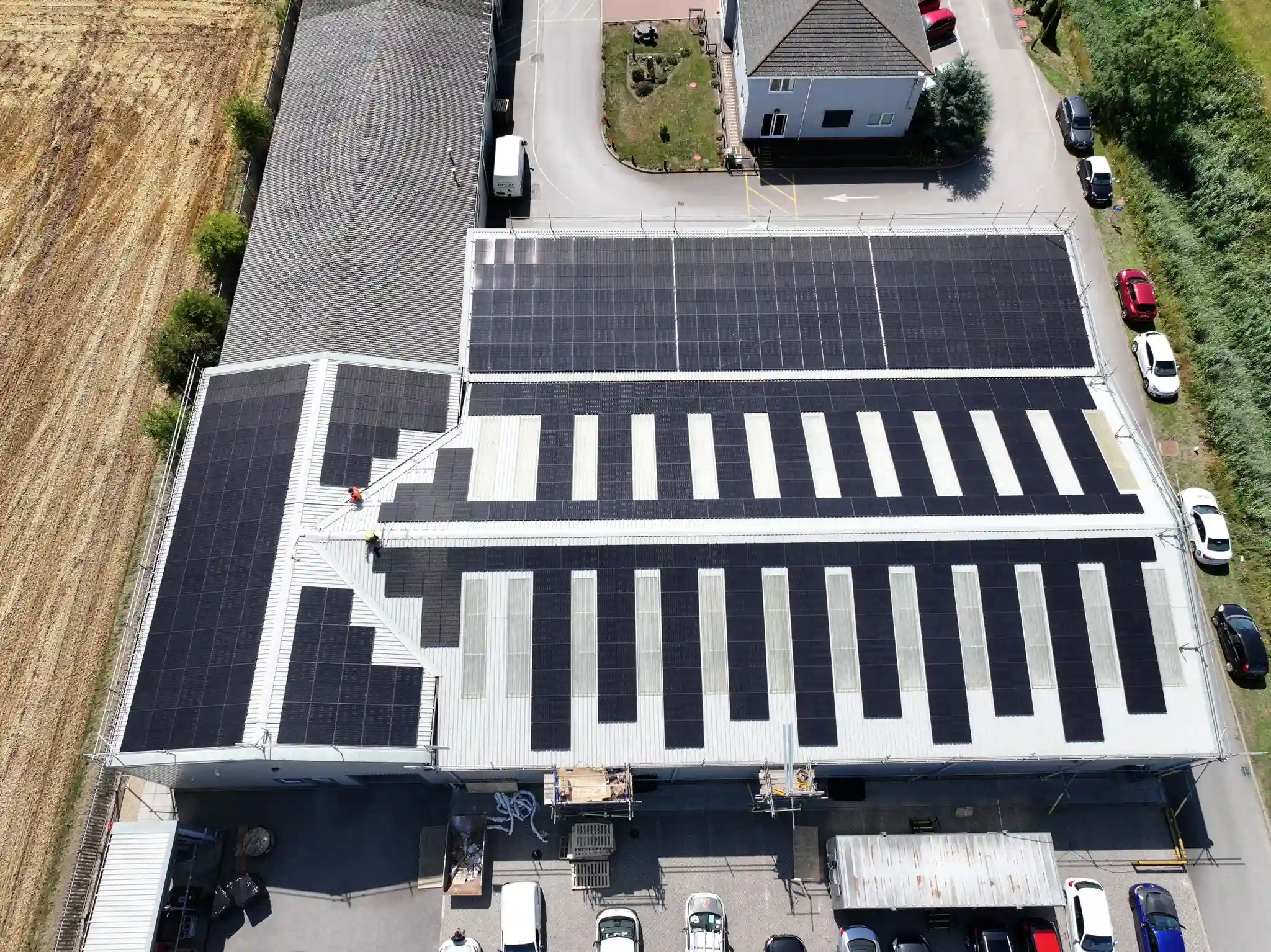
Commercial and industrial solar PV
Large scale rooftop and ground mounted systems for businesses, from the survey and the DNO application through to commissioning and handover. Our biggest to date is 315kW.
Large roof and ground mounted arrays.
- Rooftop arrays
- Ground mounted systems
- DNO applications
- Commercial battery storage
- Half hourly data analysis
How we work
- 1Free consultationWe look at what you have and what you need, with no obligation.
- 2Tailored designA written quote with the kit list and the numbers before you commit.
- 3Professional installOur own engineers, certified and notified properly.
- 4AftercareServicing and support once the job is signed off.
Sizing a commercial array around daytime demand
Commercial solar pays back on self consumption, so the first thing we ask for is half hourly data from your supplier. That shows what the site draws hour by hour across a full year, and it is far more revealing than the annual total on the bill. A warehouse running conveyors and lighting from six in the morning to six at night is close to a perfect match for a solar curve. A site that works nights is not.
From that profile we size the array to sit under the daytime baseload instead of over the top of it. Oversizing looks impressive on a proposal and then pushes a third of its output onto the grid for a rate nobody would call a return. On the 315kW rooftop system we completed for a W7 Make UK distribution centre, generation was aligned with operational demand and not simply with whatever roof area happened to be available.
Payback is driven by what you would otherwise have imported, so the higher your daytime unit rate, the shorter it gets. The calculation we present is built from your own consumption data and is meant to be picked apart. Where the numbers do not work, on a low consumption site or under a structurally tired roof, that is worth knowing before you spend anything.
Roof loading, three phase and the DNO application
A structural check comes before anything else on a large roof. Trapezoidal profile sheet, standing seam and built up systems each want a different mounting approach, and the 315kW W7 Make UK roof took a mini rail trapezoidal system fixed to the sheet, which keeps added dead load down compared with ballast. Purlin spacing, sheet gauge and the remaining life of the covering all feed into that.
A system of this size needs a G99 application to the distribution network operator, and on larger schemes that approval, rather than the installation itself, sets the programme. We make the application and manage it through to consent. Expect the operator to come back with conditions. A cap on what you may push back to the grid is the usual one, and it is normally workable, because a capped system still saves you exactly the same money on the units you no longer import.
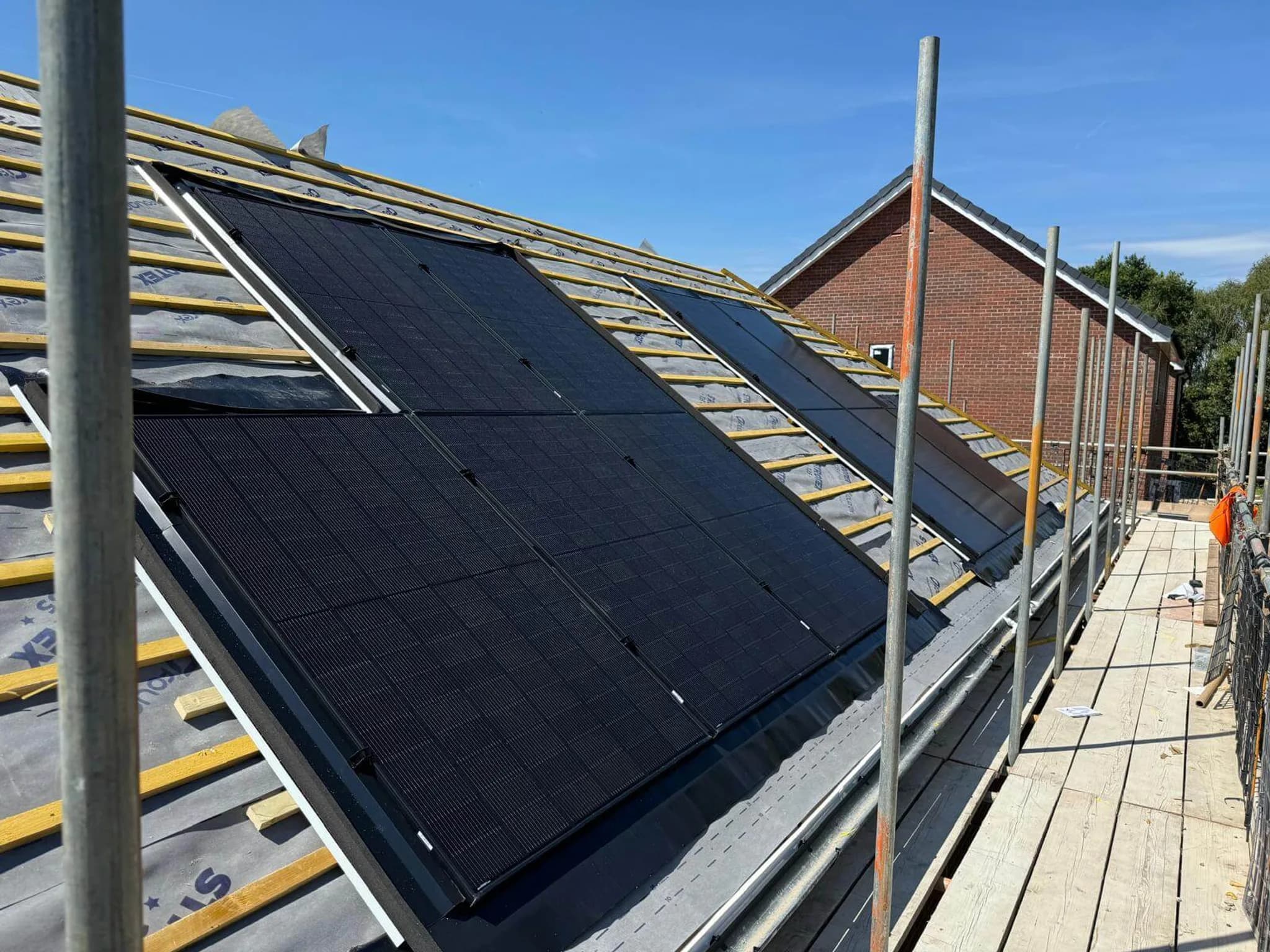
Sites of this size are three phase, so inverters are specified and balanced accordingly, twelve 25kW SolaX three phase units on the 315kW roof and a single 40kW SolaX on a 45kW array of all black AIKO panels. CT meters go in for real time monitoring, so you can watch generation against consumption and prove the system is doing what the payback calculation promised.
Land based arrays where roof space runs out
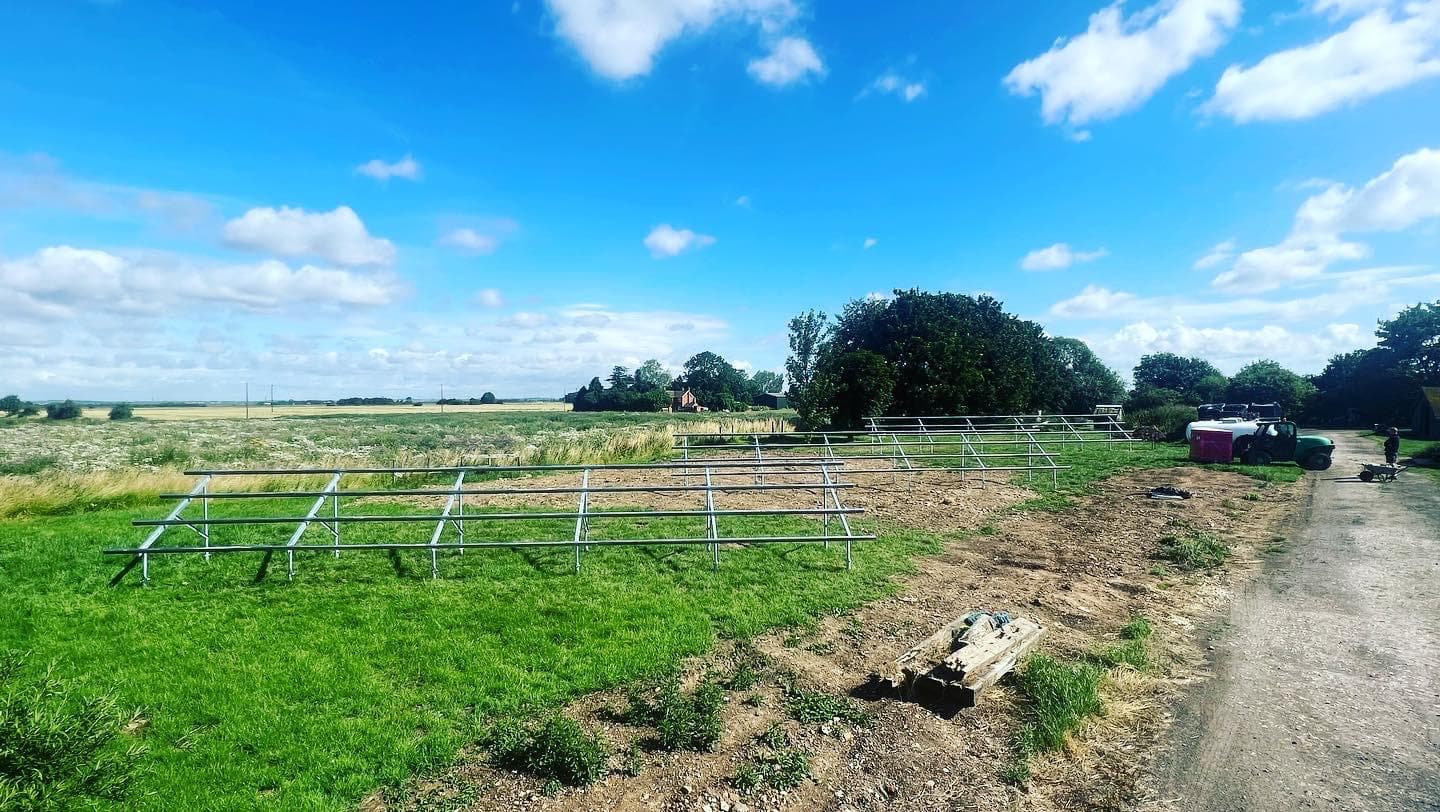
Where roof area is limited but land is not, a ground mount is often the better answer. On a poultry farm we built a 30kW array on a bolted anchor framework, with SWA cable trenched back to a new three phase distribution board. Row spacing is set so the front rank does not shade the one behind through the low winter sun, which is the calculation most often skipped on a field layout.
Farms and processing sites suit this well, since ventilation, lighting, feed systems and environmental controls draw steadily right through daylight hours. Access for mowing and for panel cleaning is designed in from the start, because an array you cannot get a machine around quickly becomes an array nobody maintains. Cable and containment get specified for an agricultural environment instead of an office car park.
We have done this before.
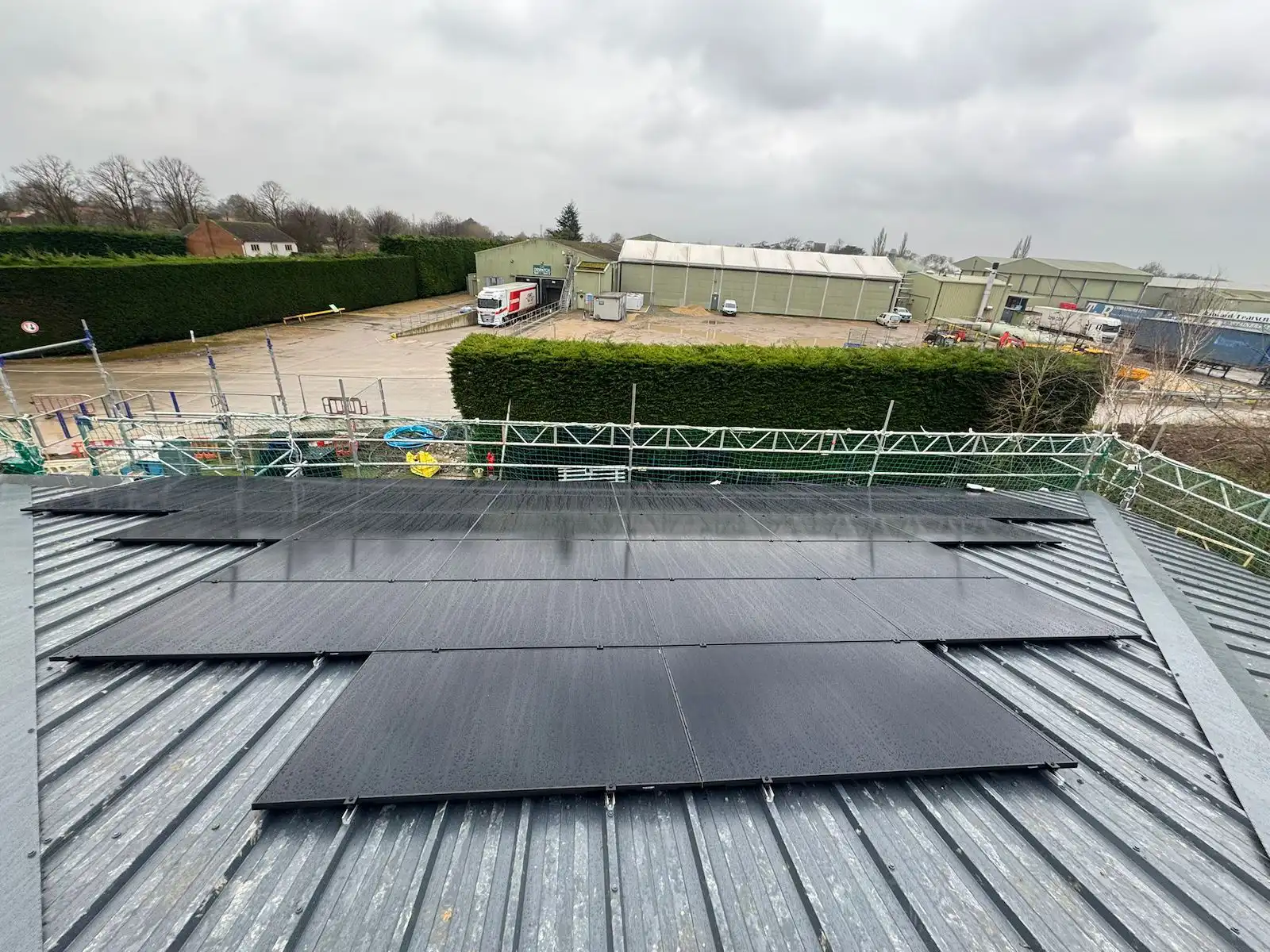 Case study45 kW Commercial Solar InstallationCES Renewables has successfully completed another premium solar installation, a 45 kW Commercial Solar PV System engineered for efficiency, reliability and long-term…
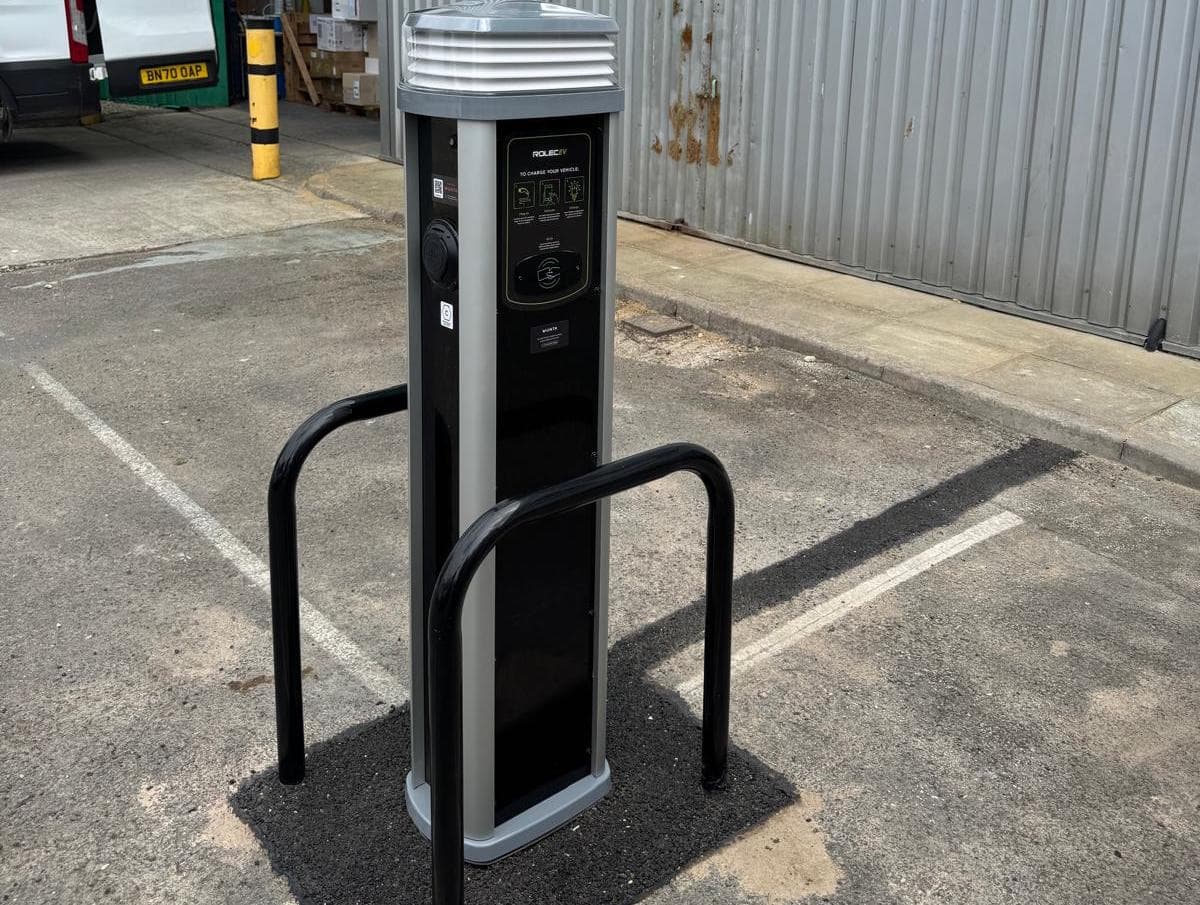 Case studyCommercial EV Charging InstallationCoastal Electrical Services & Renewable Energy were appointed to deliver a turnkey electric vehicle charging solution for Micron-Clean Ltd at their Swindon commercial…
 Case studyCommercial Electrical & Lighting UpgradeCoastal Electrical Services & Renewable Energy were appointed by Belvin Construction to carry out a comprehensive electrical upgrade within a designated area of Grantham…
Everything else we do.
Commercial solar across Lincolnshire.
Based in Skegness and covering the county. If you are not sure whether we reach you, just ask.