
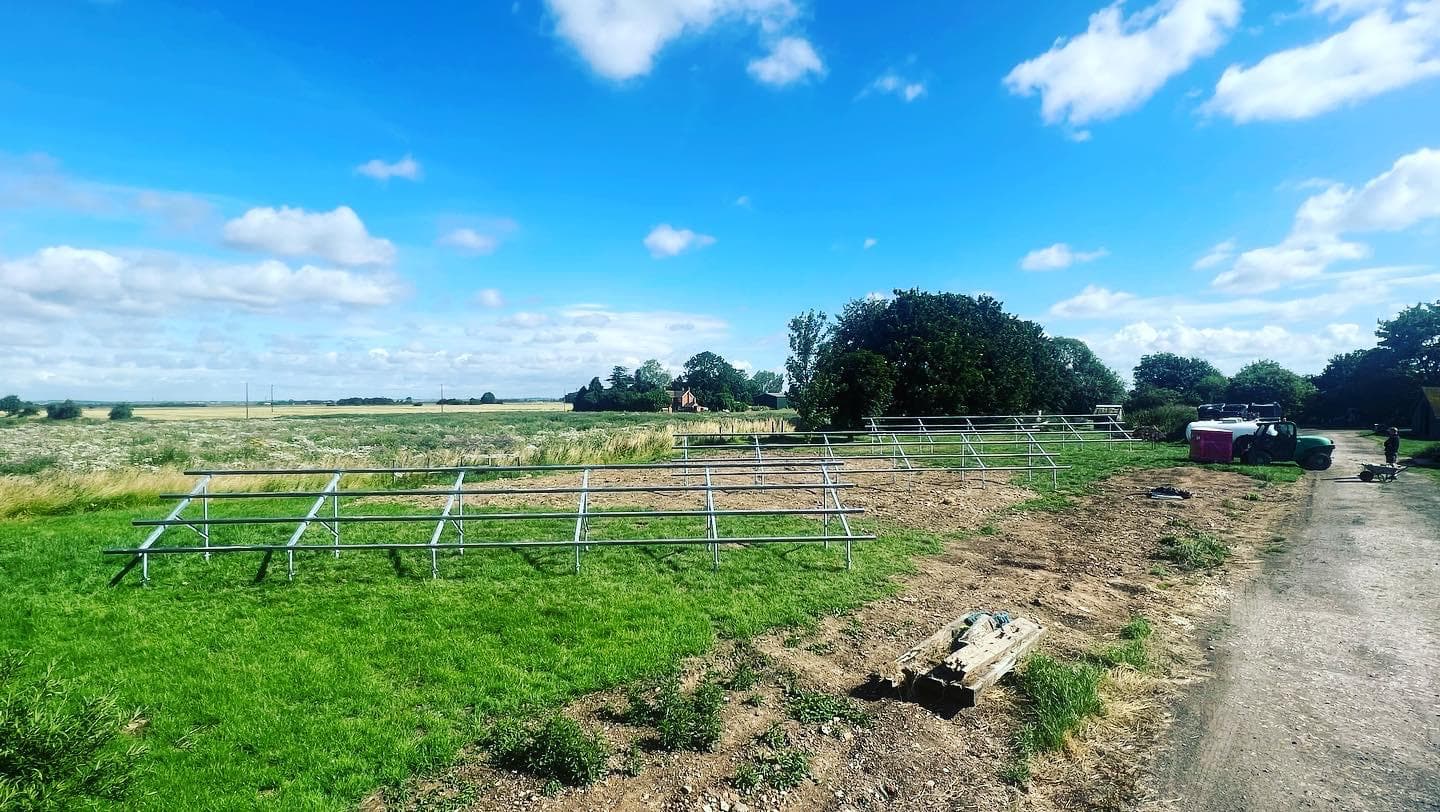
Electricians and solar installers in Alford
A lot of property around Alford sits off the gas grid, which changes the sums completely. When the alternative is oil or electric heating, solar with storage stops being a nice idea and starts being the cheapest way to run the house.
Rural properties, often off the gas grid.
What we do most of here
Off the gas grid around Alford
Where the gas main stops, the heating is oil, LPG or straight electric, and that is most of the property out this way. It moves the whole calculation. A house on mains gas is measuring generation against a relatively cheap fuel. A house on a kerosene tank or on panel heaters is measuring it against one of the dearest ways there is to keep a room warm, and every unit the roof makes is a unit nobody has to buy in or have delivered down a narrow lane.
What a domestic array will not do is carry a winter heating load. A roof in Lincolnshire makes a small fraction of its June output in December, and anyone promising that panels will heat an off grid house through a cold snap is selling and not surveying. The gain is real, it is simply spread across the year instead of arriving when the weather is worst, and that is better understood in August than discovered in January.
Hot water first, then a battery
The hot water is usually the first easy win. A diverter sends surplus generation to the immersion, so the oil boiler can sit idle through the warmer half of the year and skip the short summer cycles that wear one out. Around Bilsby, Willoughby and the lanes out towards Ulceby Cross that alone takes a noticeable slice off the annual fill, and it is a far smaller job than fitting a battery.
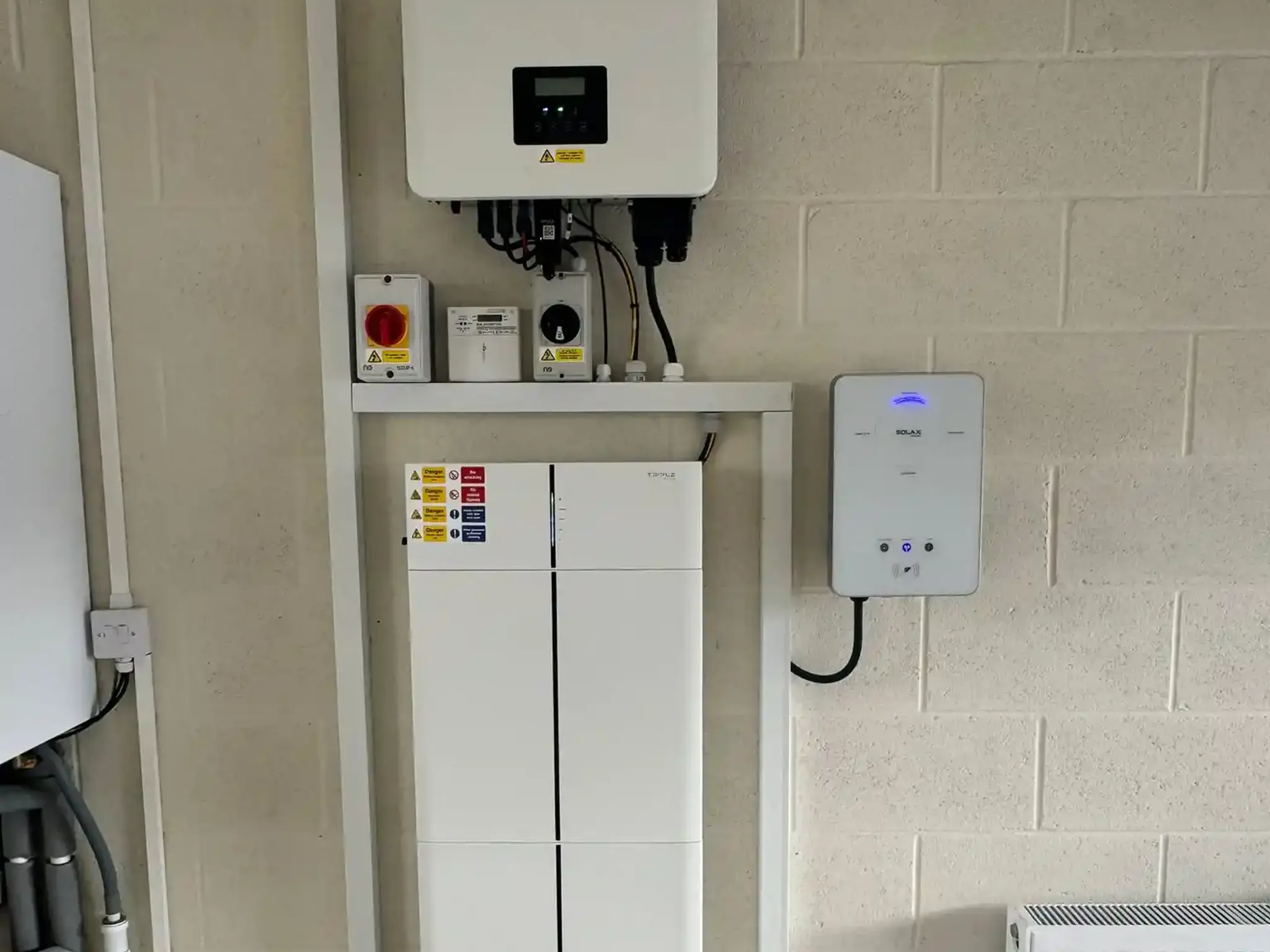
Storage is the next step. Off the gas grid the cooking, the hot water and often the heating are all electric, so the evening draw is heavier than it would be in town and a battery has more work to do. We are an Octopus installation partner and we fit SolaX systems, sized on what the meter shows for that particular household and not on the biggest unit in the catalogue.
Long rural supplies, voltage rise and old roofs
Rural supplies are worth looking at before anything is designed. Properties at the end of a long spur can already sit high in the voltage band, and an inverter pushing generation back up that spur raises it further. Go past the limit and the inverter shuts itself down to protect the network, which costs you output on exactly the bright days you were counting on. Measuring the supply first is how that gets designed around rather than discovered.
Then the buildings themselves. A lot of the housing out this way is bungalows and older cottages with outbuildings, so there is often more usable south facing area on a garage or a barn than on the house, and running the cable back is a smaller job than people assume. If a roof is not worth panelling, you will hear that at the survey along with the reason.
Thatch is the one that stops a solar conversation dead. Nothing gets fixed through a thatched roof, and any wiring near one wants treating with proper respect, which means cable kept out of the thatch itself, sound terminations in accessible enclosures and no buried joints anywhere near it. Where a property has a thatched main range and a tiled or sheeted outbuilding behind, the outbuilding is very often where the array ends up.
Projects across the county.
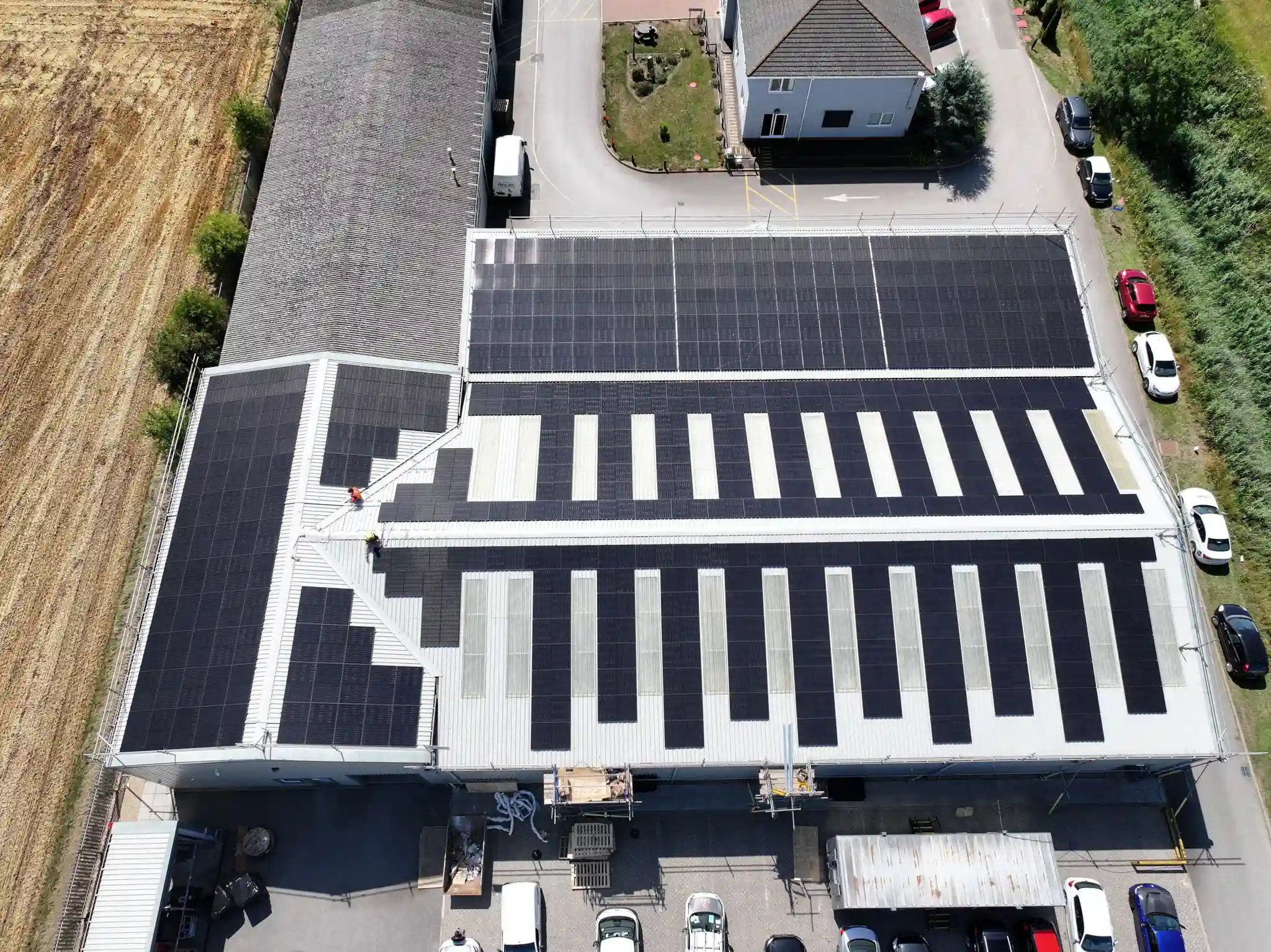
 Case study315kW Commercial Solar PV Installation, Distribution Centre ProjectCES Renewables recently completed a major 315kW rooftop solar PV installation for one of W7 Make UK’s distribution centres, delivering a high-performance system designed…
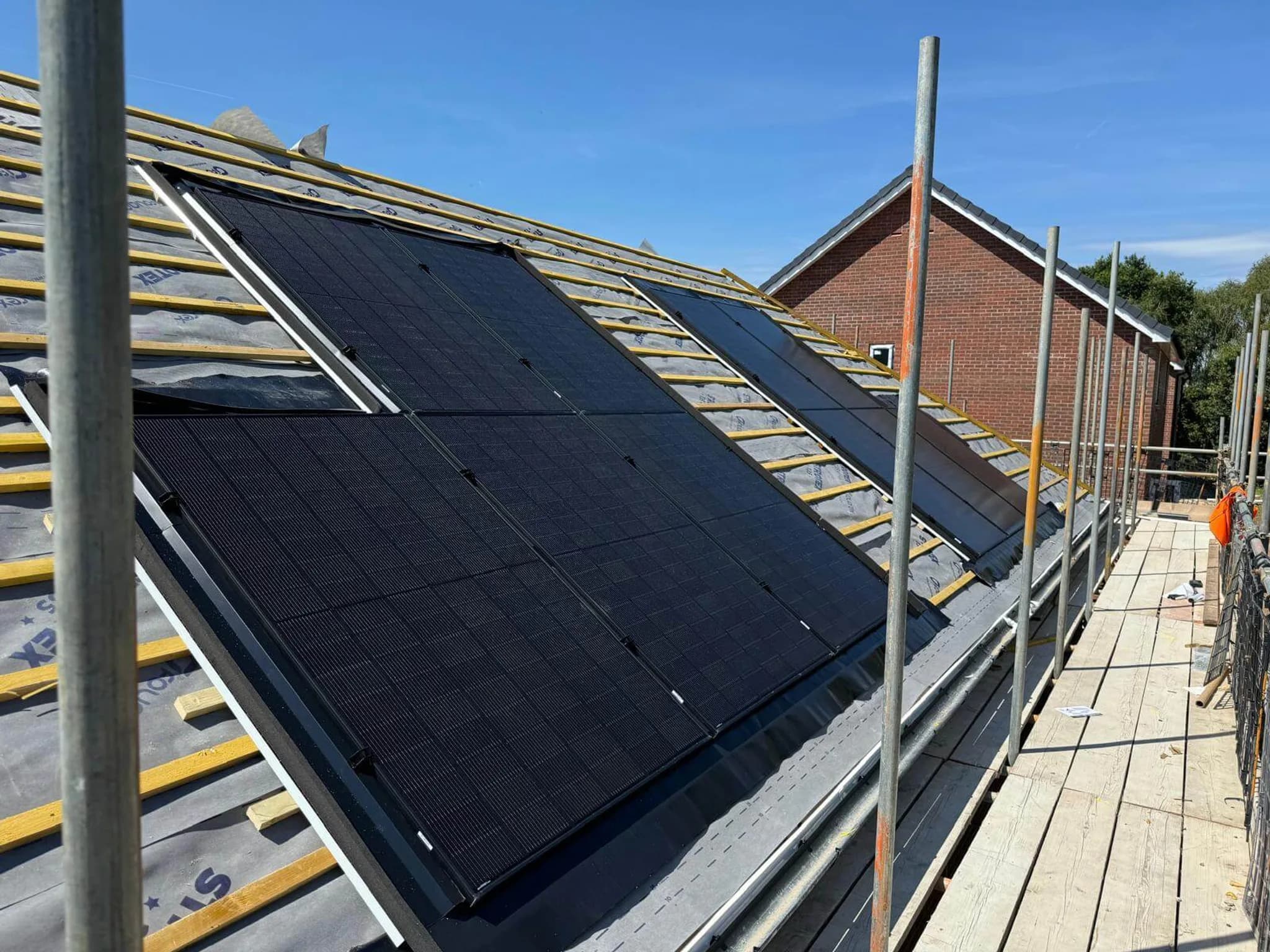
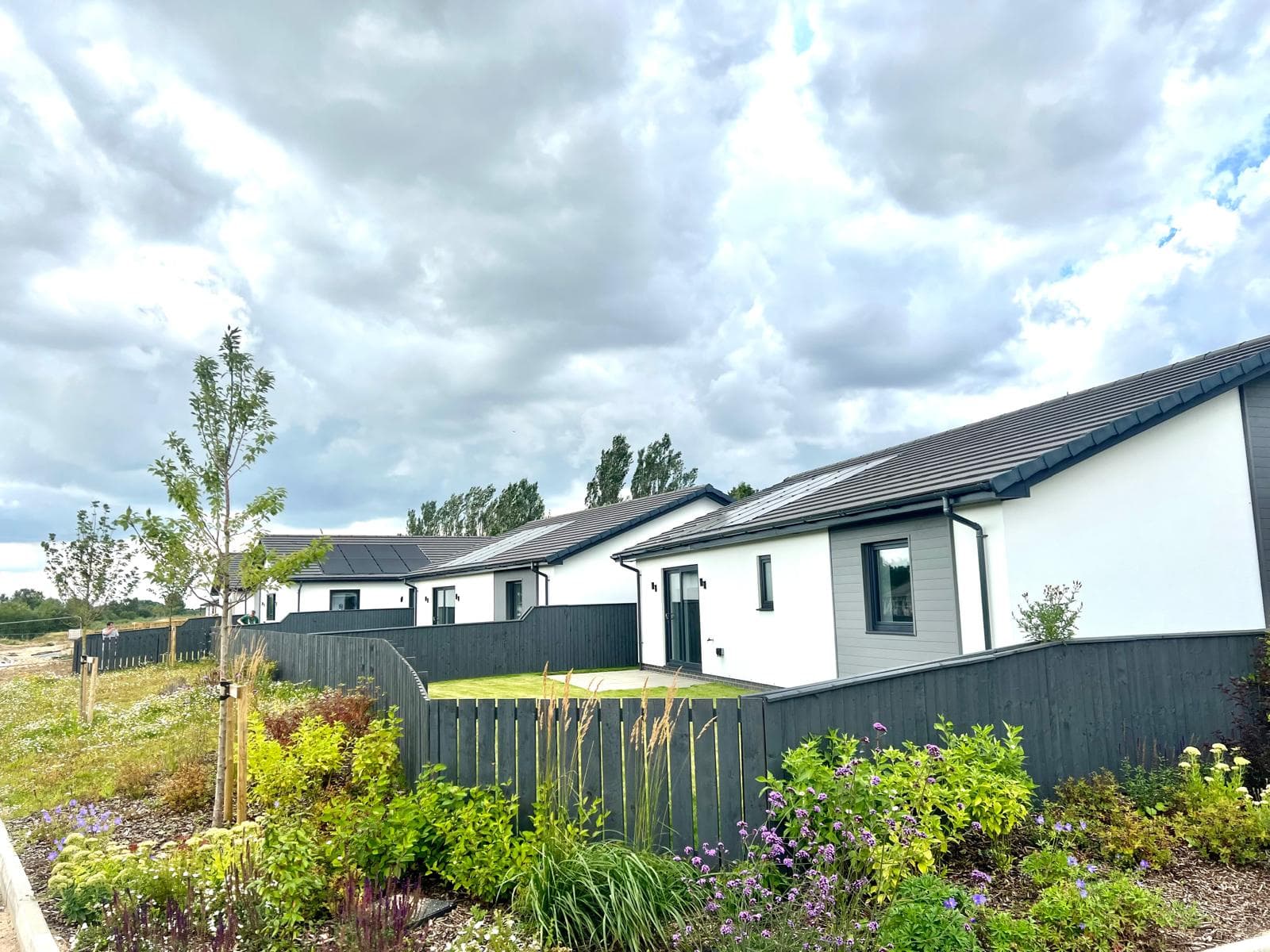 Case studyEco Home Bungalow DevelopmentCoastal Electrical Services & Renewable Energy were appointed to deliver the full electrical installation for a high-spec eco bungalow development consisting of 13…
 Case studyPrivate Residential New Build, Burton BuildersCoastal Electrical Services & Renewable Energy were appointed by N R Burton Builders to deliver a complete electrical and low-carbon energy solution for a new build…