
Electricians and solar installers in Grantham
Grantham sits on the A1 and has the distribution sheds to match. Those roofs are exactly where commercial solar does its best work, and rooftop arrays at that scale are what we build. In the town itself we carried out a full electrical rewire and LED lighting upgrade at Grantham College for Belvin Construction, working around a live college.
Distribution and logistics along the A1.
What we do most of here
Commercial solar on Grantham distribution sheds
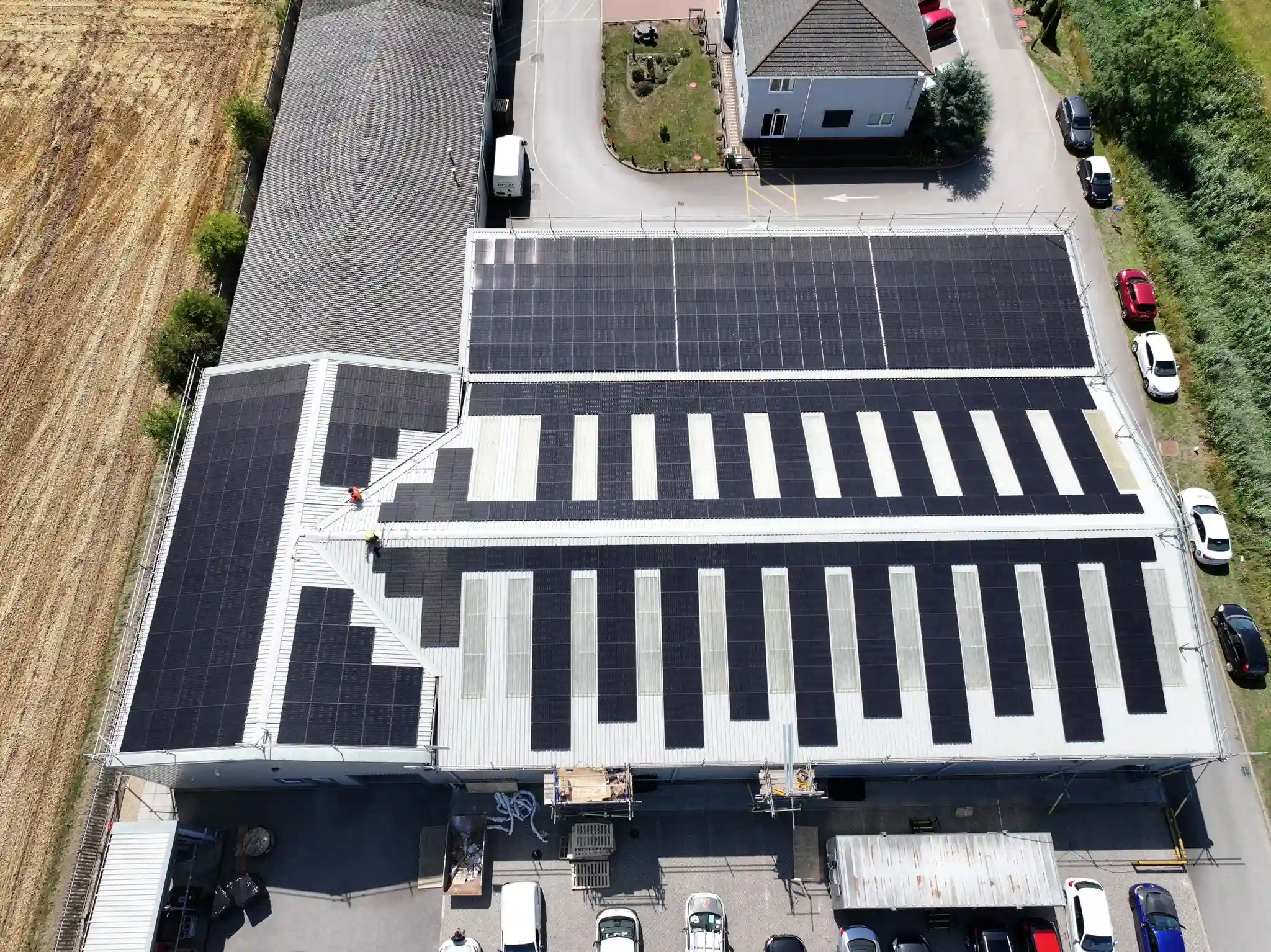
The logistics estate along this stretch of the A1 is close to ideal for solar. The buildings are large, low pitched, structurally simple and rarely broken up by dormers or valleys. A shed of that kind is what our largest array to date was built on, 315kW of JA Solar panels on a mini rail trapezoidal system with twelve SolaX three phase inverters behind it and CT meters for live monitoring.
At that scale the job stops being a day on a roof and becomes a programme. Roof access plans, scaffolding, the network operator application and commissioning all run alongside each other. The first question is not how many panels fit but how much life the sheeting has left, and where the incoming supply sits, because a long run from an inverter room at one end of a building to the board at the other adds cost nobody budgeted for.
Warehouse lighting and distribution upgrades
Inside those sheds, high bay lighting is usually the quickest win. Legacy metal halide fittings take minutes to restrike after a voltage dip, which on a night shift means an aisle out of use until they come back, whereas LED with presence detection in the racking aisles is instant and only burns when somebody is in the aisle.
The rest is distribution work. New boards and submains as a unit gets subdivided, supplies for dock levellers, shutters and baling equipment, and properly ventilated forklift charging bays on their own circuits. Emergency lighting is tested and certified with everything else, because a racking aisle in the dark is not a place anyone should be hunting for an exit.
Depot and fleet EV charging near the A1
Van and car charging at a logistics site is a capacity problem before it is a charger problem. Ten bays at seven kilowatts is a serious load on top of the building itself, so we start with the existing supply, the site consumption profile and what the network operator will allow, then set the group up to share what is spare across the shift.
Commercial units are usually dual outlet and fed by their own sub main from the intake position, with ducting and cable protection laid in properly and the surface made good afterwards. Groundworks are the expensive part, so lay ducting for the bays you expect to need and not only the ones going in now. Digging a yard twice costs far more than putting spare capacity in once.
Live buildings, from teaching rooms to despatch
Not everything here is warehousing. At Grantham College, working for Belvin Construction, we carried out a lighting rewire and an LED panel upgrade within a live teaching area, which meant isolating and stripping out the old circuits without disturbing the rest of the building. As part of the same roofing works we disconnected the existing solar array, stored it, then reinstated and reconnected it once the new roof was on.
In the town itself we worked for Belvin Construction inside Grantham College, taking a designated area back to bare fabric and rebuilding it, with a full rewire and an LED lighting upgrade. A building in daily use needs the same discipline about phasing and handing areas back as a working shed does, and the as installed documentation matters more, because somebody else maintains it afterwards.
Projects across the county.
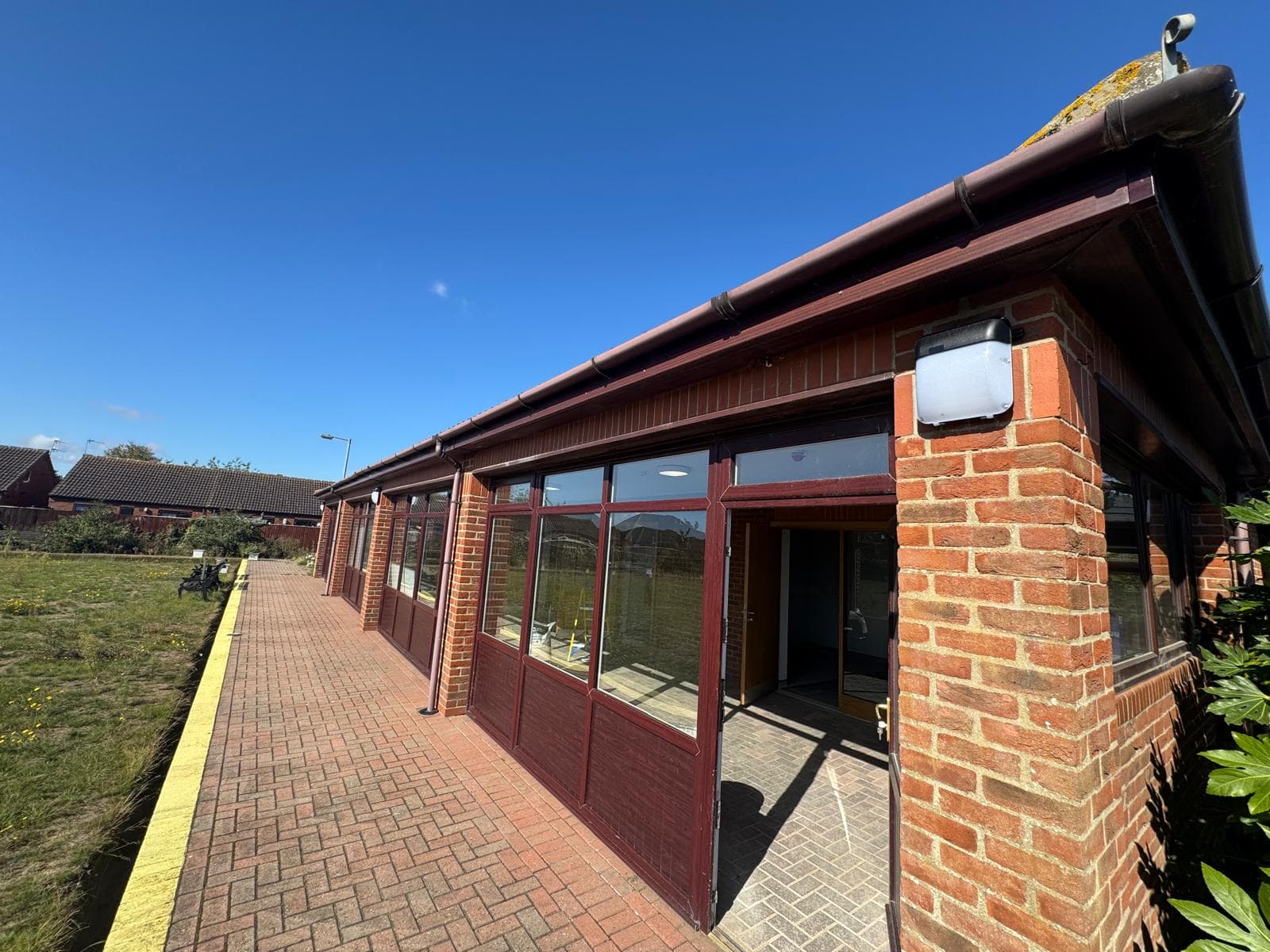 Case studyLinkage Training CentreWe were appointed to deliver a complete electrical and life-safety installation for a specialist training centre operated by Linkage. The project involved transforming…
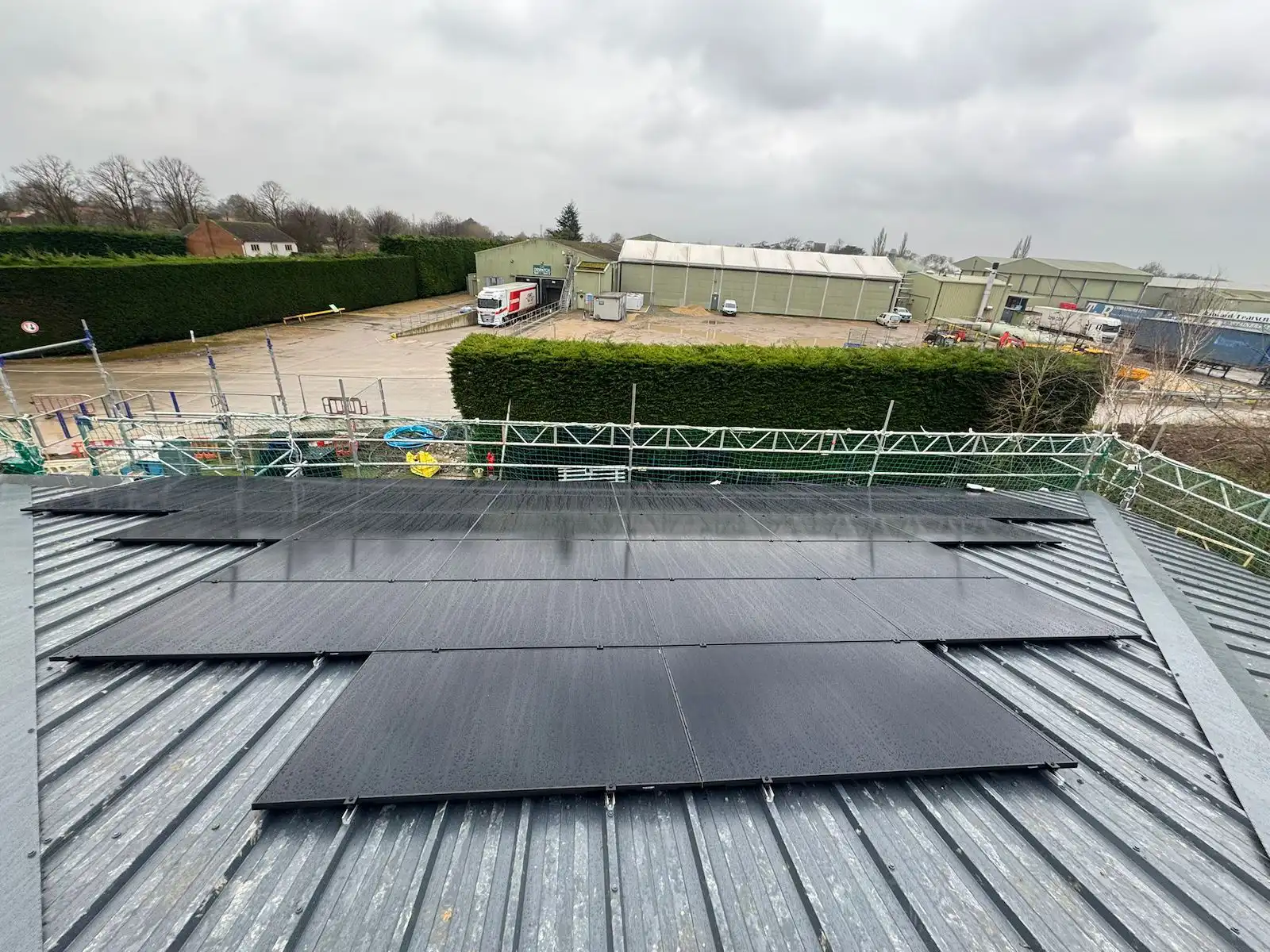 Case study45 kW Commercial Solar InstallationCES Renewables has successfully completed another premium solar installation, a 45 kW Commercial Solar PV System engineered for efficiency, reliability and long-term…
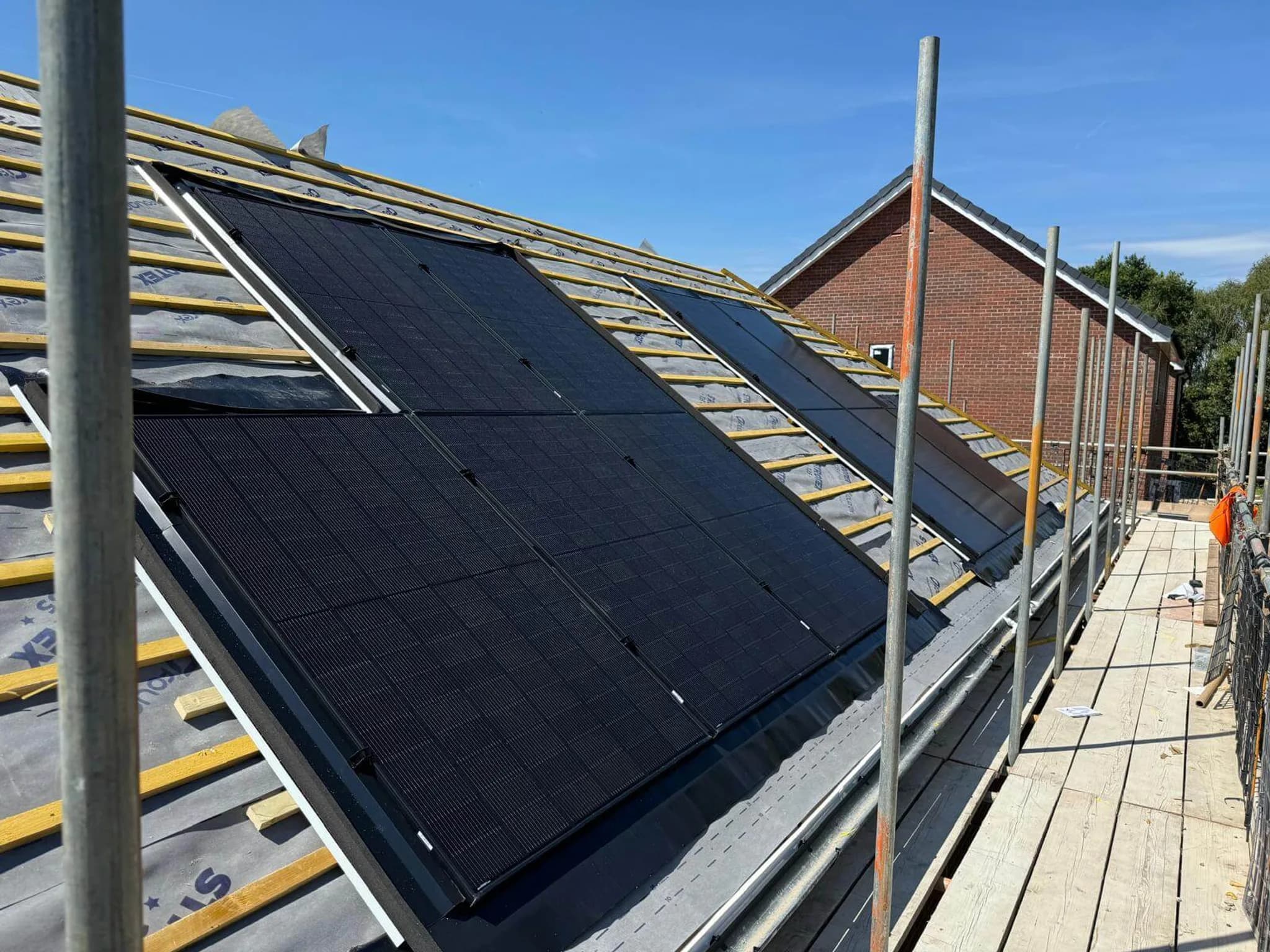
 Case studyNew Build Development, Home Solar PV InstallationWe partnered with a new build housing developer to install 6 brand-new Solar PV systems, ensuring each property is future-ready and powered by clean, renewable energy…