
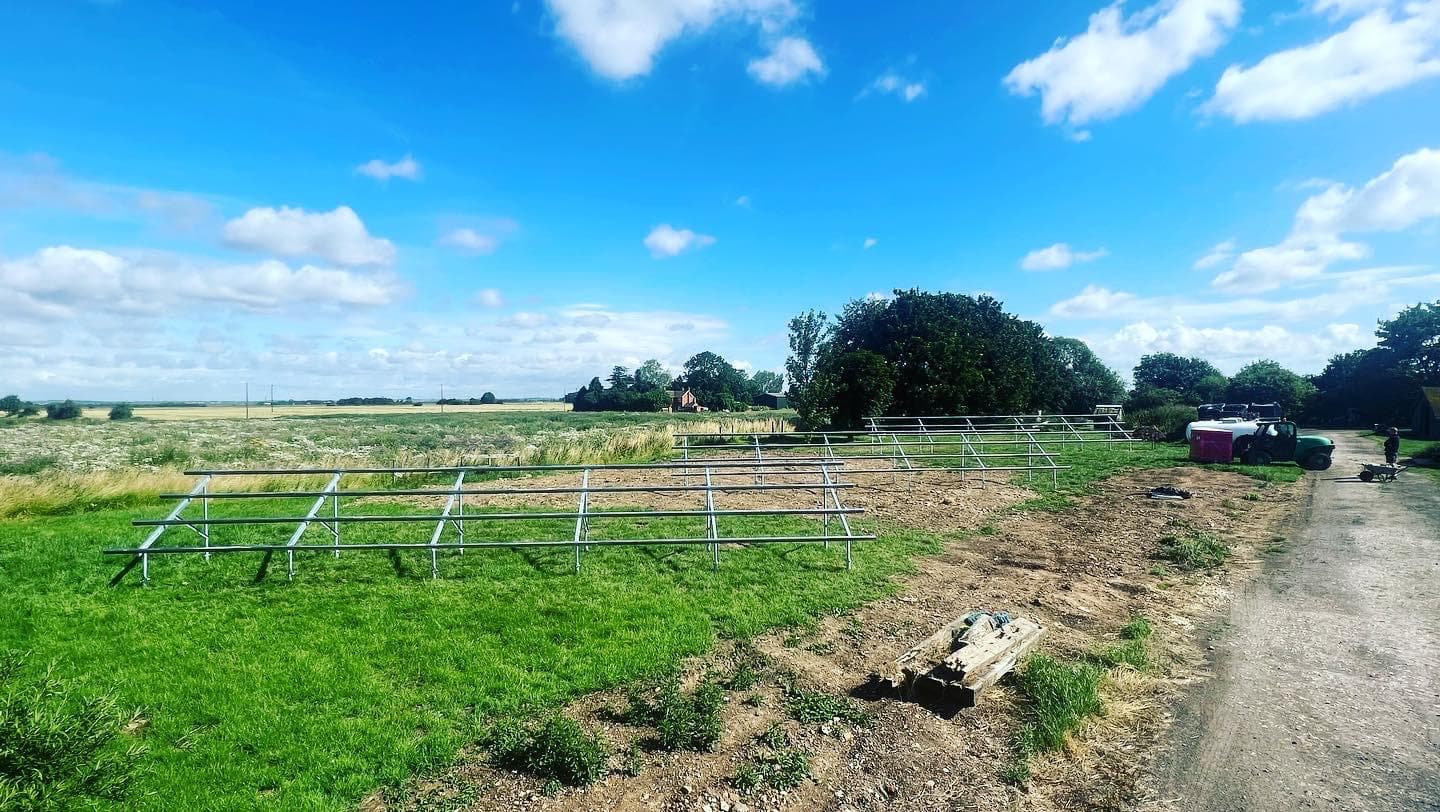
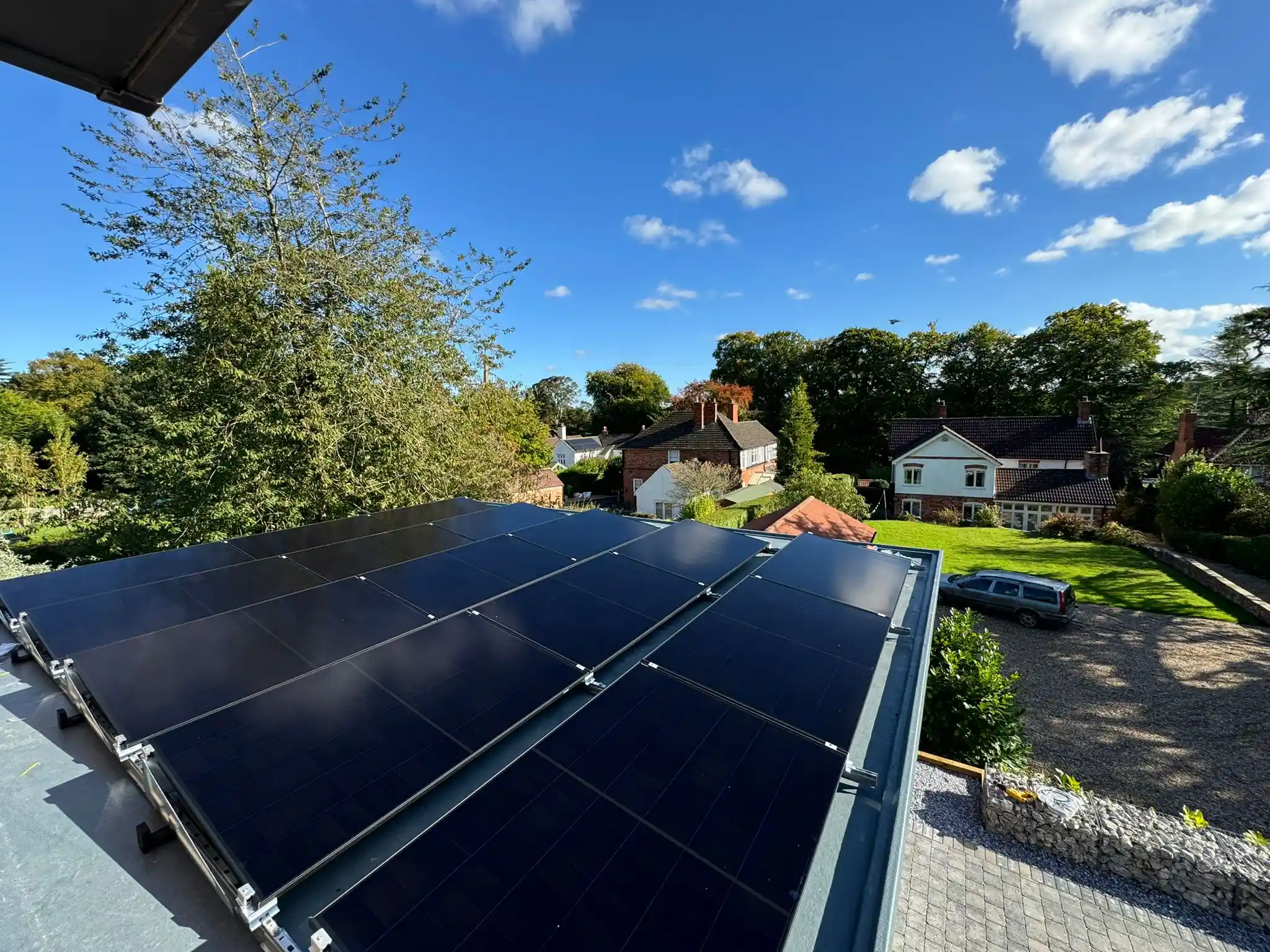
Solar panel installation in Lincolnshire
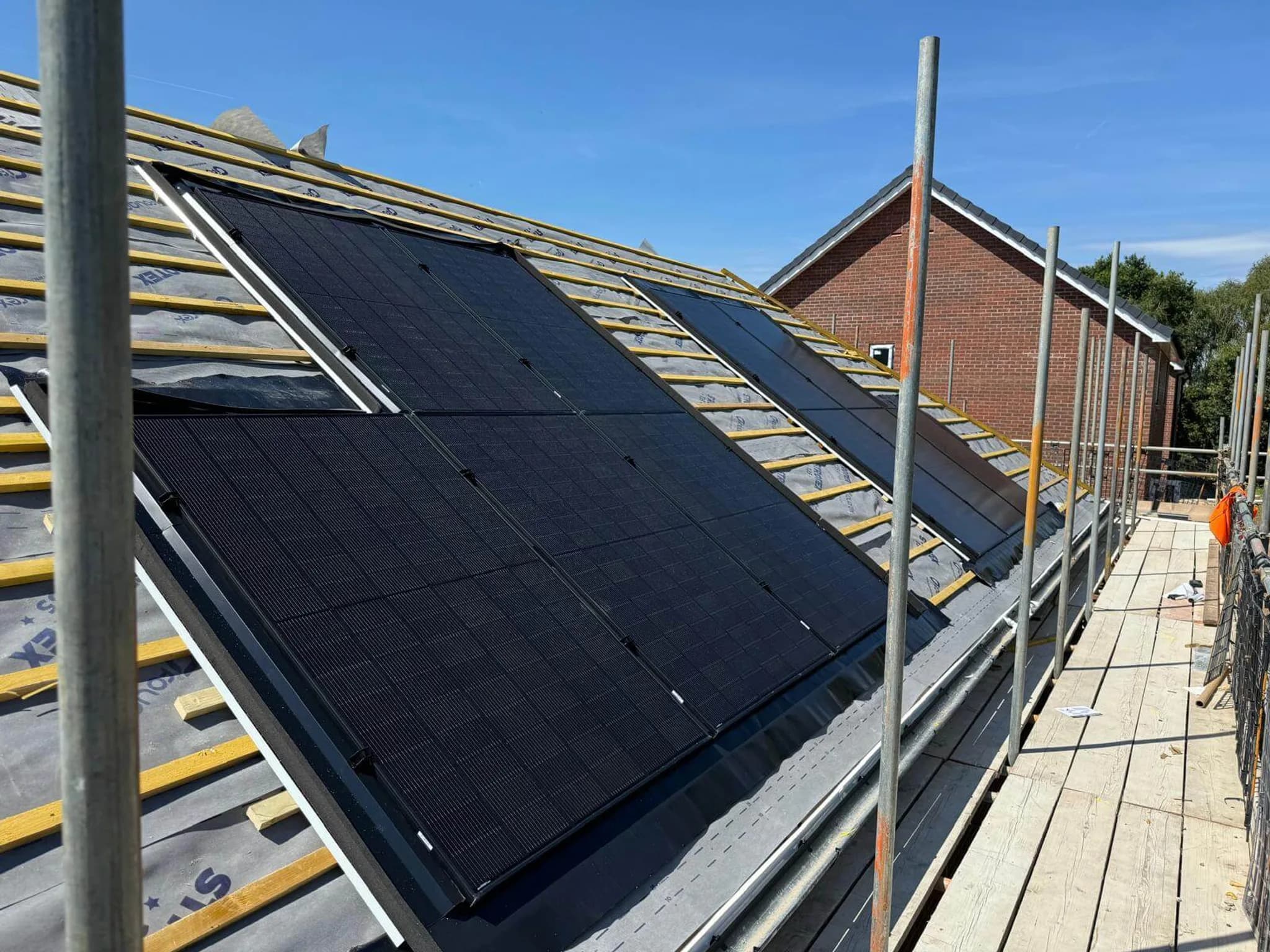
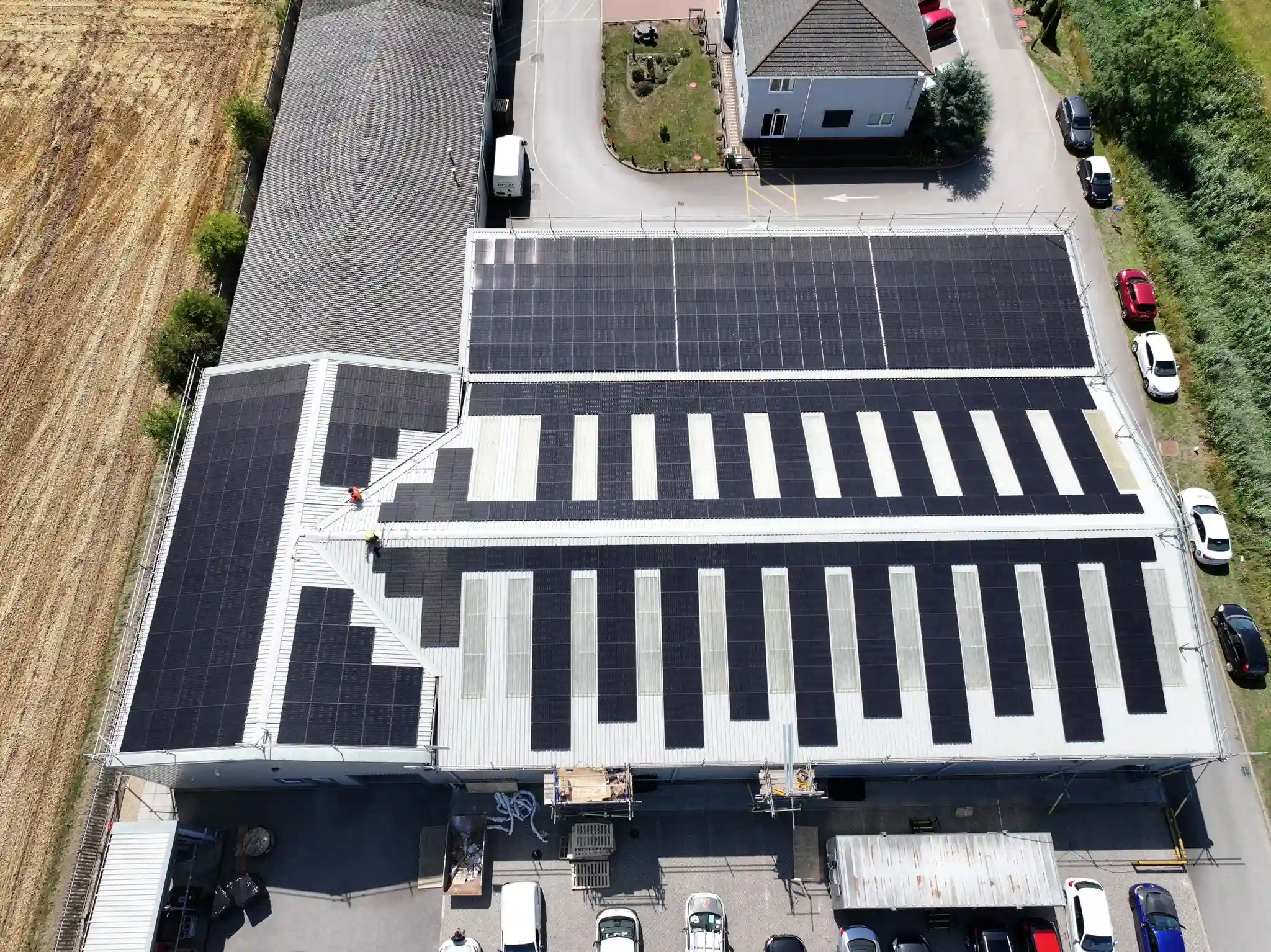
All black rooftop arrays for homes, and full roof systems for warehouses and distribution centres. Surveyed, designed, installed and commissioned by our own engineers.
Rooftop arrays for homes and commercial buildings.
- Free site survey
- MCS certified installation
- Zero percent VAT until March 2027
- Scaffold and roof work included
- Handover and monitoring setup
How we work
- 1Free consultationWe look at what you have and what you need, with no obligation.
- 2Tailored designA written quote with the kit list and the numbers before you commit.
- 3Professional installOur own engineers, certified and notified properly.
- 4AftercareServicing and support once the job is signed off.
What a solar panel survey in Lincolnshire covers
A roof survey decides whether the job is worth doing at all. We measure the usable area, check the pitch and the tile type, and look at rafter spacing and the condition of the timbers, because an array adds real dead load and an old roof does not always want it. Slate, pantile, plain tile and interlocking concrete each take a different fixing kit. Getting that wrong is how a roof starts leaking two winters later.
We also look at where the consumer unit sits, how far the DC cable has to run, and whether there is a sensible spot for an inverter that stays cool and is not on the other side of a bedroom wall. Loft temperature matters, since an inverter cooking in a hot roof space gives up output in exactly the weeks it should be generating most. On a flat roof the conversation turns to a ballasted or anchored frame instead.
Scaffold and roof work are quoted as part of the job instead of appearing later, and the survey itself is free with no obligation to go ahead. Where the covering needs attention first, that goes in the report before any layout is drawn, because taking an array down and putting it back to replace a handful of broken tiles costs considerably more than doing the tiles first.
Orientation, shading and real world yield
Due south at around thirty five degrees is the textbook answer, and very few houses are built to the textbook. An east and west split gives up something against a perfect south facing array, but it spreads generation across the morning and the evening instead of stacking it into a sharp midday peak. With the house empty at lunchtime and no battery, that flatter curve is often worth more than the headline figure.
Shading is the thing that ruins arrays. A chimney, a satellite dish, a neighbour's conifer or a dormer will pull an entire string down if the panels are wired in series with nothing managing it. Where shade is unavoidable we design around it, either with optimisers on the affected modules or by splitting the array across separate inverter inputs. On a genuinely shaded roof the sensible array is smaller than you hoped, and we say so.
Treat the kilowatt peak figure with care. It is measured in a laboratory at a light level a Lincolnshire roof sees for very few hours in a year, so what counts is the modelled annual yield once orientation, pitch, shade and the losses through cable, inverter and heat are all in. A well designed array on an ordinary roof beats a careless one on a perfect roof.
MCS certification and the Smart Export Guarantee
Our domestic solar installs are MCS certified and we are RECC members, which covers the contract terms as well as the workmanship. Without an MCS certificate you cannot register for the Smart Export Guarantee, so your surplus goes to the grid for nothing. We deal with the network operator too, under G98 where the system is small enough and G99 where it is not, issue electrical certification under BS 7671, and hand over the paperwork your supplier asks for.
Be realistic about export. SEG rates from most suppliers are a fraction of what the same unit costs you to import, so the money is in using what you generate. Running the dishwasher, the immersion or the car charger in daylight beats any export tariff going. That is also the honest argument for a battery, and the reason an array gets sized around your consumption instead of filling every last square metre of tile.
We have done this before.
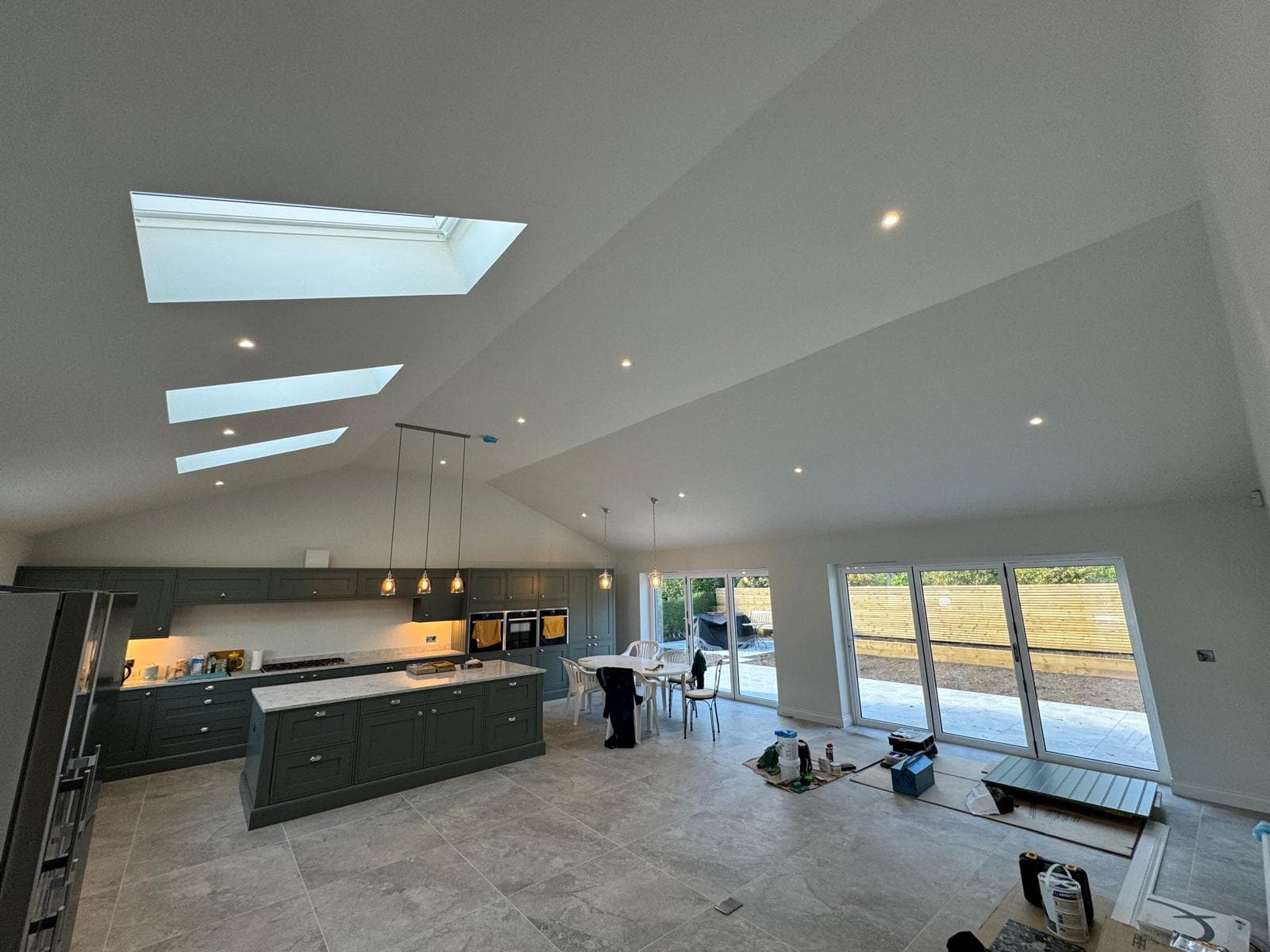 Case studyPrivate Residential New Build, Burton BuildersCoastal Electrical Services & Renewable Energy were appointed by N R Burton Builders to deliver a complete electrical and low-carbon energy solution for a new build…
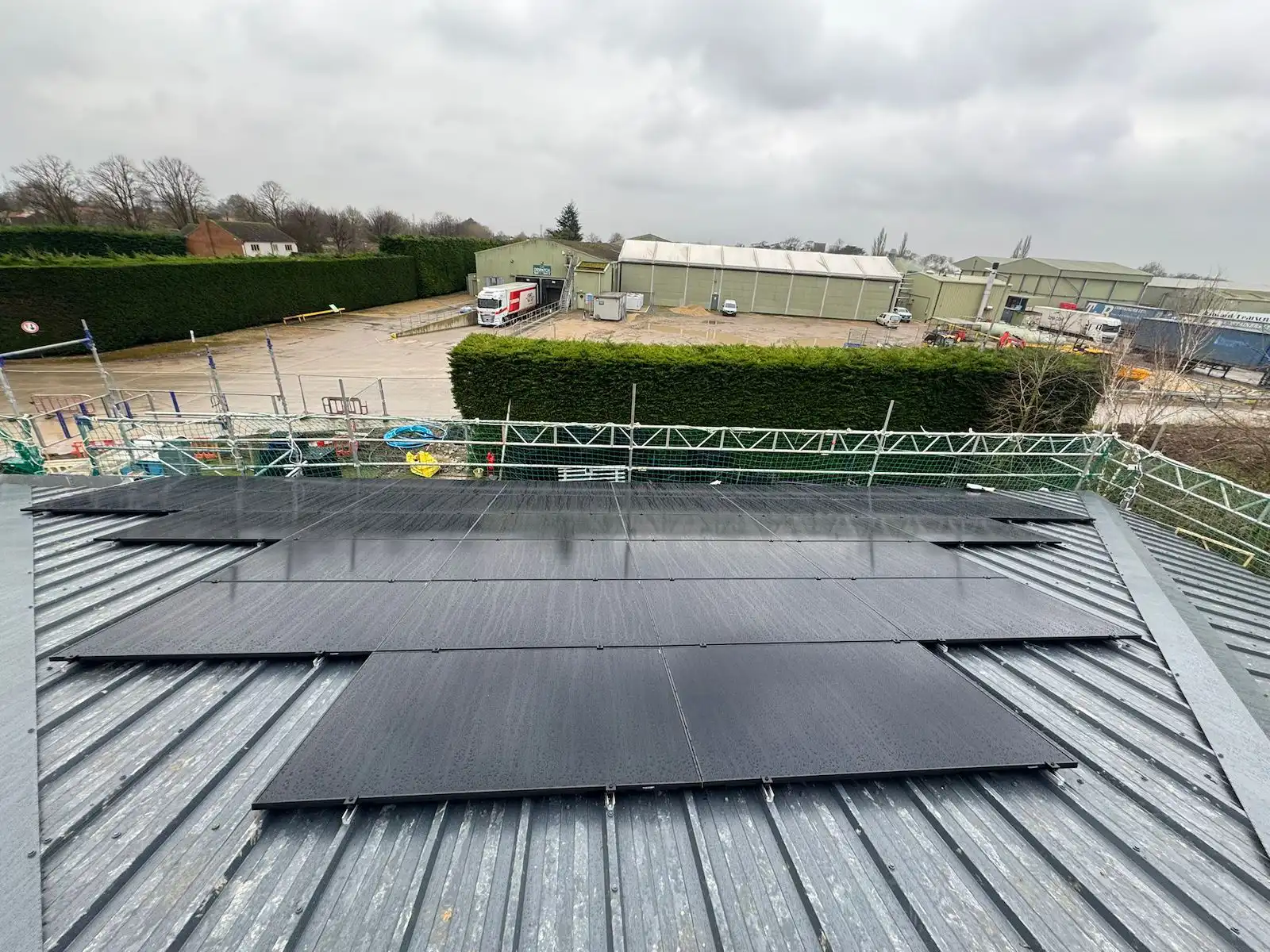 Case study45 kW Commercial Solar InstallationCES Renewables has successfully completed another premium solar installation, a 45 kW Commercial Solar PV System engineered for efficiency, reliability and long-term…
 Case study6.8kW Domestic Flat Roof Solar InstallationCES Renewables has successfully completed another high-quality domestic renewable installation. This 6.8kW Solar PV system was designed for a flat roof application,…
Everything else we do.
Solar panels across Lincolnshire.
Based in Skegness and covering the county. If you are not sure whether we reach you, just ask.