
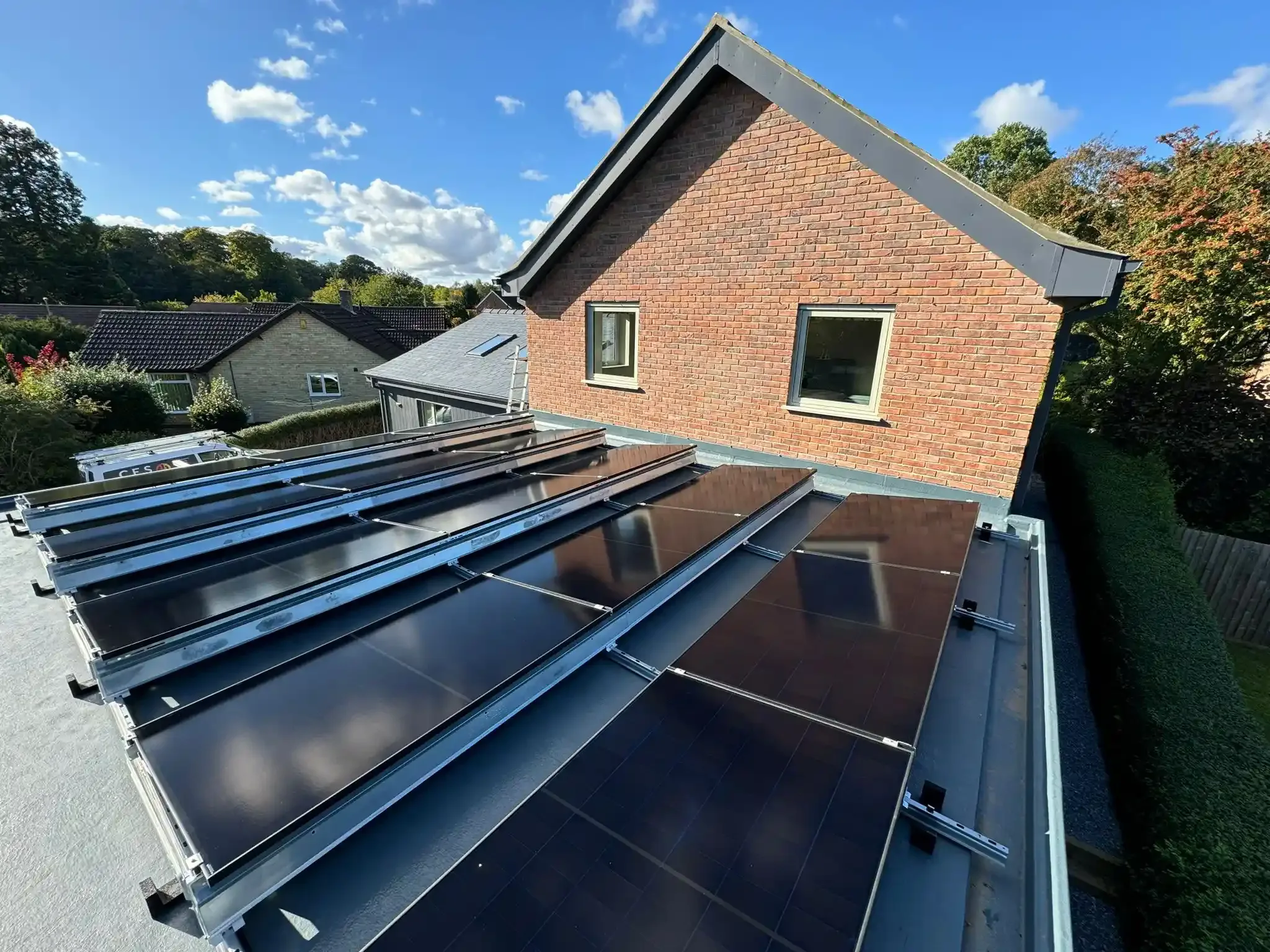
For most homes in 2026, a fully installed solar panel system costs somewhere between about £5,000 and £10,000. A typical four kilowatt system of around ten panels lands at roughly £6,500 to £7,500, and a six kilowatt system at around £9,000 to £10,000. Those figures cover the panels, the inverter, the mounting, the scaffold, the electrical work and the certification, and they carry no VAT, because solar on a home is zero rated until 31 March 2027. A battery is a separate cost on top.
Those ranges are built from the government's own analysis of every certified installation in Great Britain, which is the most reliable guide there is to what people are actually paying. Where your quote falls within them depends on your roof, your electrics and a handful of choices about equipment, and those are what the rest of this guide is about.
What the government figures actually show
Every year the Department for Energy Security and Net Zero publishes the cost of small scale solar installations, drawn from the MCS database. The latest release came out in May 2026 and covers April 2025 to March 2026. It was a record year, with 264,742 installations in the analysis, 27 per cent more than the year before.
The median cost was £1,595 per kilowatt for systems up to 4kW and £1,546 per kilowatt for systems between 4 and 10kW. Multiply those by the size of system you are considering and you have a sound starting point. After allowing for inflation, costs fell again on the previous year, by 7 per cent for the smallest systems and by 9 per cent in the 4 to 10kW band.
Closer to home, the East Midlands had 24,687 installations in the analysis in 2025/26, up more than 80 per cent on the 13,308 two years earlier. The average cost in the region was £1,840 per kilowatt for systems up to 4kW and £1,642 for 4 to 10kW. An average always sits a little above the median, because a minority of awkward, expensive jobs pull it upwards, so a quote for a straightforward roof that comes in below it is not necessarily too good to be true.
What you are actually paying for
People tend to picture the panels as the bulk of the bill. On a typical home they are not. A quote is made up of the panels, an inverter to turn their direct current into the alternating current your house runs on, the rails and fixings that hold everything to the roof, the scaffold that lets the work be done safely, the cabling, isolators and protective devices on both sides of the inverter, and the testing, commissioning and paperwork at the end.
Much of that is a fixed block. The scaffold, the inverter, the connection into your consumer unit and a day or two of an installation team cost broadly the same whether the roof carries eight panels or fourteen. That is why the government figures show cost per kilowatt falling as systems get bigger, with 10 to 50kW installations coming in about a quarter cheaper per kilowatt than the smallest. It is also why the last few panels on a roof are the best value of the lot, which is worth knowing when you are working out how many panels you need.
The paperwork carries a cost too. An MCS certified installation has to be designed to the scheme's standards, registered and handed over with a certificate, and the network operator has to be notified or asked for approval. None of that is optional if you want to be paid for the electricity you export, so a quote that looks cheap because it leaves certification out is not the bargain it appears.
Why two quotes for the same house can be far apart
Most of the spread between quotes comes down to a few decisions, and it helps to know which are genuine choices and which are corners being cut.
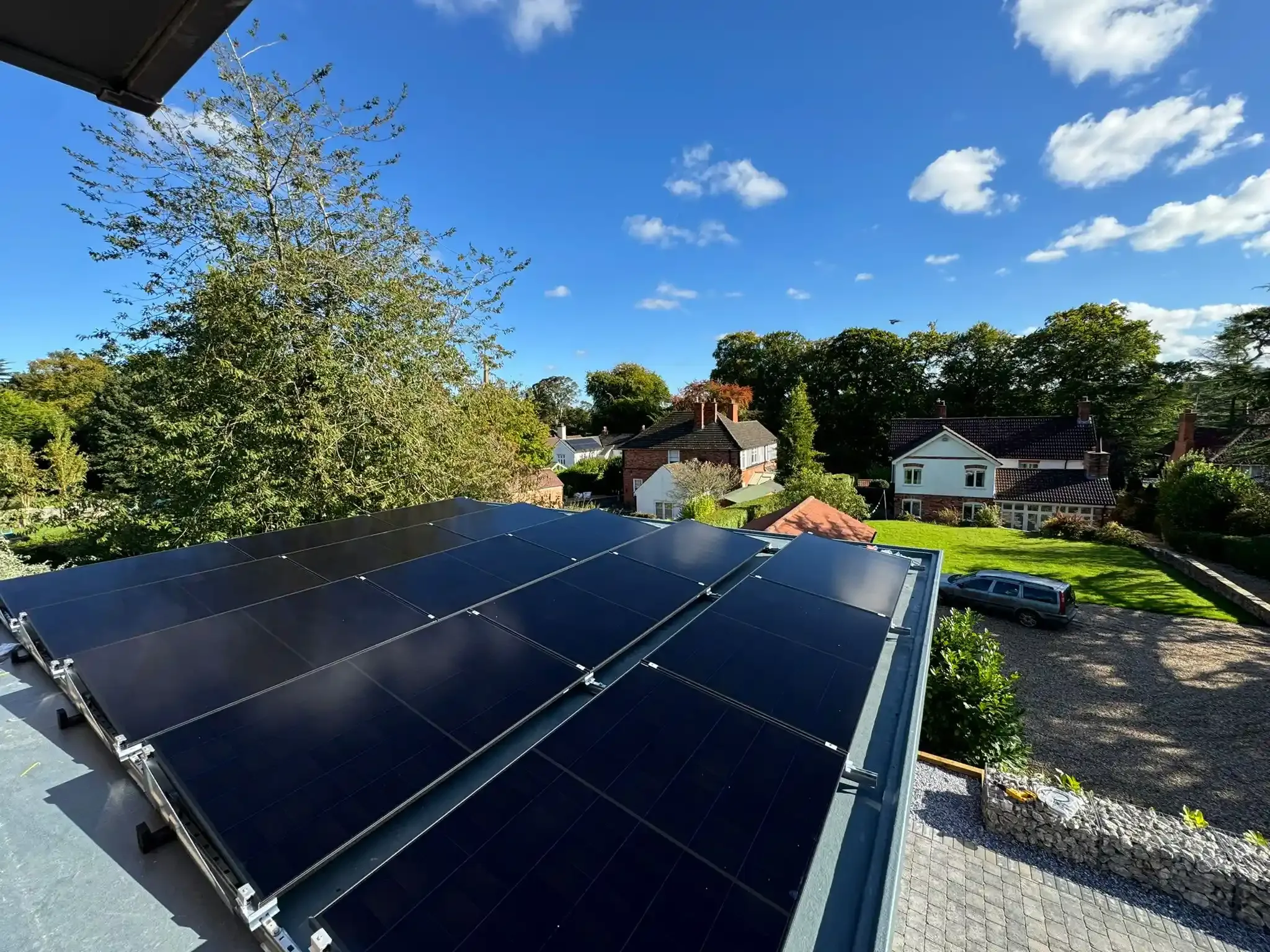
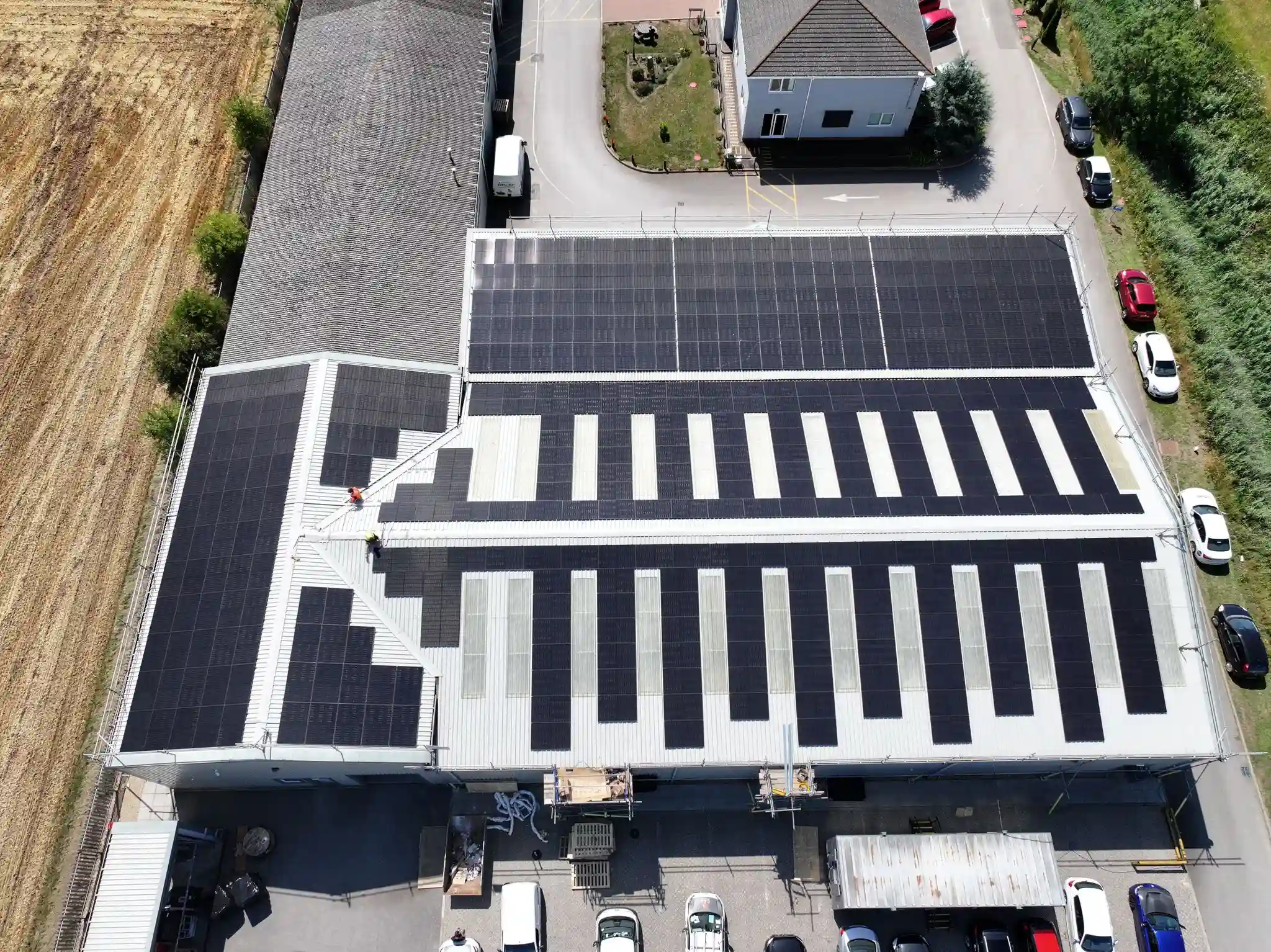
Panel choice is the most visible. All black panels cost a little more than the silver framed kind and are what most homeowners now ask for. On a recent 6.8kW flat roof installation we fitted fifteen 455W all black AIKO panels, and on our larger commercial jobs we have used both AIKO and JA Solar modules. Higher wattage panels mean fewer of them for the same system size, which can matter more on a small roof than the price of each one.
The inverter is the second. A hybrid inverter, which can run a battery as well as the panels, costs more than a basic string inverter. That same 6.8kW job used a 6kW SolaX hybrid inverter feeding a 9kWh SolaX battery. If a battery is likely at some point, paying for a hybrid at the start is usually cheaper than adding a second inverter later.
Shading is the third. Where part of a roof is shaded for some of the day by a chimney, a tree or a neighbouring building, optimisers on the affected panels stop one shaded panel dragging down the rest of its string. They add cost, and on a clear roof they are unnecessary. The 6.8kW system above had partial shading optimisation because that particular roof needed it.
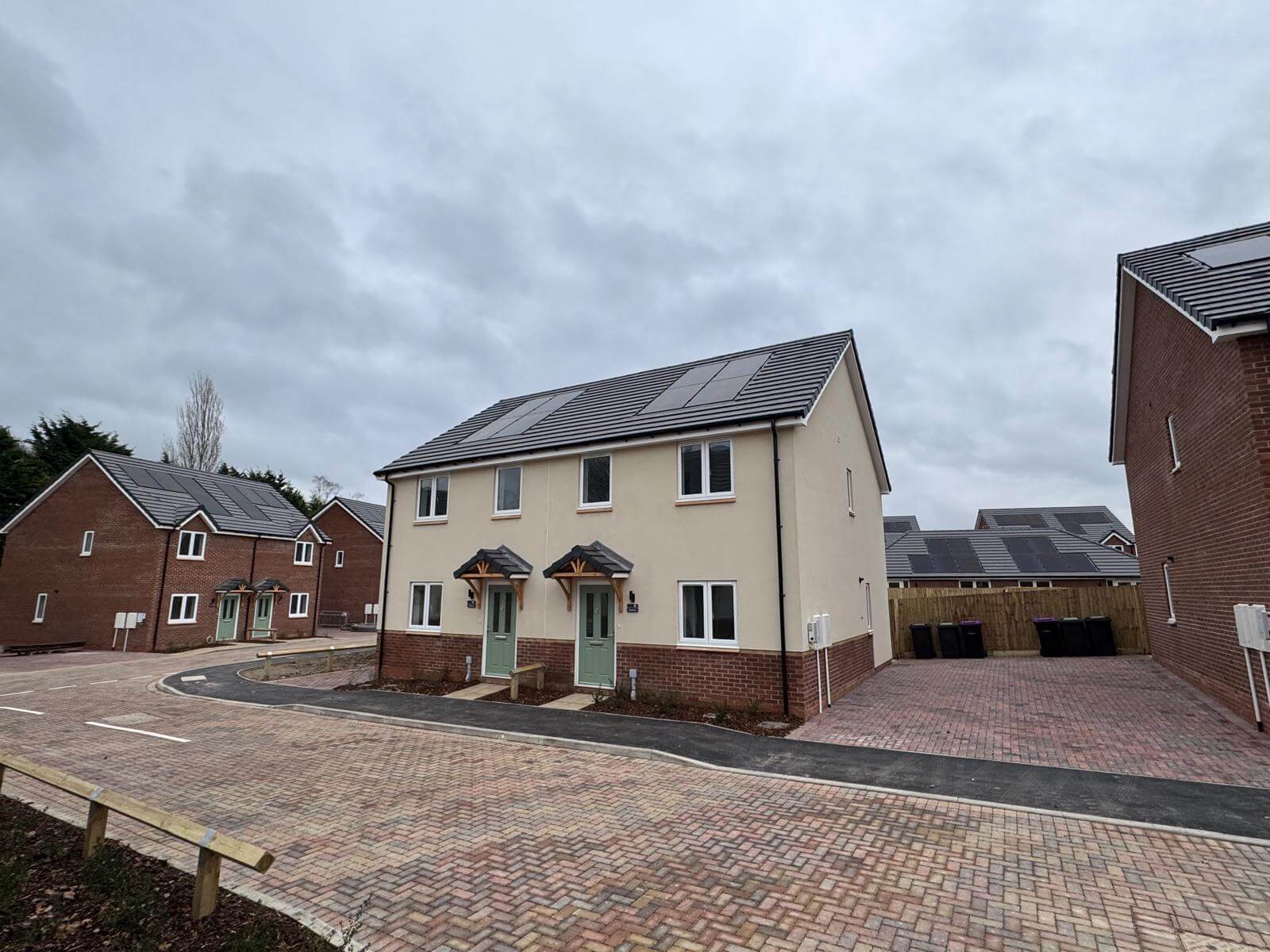
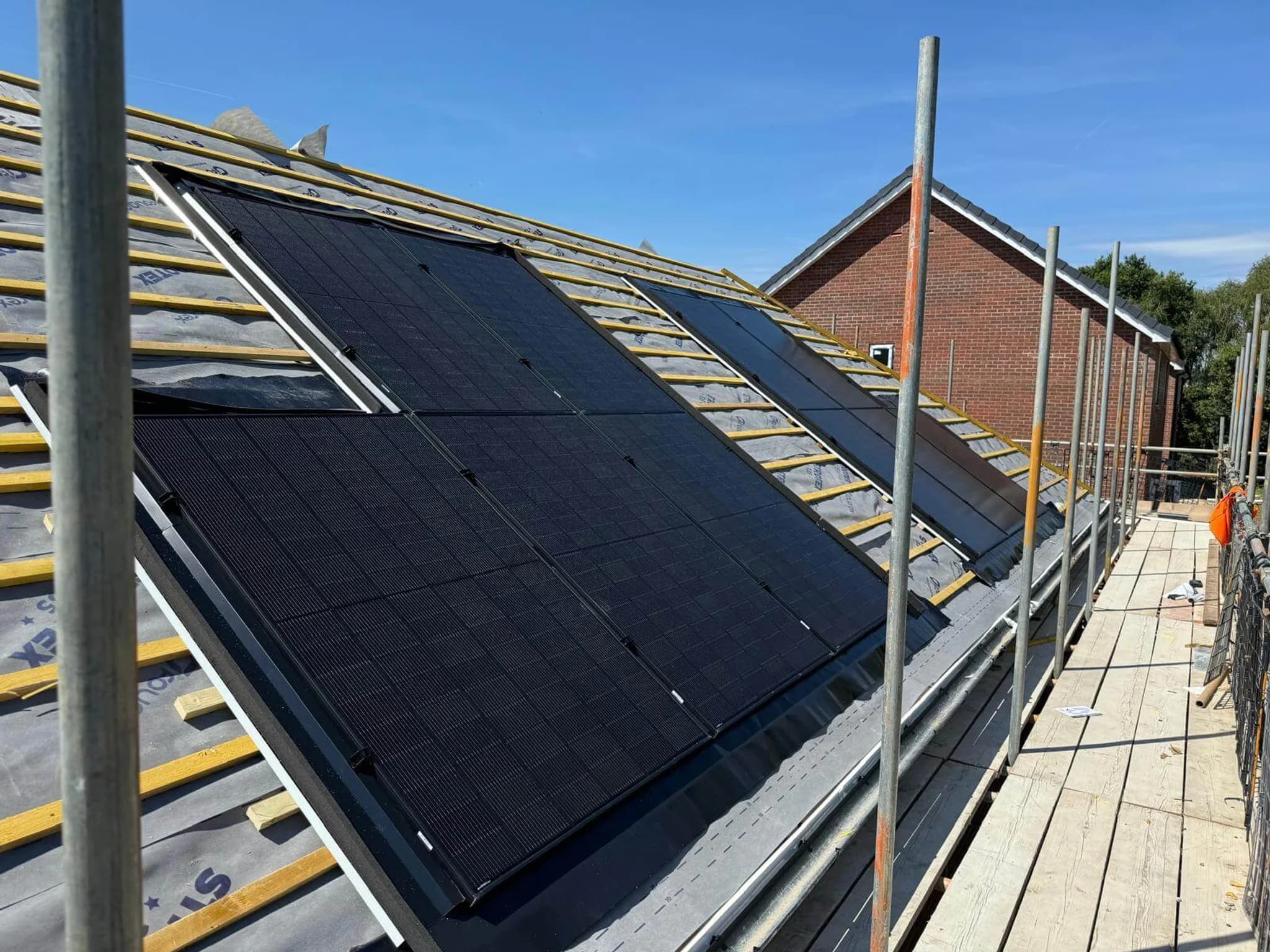
The roof itself is the fourth, and often the biggest. A standard pitched tile roof is the cheapest to work on. A flat roof needs a tilted frame designed for the wind loading, and on that flat roof job we used a VanderValk flat roof mounting system. Slate, older roofs with fragile tiles and complicated hips and valleys all take longer. On a new build, an in roof system that sits in place of the tiles often works out cheaper per kilowatt, which the government figures bear out. Domestic new build installations averaged £1,518 per kilowatt for systems up to 4kW, against £2,109 for the same size fitted to an existing home. On a development of thirteen eco bungalows at Burton Waters, we fitted a 3.6kW in roof system to each home as the roofs went on.
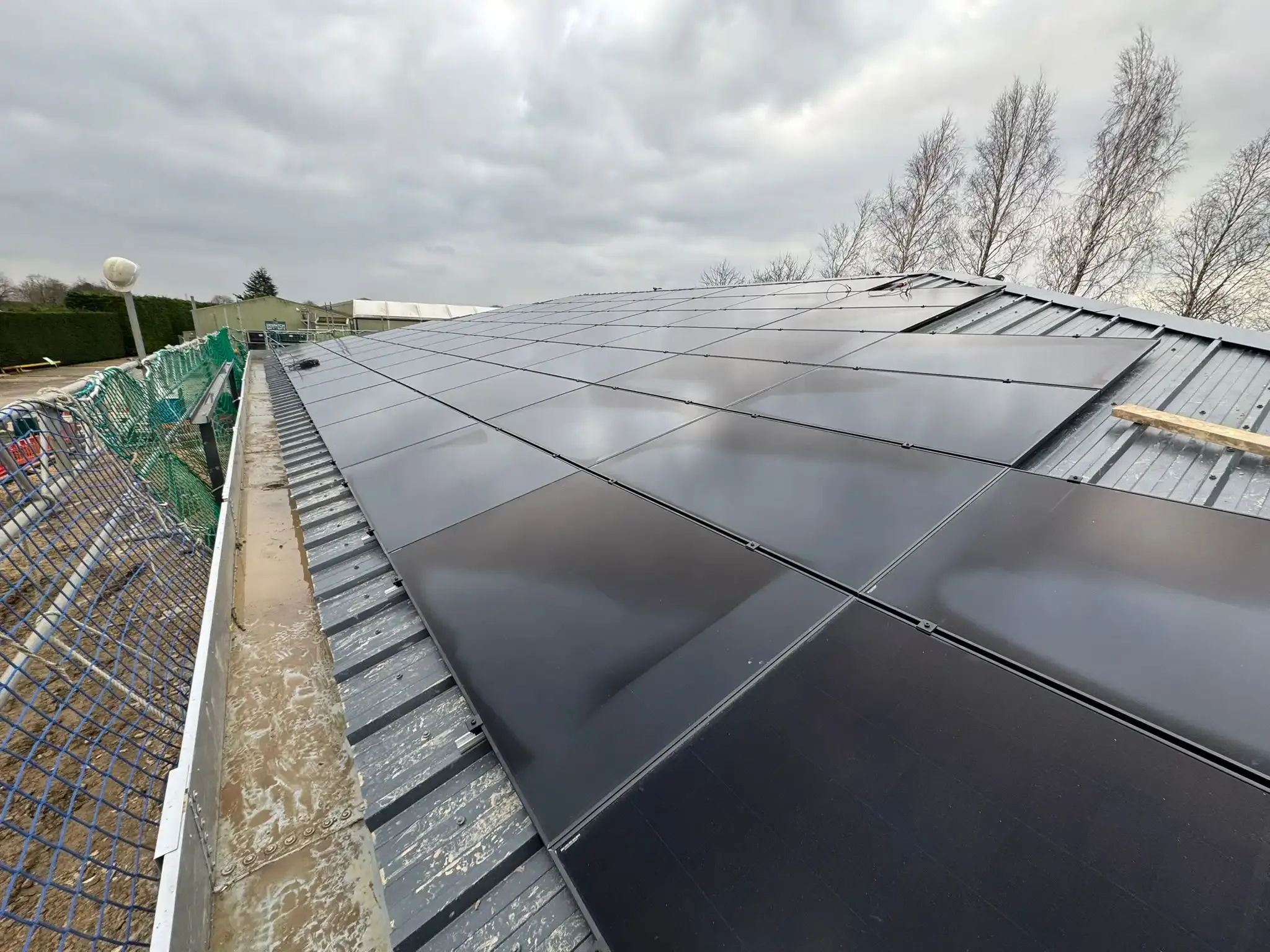
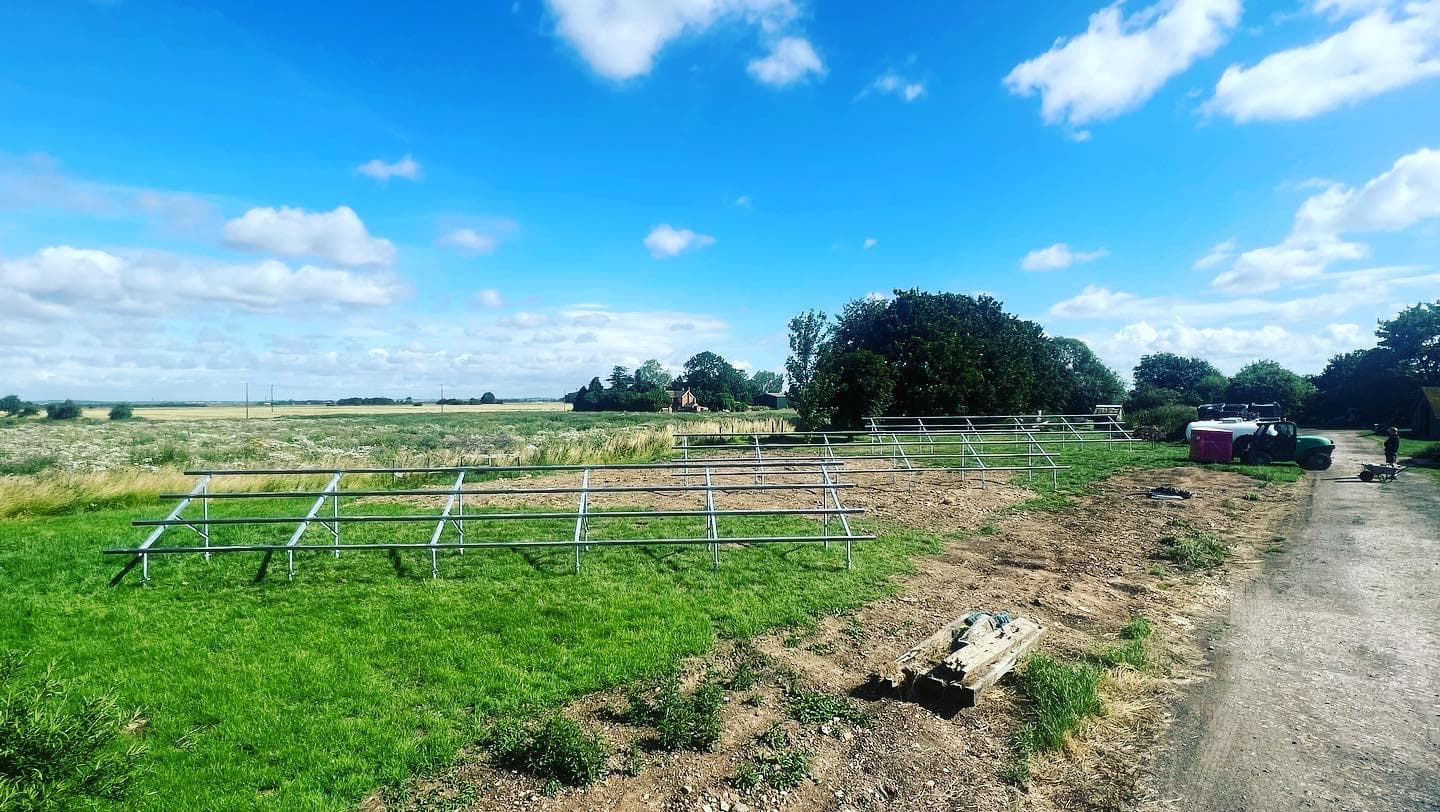
Then there is whatever the survey turns up. An older consumer unit may need replacing before anything new can be connected to it, and some properties need earthing work first. A ground mounted array needs trenching and armoured cable back to the house or the distribution board. For the 30.24kW array at a poultry farm near Friskney we used a ground anchor bolt framework, which avoided large concrete bases and kept the disturbance to the ground to a minimum.
The one cost you can sometimes share
Scaffold is one of the few costs on a solar job that has nothing to do with the size of the system, and it is the easiest one to share. In our experience, fitting solar while a scaffold is already up for roofing work works better than booking the two jobs separately, because the access is paid for once, and on a re-roof the mounting or an in roof system can go on as the new covering goes on rather than disturbing a finished roof afterwards.
If you are planning a new roof, replacement fascias or chimney work in the next year or two, it is worth raising solar at the same time.
Where Lincolnshire homes tend to land
How much solar panels cost on a Lincolnshire home often comes down to the kind of house it is, and a lot of the housing in this part of the county is single storey. Bungalows are quick to scaffold and quick to work on, and on a simple roof they tend to sit at the lower end of the range for their size. The limiting factor is usually roof area rather than cost.
Flat roofed extensions and garages are common too, and they can carry a very effective array on a tilted frame, at the extra cost of the frame and its fixings or ballast. Rural properties and farms often have land or outbuildings that suit a ground mounted system, which costs more per kilowatt in groundwork but leaves the house roof untouched and can be angled exactly where it should be.
Near the coast, the specification adds a little. Marine grade stainless fixings and panels tested for salt mist resistance are worth paying for within reach of the sea, because salt air is hard on metal and on the electrical connections that hold a system together.
What about a battery?
The government figures leave batteries out, and so do the ranges at the top of this guide. A battery is priced on its own, driven mainly by its usable capacity and by whether the inverter can already run one. If battery storage is on your list, ask for it to be quoted as a separate line so you can see what each part costs.
Why the VAT deadline matters
Solar panels fitted to a home are zero rated for VAT until 31 March 2027. From 1 April 2027 the rate is due to rise to 5 per cent. On an £8,000 system that is £400. It is not a reason to rush a decision you are unsure about, but it is a reason not to leave a decision you have already made until February.
A survey, a design, the network paperwork and a slot in the installation diary all take time, and a larger system that needs the network operator's approval before it can be fitted can take several weeks on that alone. If you want the zero rate, it is sensible to have the work booked well before the spring.
How to read a solar quote
A good quote tells you exactly what you are buying. Look for the make, model and wattage of the panels, the make and model of the inverter, the mounting system, whether scaffold is included, and who handles the network notification and the MCS registration. It should also include an estimate of how much electricity the system will generate each year, calculated using the scheme's standard method, which means you can compare it fairly between installers.
Be wary of a price given over the phone or from a satellite image. Older roofs, tired consumer units and awkward cable routes are common enough in this area that the survey is where a price becomes real.
And remember that the price is only half of the question. The other half is what the system saves you each year, which is what decides how long it takes to pay for itself.
Getting a price from us
We are MCS certified, NICEIC approved and based in Skegness, and we price every solar panel installation from a survey of the actual roof. If you would like a figure for your home, get in touch and we will arrange a visit.