

For most homes the answer lands between eight and fourteen panels. A modern panel is around 400 to 450 watts, so ten of them make a system of roughly four kilowatts, and on a decent Lincolnshire roof four kilowatts generates somewhere in the region of 3,500 to 4,000 units of electricity a year. That is comfortably more than a typical household gets through.
The catch, and it is the whole reason this question is more interesting than it looks, is that generating as much as you use over a year is not the same as powering your home. Solar produces in the middle of the day and households mostly use electricity in the morning and evening. Without storage, a system that matches your annual consumption on paper will still leave you buying more than half your electricity from the grid.
The arithmetic, in plain terms
Three numbers get you most of the way. Panel wattage, system size and annual generation.
Panels are rated in watts, and current domestic panels sit around 400 to 450W each. Multiply by the number of panels and you have the system size in kilowatts peak, which is the figure everyone quotes. Ten 420W panels make 4.2kWp.
Annual generation follows from that. As a working figure, a well oriented UK system produces somewhere between 850 and 1,050 units a year for every kilowatt peak installed, and Lincolnshire sits in one of the sunnier and drier parts of the country, so a south facing roof here tends towards the upper half of that range. A 4.2kWp system on a good roof is therefore looking at roughly 3,800 to 4,200 units a year.
Roof space is the constraint that decides whether the sums are academic. A panel is about two square metres including its mounting, so ten panels want around twenty square metres of usable slope, free of chimneys, vents, dormers and shade.
Start with what you use, not with what fits
The figure to begin from is your annual electricity consumption in units, which is on your bill and in your online account. Guessing it is the commonest reason a system ends up the wrong size.
For context, the benchmark Ofgem uses for a typical household was reduced to 2,500 units of electricity a year from July 2026, down from 2,700, reflecting a genuine fall in consumption over recent years. Plenty of homes sit well above it. The East of England has historically been the highest consuming region in Great Britain, and any household with electric heating, an electric shower in daily use or a car on the drive will be a long way past the benchmark.
So the honest version of the answer is that a modest household with 2,500 units of demand is looking at eight to ten panels, and a larger family home running at 4,500 to 5,000 units wants twelve to sixteen if the roof allows it.
Why the last few panels are the cheapest ones
Once the roof has been surveyed there is usually a decision to make about whether to fill it or stop at the number that matches the bill.
In our experience, filling the usable roof area works better than sizing precisely to last year's consumption, because the scaffolding, the inverter, the cabling and the day's labour cost the same whether the roof carries ten panels or fourteen, so the last few are the cheapest on the whole installation, and household demand has a habit of rising when an electric car or a heat pump arrives rather than falling.
There are two real limits on that. The inverter has to be sized to suit, and the network operator sets a ceiling on what can be exported without a more involved application, which is a conversation your installer should be having rather than you. Within those limits, adding panels while the scaffold is up is far better value than adding them in three years.
Why matching your annual usage does not power your home
This is where the arithmetic stops being arithmetic. A system generates at midday. A household cooks at six.
Without a battery, most homes use somewhere between 30 and 50% of what their panels produce, and export the rest. The exported units earn something under the Smart Export Guarantee, but a good deal less than you pay to buy electricity back in the evening. So a house generating 4,000 units a year and consuming 4,000 units a year is still buying perhaps half of what it uses.
Adding storage moves self consumption to something like 70 to 90%, which is why the sizing question and the battery question are really one question. Getting the battery capacity right depends on the same consumption pattern that decides how many panels are worth fitting.
If a household is out all day, the case for storage is at its strongest and the panel count matters less than the battery. If somebody is home through the day, direct use is already high and more panels do more good.
What orientation and shading do to the number
Due south is best. Anything within about 45 degrees of south loses only a few per cent, which is why a south east or south west roof is rarely a problem. A true east or west facing roof produces roughly fifteen to twenty per cent less over a year, so the same generation needs proportionally more panels.
An east and west split across both slopes is not the compromise it appears. Output is flatter through the day, with a morning peak and an evening one, and that shape often matches a household's actual demand better than a single midday spike.
Shading is the one that does real damage, because on a conventionally wired string a shaded panel drags down the ones connected with it. A chimney, a neighbouring tree or a dormer changes the design rather than simply reducing it slightly, and it is the main reason a proper survey beats an estimate from an aerial photograph.
What we actually fit across Lincolnshire
Real numbers are more useful than averages here.
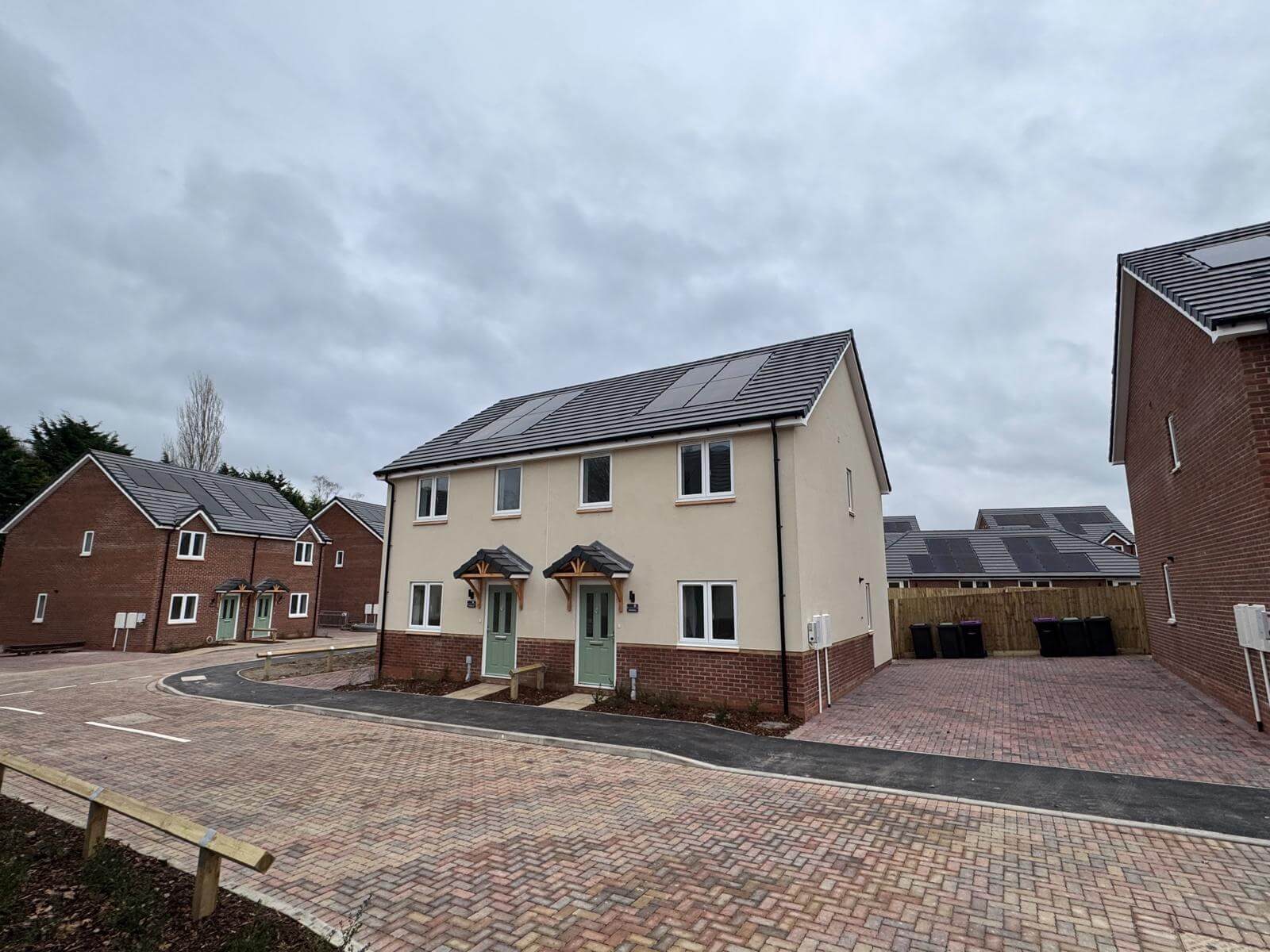
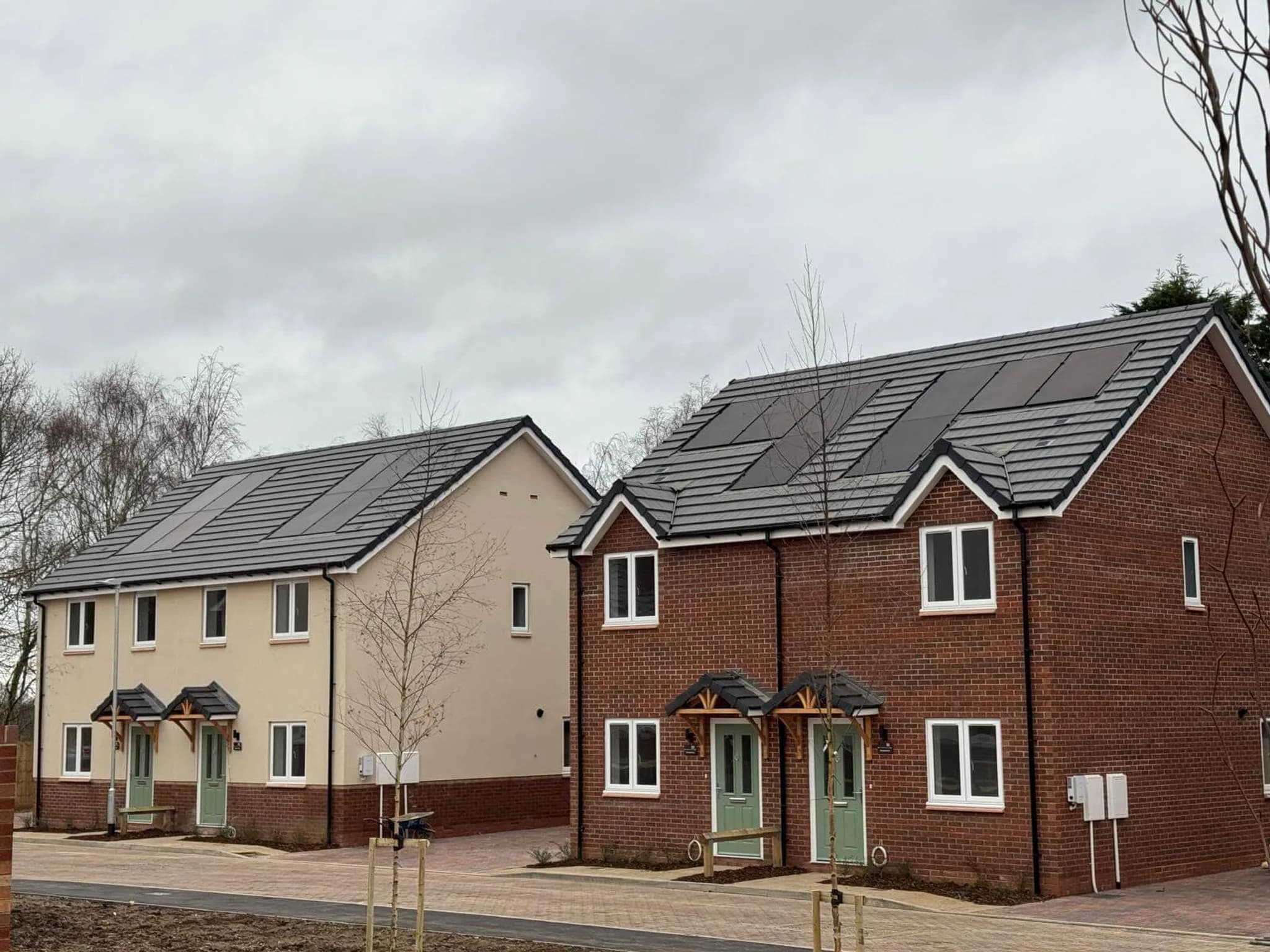
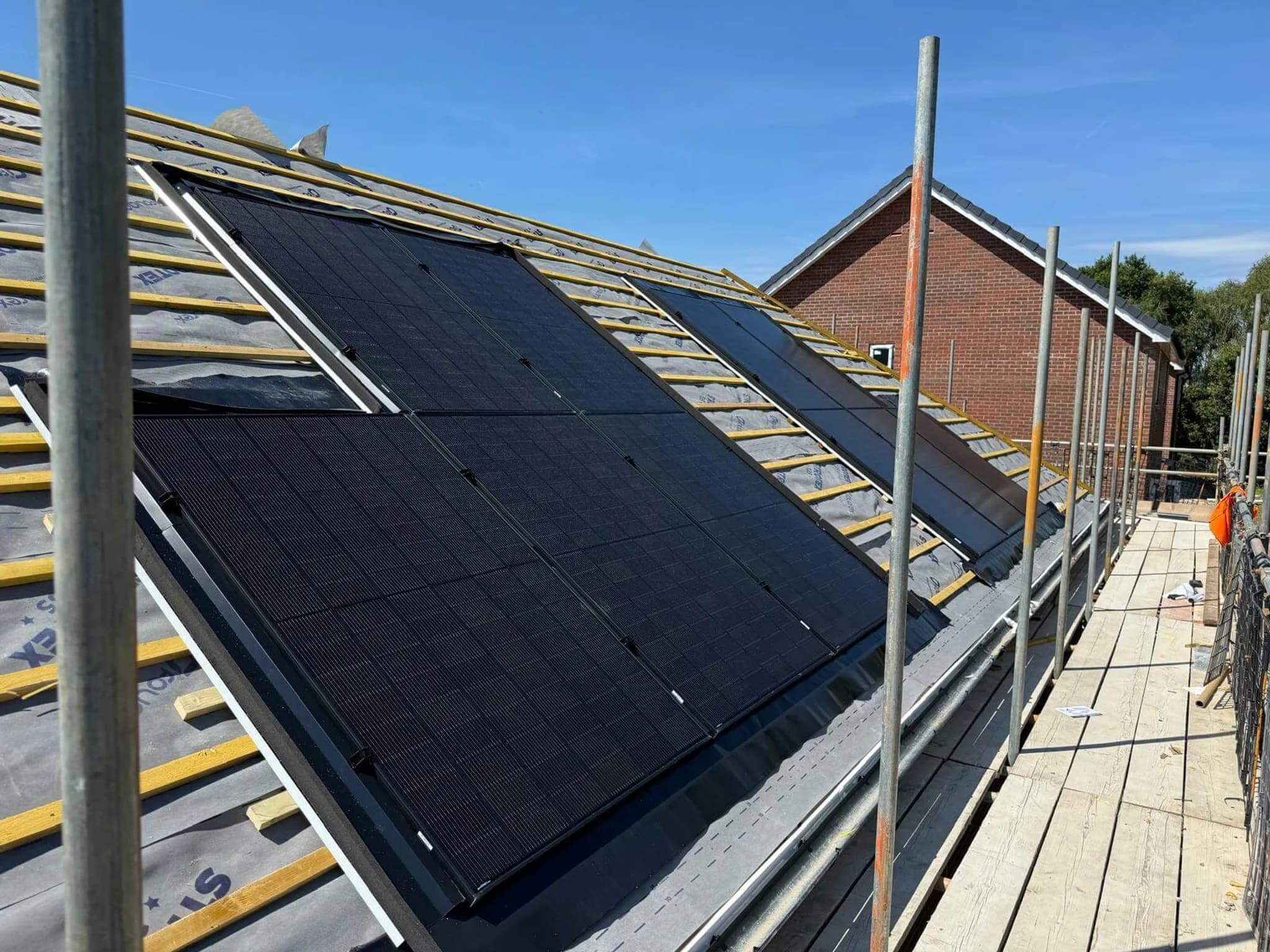
On new housing the figure is smaller than most people expect. Across the thirteen plot eco bungalow development at Burton Waters we installed 3.6kW of in roof solar to each property, which is roughly nine panels per home, designed alongside air source heat pumps to meet the energy standards of the scheme rather than to zero a bill.
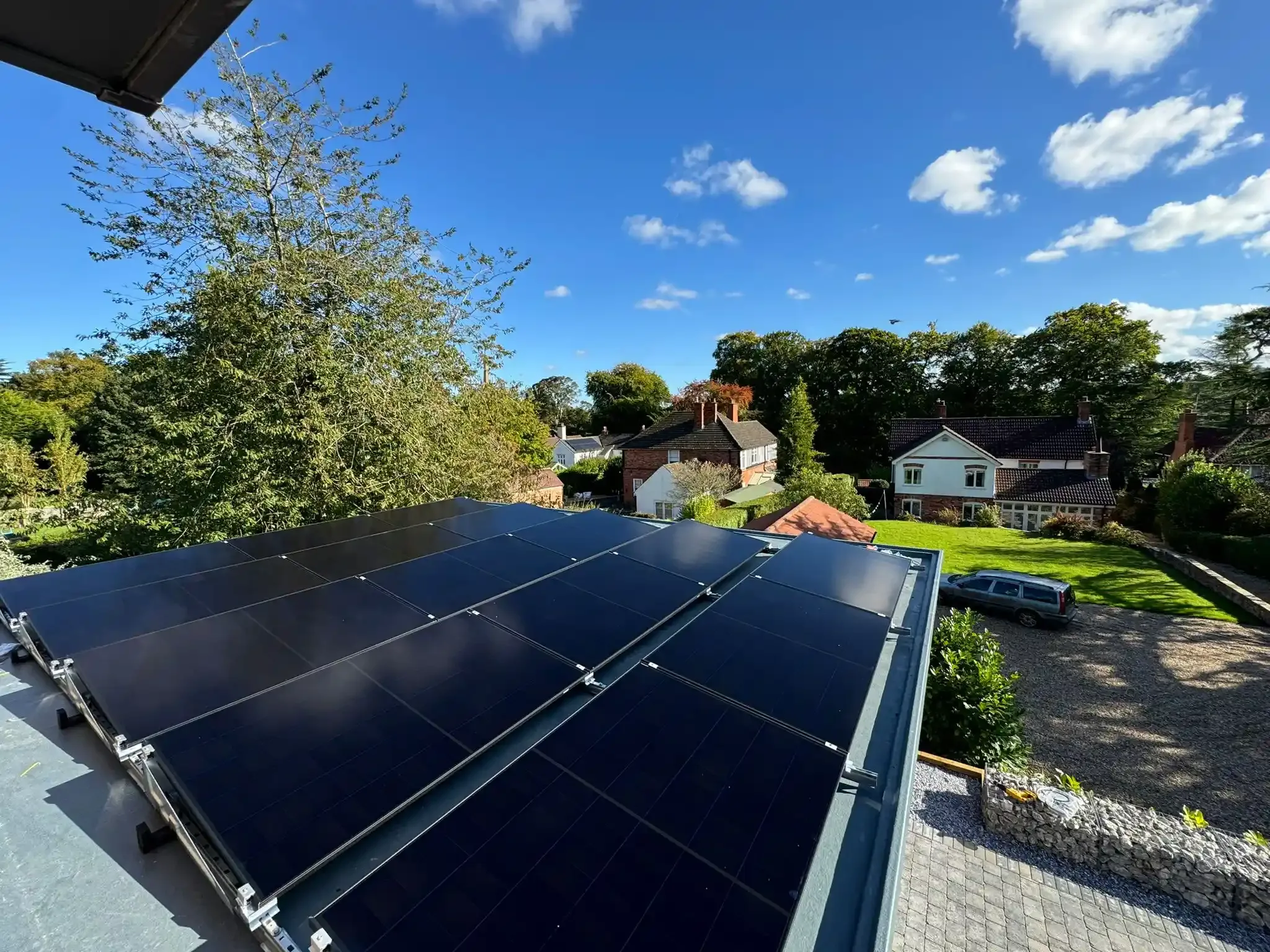
On an existing home with room to work with, systems run larger. The 6.8kW installation we completed on a flat roofed Lincolnshire property is around sixteen panels, paired with a hybrid inverter and battery so that the generation is actually used rather than exported.
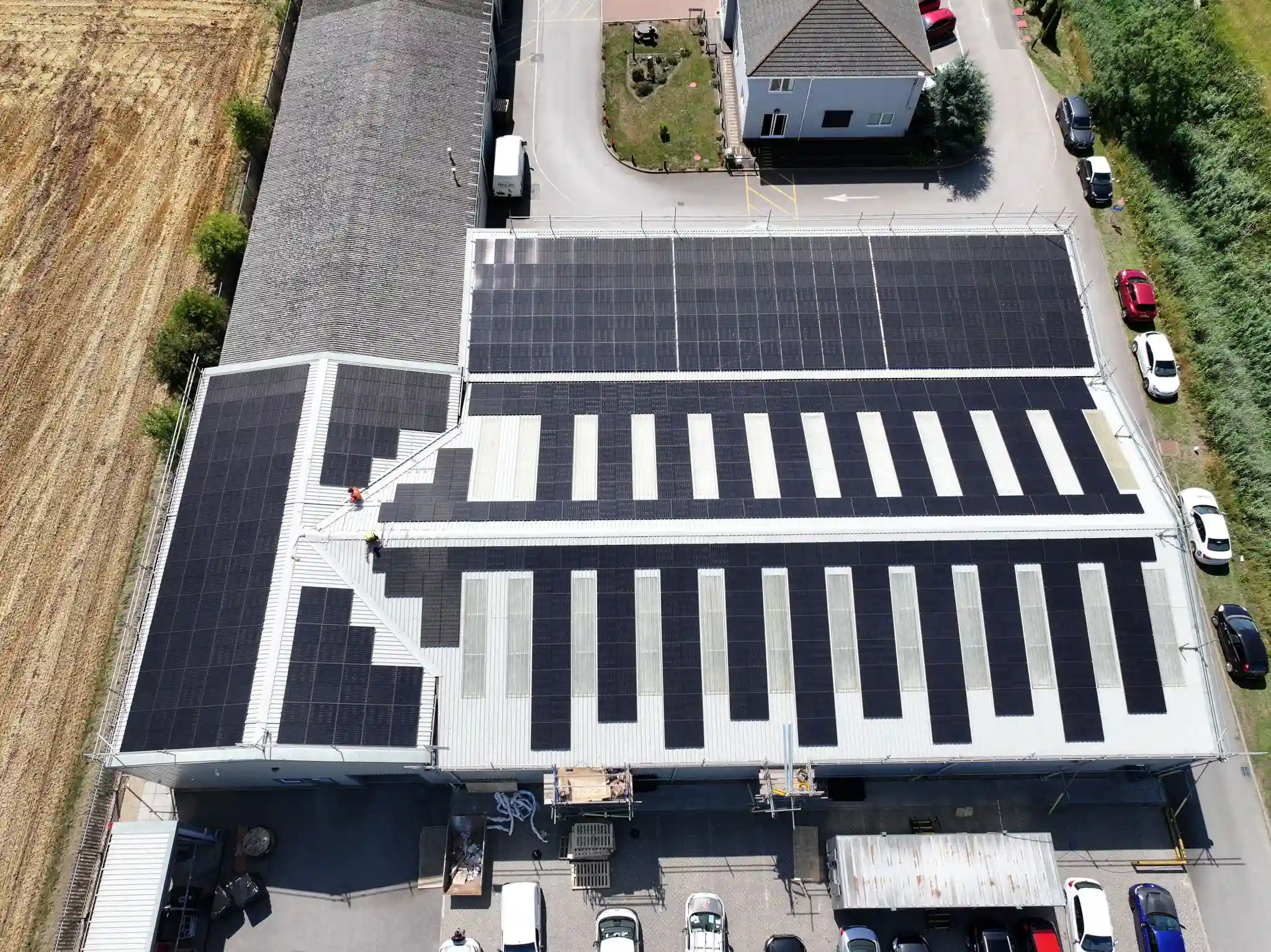
At the other end of the scale the arithmetic is identical and only the numbers change. The poultry farm near Friskney took 72 panels of 420W for 30.24kW, sized around heavy daytime demand from ventilation and environmental controls. That site is the clearest illustration of the principle, since a building that uses most of its power during daylight can justify far more generation than a house of the same roof area ever could.
So how many do you need?
As a starting point, take your annual units, divide by about 950, and that gives you the system size in kilowatts peak that would match your consumption over a year. Divide that by 0.42 and you have a rough panel count. A 3,500 unit household comes out at around 3.7kWp, or nine panels.
Then adjust for reality. Add panels if the roof has room, because the marginal cost is low. Add more if an electric vehicle is likely. Take some off if the roof is east or west facing and space is tight, or if shading limits the usable area. And treat the result as the opening position in a survey rather than a specification, since what the system returns over its life depends on how much of it you use rather than how much of it you generate.
Talking to us about sizing
Bring your annual consumption in units and a rough idea of when you use electricity, and we can be useful immediately. Bring a recent bill and a photograph of the roof and we can be more useful still.
Get in touch and we will work it through with you.