

Yes, you can get paid for the solar energy you don't use. Under the Smart Export Guarantee, every large electricity supplier has to offer a tariff that pays you for each unit of electricity your solar panels send to the grid. To qualify, your system needs to be MCS certified and you need a smart meter that records exports every half hour. What you are paid depends entirely on the tariff you choose, and in autumn 2026 the spread is wide, from around 3 or 4 pence a unit on the most basic tariffs to 12 pence or more on tariffs tied to buying your electricity from the same supplier.
For a typical home without a battery, that works out at somewhere between about £75 and £300 a year, depending on how much is exported and the rate being paid. It is worth having and worth choosing carefully, but for most households the bigger saving is still the electricity they use themselves.
How the Smart Export Guarantee works
The scheme is run by Ofgem and began in January 2020, after the Feed-in Tariff closed to new applicants. Any supplier with 150,000 or more domestic customers must offer at least one export tariff, and smaller suppliers can choose to. Ofgem sets two rules that matter to you. The rate must always be above zero, and payment is based on export meter readings, so you are paid for what you actually send to the grid rather than an estimate.
It covers solar, wind, hydro, anaerobic digestion and micro combined heat and power, on installations up to 5MW. For solar up to 50kW, which takes in every home system and plenty of business ones, the supplier will ask you to show that the installation and installer were properly certified, and the MCS certificate is how you do that.
You do not have to sell your exports to the company that supplies your electricity. You can shop around, although the best rates usually come with that condition attached.
What the tariffs actually pay
Rates move, so treat these as a snapshot from early October 2026. At the basic end, tariffs open to anyone, whoever supplies their electricity, pay between about 3 and 6 pence a unit. EDF pays 3 pence, Octopus's own basic SEG tariff 4.1 pence and E.ON Next 6 pence.
The better fixed rates come with strings. Octopus pays 12 pence a unit on its Outgoing tariff to customers who also buy their electricity from Octopus, a rate it cut from 15 pence in March 2026, and other suppliers pay between 13 and 15 pence on the same basis. The highest flat rates, 17.5 pence and more, usually go only to households whose panels or battery that supplier installed itself.
Then there are tariffs built around batteries. Octopus's Flux tariffs pay a much higher rate for electricity exported in the early evening peak between 4pm and 7pm, and charge less for electricity bought in the small hours, which rewards a battery that charges cheaply overnight and exports when the grid needs it most. They need a battery, and the version that runs the battery for you only works with compatible models, so they suit some households far better than others.
We are an Octopus installation partner, but the honest answer on which of these to pick is that it depends on how your household uses electricity, not on the headline rate.
What that is worth in a year
As a working figure, a well oriented system in Lincolnshire generates somewhere around 950 units a year for every kilowatt installed. Without a battery, a household that is out for much of the day might export around half of that, so a 4kW system could send something like 1,800 to 2,000 units a year to the grid.
At 4.1 pence, that is around £75 to £80 a year. At 12 pence it is around £215 to £240, and at 15 pence around £270 to £300. Over the life of a system the gap between the basic and the better tariffs is real money, and export income shortens how long a system takes to pay for itself, which is why it is worth choosing a tariff deliberately rather than accepting whatever your supplier offers by default.
Now set that against the price of the electricity you buy. Under the Ofgem price cap from 1 October 2026, a unit costs around 26 pence on a standard tariff paid by direct debit. The best flat export rates pay a little over half of that, and the basic ones about a sixth. Every unit you use in your own home instead of exporting is worth anywhere from one and a half to six times as much as a unit sold to the grid.
Using more of it yourself usually earns more
That gap is why most of the saving from solar comes from self consumption rather than export. Without a battery, a typical household uses around 30 to 50 per cent of what its panels generate. With a battery, that rises to somewhere around 70 to 90 per cent. Moving the washing machine, the dishwasher and any other flexible load into the middle of the day helps too, and costs nothing.
That does not make export pointless. A battery fills up by early afternoon on a good summer day, and anything generated after that has to go somewhere. Export turns it into income rather than a unit given away.
Export limits, and why a bigger array can still make sense
The network operator has a say in how much a home can export. A single phase system that can export no more than 16 amps, about 3.68kW, is simply notified after it is installed. Above that, the operator has to approve it first, and where the local network is constrained, approval can come with an export limit that the inverter enforces using a meter measuring what flows to the grid.
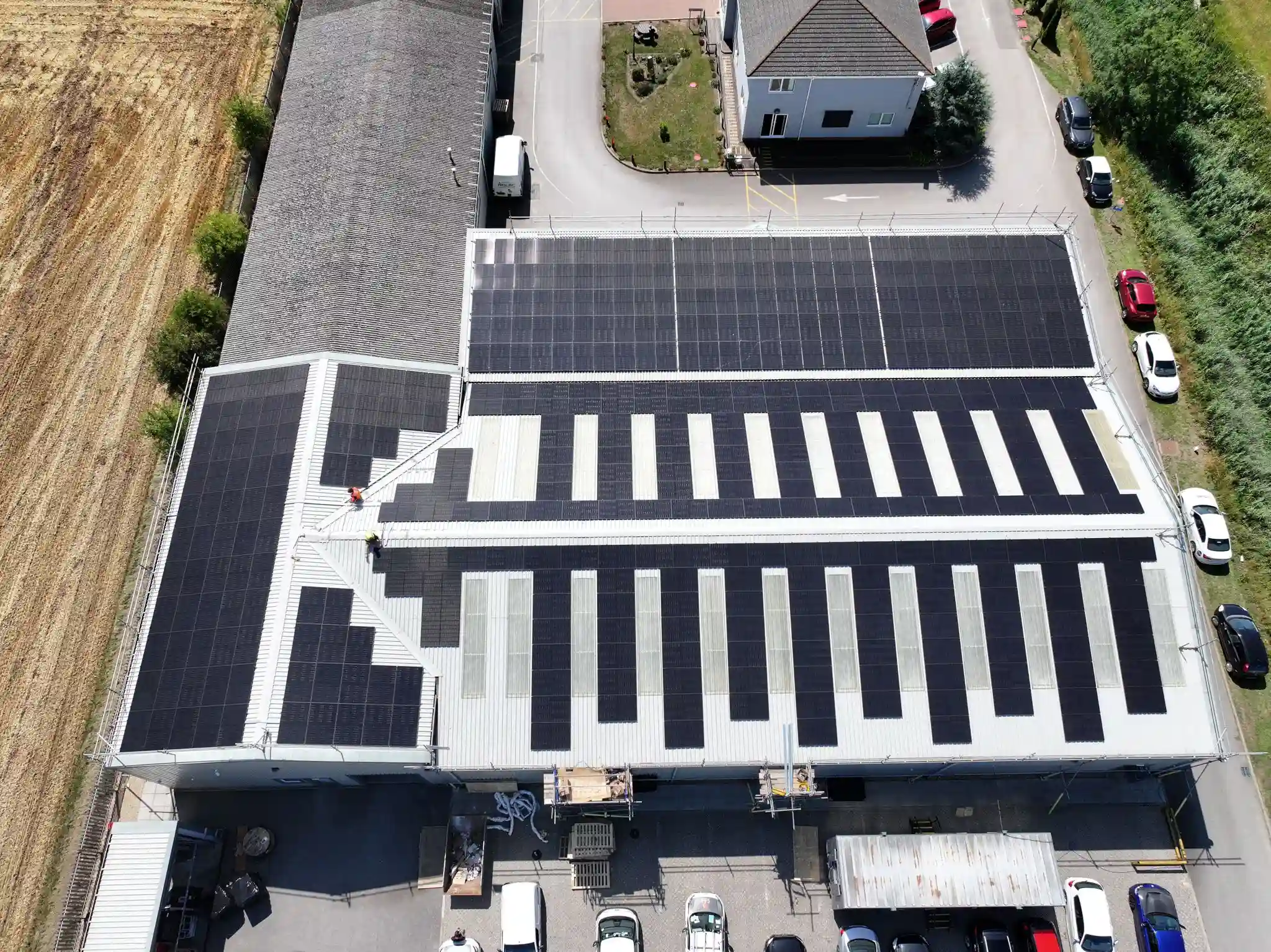
An export limit is normally workable. A capped system still saves exactly the same on the units it stops you buying, which is usually where the value was anyway. The meters that enforce a limit measure the flow at the grid connection in real time, and we fit them on our commercial systems, including the 315kW distribution centre installation and its twelve SolaX inverters.
The paperwork that decides whether you are paid
Three things decide when export payments can start. The first is the MCS certificate, which your installer registers after the system is commissioned and which the supplier will ask to see. The second is the smart meter, which has to be able to record exports half hourly, and some meters need replacing or reconfiguring before they can. The third is the network notification or approval, which has to be in place.
We handle the MCS registration and the network paperwork on every installation, whether that is a simple notification on a home or a full application to National Grid on a commercial site, and we hand over the certificate you need to apply. The application to the supplier is then yours to make, and it is usually a short form online.
Is export income taxed?
For most households, no. Section 782A of the Income Tax (Trading and Other Income) Act 2005 exempts income from selling electricity generated by a microgeneration system, provided the system is installed at or near the home you live in and you do not intend it to generate significantly more electricity than the home uses.
A system on a business, a farm, a holiday let or a rental property is a different matter, and that is a question for your accountant rather than for us.
What if you already have panels?
If your system is still being paid under the Feed-in Tariff, you cannot claim the Smart Export Guarantee for the same exports, and your Feed-in Tariff payments carry on as before. If you are thinking about adding a battery to an older Feed-in Tariff system, there are some points about metering and your existing payments to check first.
Getting set up
If you are having a new system fitted, it pays to choose an export tariff alongside your import tariff at the outset rather than months later, so that your exports start earning from the first sunny day. If you would like help working out which suits your household, or a quote for solar panels, get in touch with CES.