
Yes. In nearly every case you can add battery storage to existing solar panels, and it is one of the more straightforward jobs we take on. The panels stay exactly where they are, your existing inverter often stays where it is too, and if you are still on the old Feed-in Tariff your payments carry on untouched. Most domestic retrofits are a day on site.
The question worth asking is not whether it can be done, but which of two methods suits the system you already own. That single choice drives the cost, the amount of disruption and how much of your own generation you end up keeping. Getting it right depends on the age and health of your current inverter, which is the first thing we look at.
The two ways of adding a battery to panels you already have
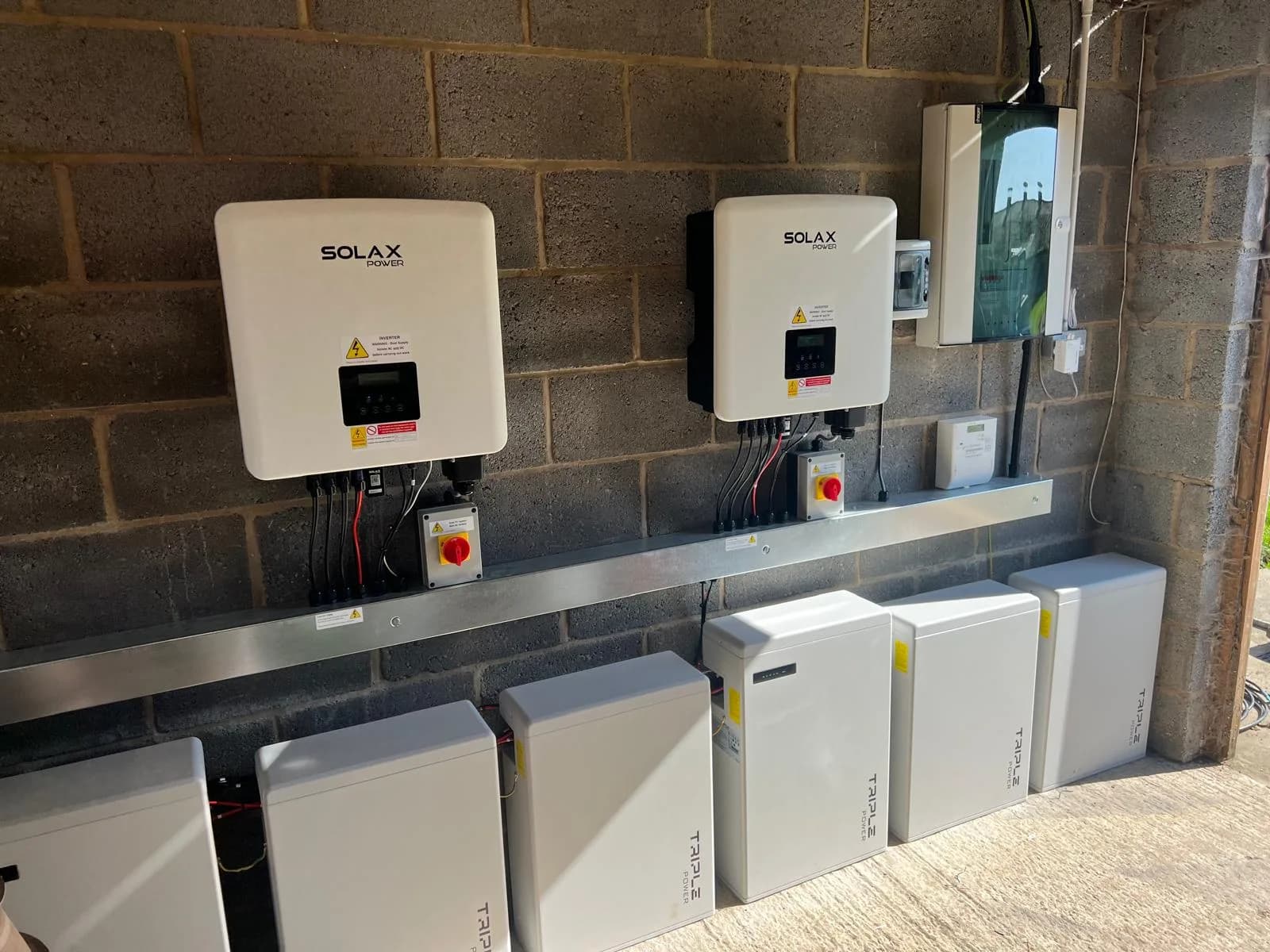
An AC coupled battery arrives with its own inverter built in and connects on the mains side of everything you already have. Your solar panels and their inverter are left completely alone. The battery watches what the house is doing, charges from whatever the panels are producing above your immediate demand, and discharges in the evening.
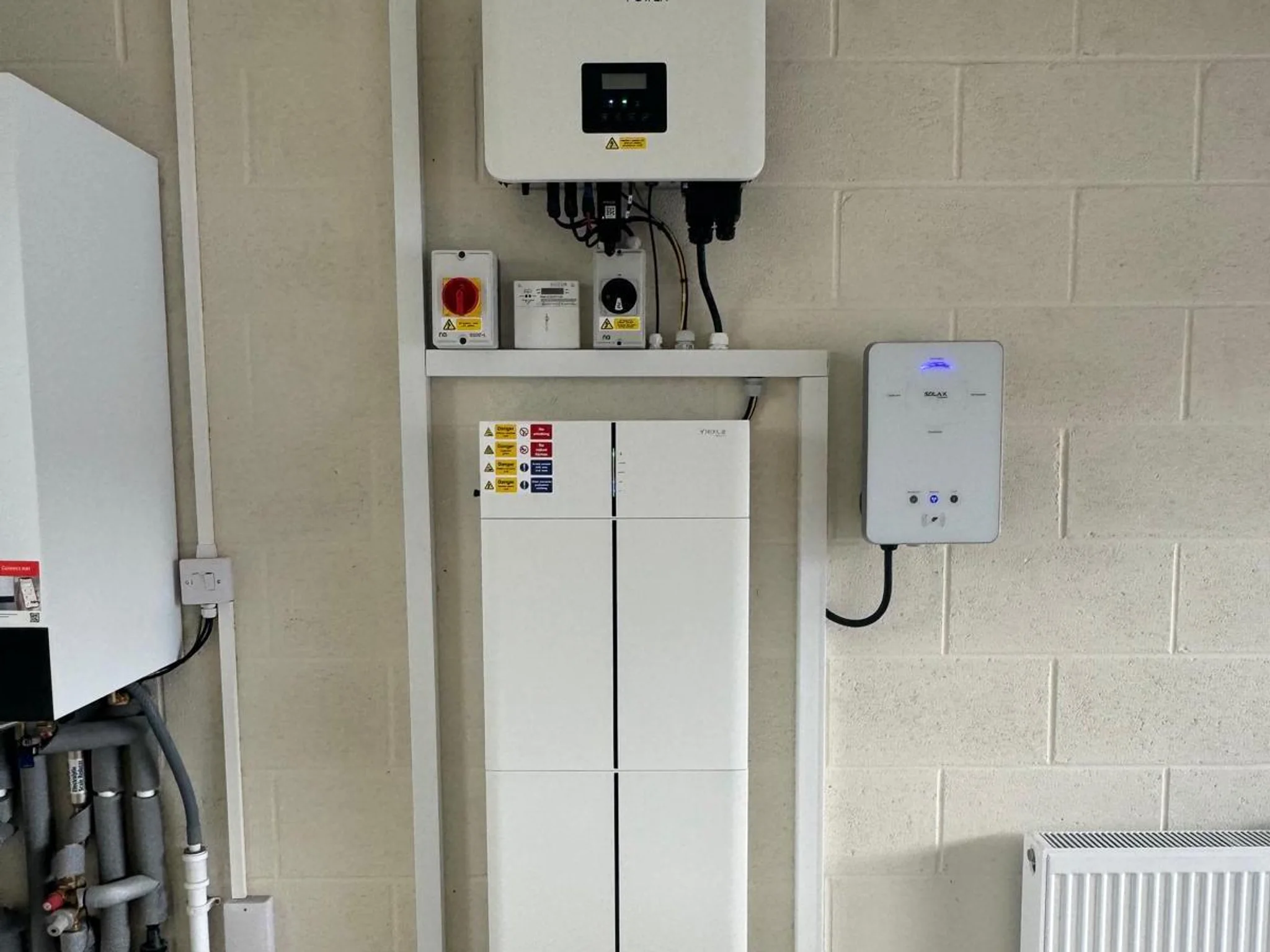
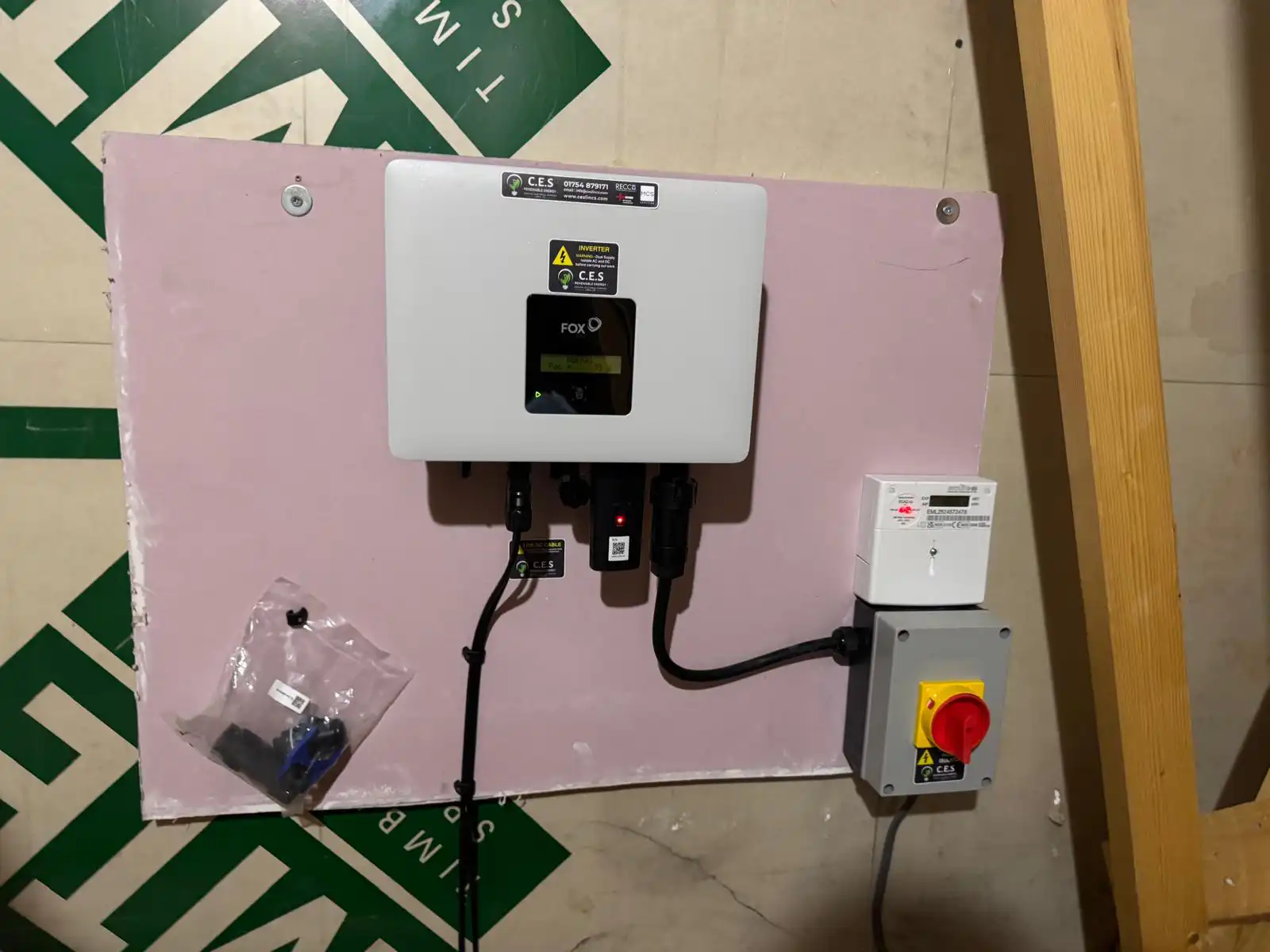
A DC coupled battery sits on the panel side instead, managed by a hybrid inverter that handles generation and storage together. On a new installation that is usually the neater arrangement. On a retrofit it normally means taking out the working solar inverter and replacing it with a hybrid one, which is a bigger job on a system that was doing nothing wrong.
In our experience, AC coupling works better than swapping a healthy string inverter for a hybrid on a retrofit because it leaves the certified generation side of the system entirely undisturbed, keeping the original sign off and the Feed-in Tariff metering intact, and it does not scrap an inverter with years of service left in it.
The extra conversion step in an AC coupled system does cost you a little in round trip efficiency. Over the life of a battery that loss is small change next to the price of replacing equipment that was working perfectly well. Where we do lean towards a hybrid is when the existing inverter is already near the end of its life, because then you are replacing it anyway and the hybrid route stops being an extra cost.
What happens to your Feed-in Tariff
This is the worry that stops most people asking, and it is largely unfounded. Adding a battery does not affect Feed-in Tariff generation payments, because the battery sits downstream of your generation meter. That meter carries on counting every unit your panels produce, exactly as it did before, and you carry on being paid for it.
The export side is more interesting, and it works in your favour. Most domestic Feed-in Tariff agreements pay export on a deemed basis, meaning you are paid for an assumed half of everything you generate rather than for units actually measured leaving the property. Nobody checks what really went out. So when a battery captures electricity that would previously have been exported and gives it back to you at seven in the evening, your deemed export payment does not shrink by a single penny.
You end up paid the same as before while buying less from the grid. That quirk makes retrofit storage noticeably more attractive on an old Feed-in Tariff system than the same battery would be on a modern one under the Smart Export Guarantee, where export is metered properly and storing a unit genuinely means not selling it.
Somebody has to tell the network operator
A battery counts as generation equipment as far as the grid is concerned, so your distribution network operator has to be told. Which route applies depends on size. Smaller installations are notified after the event, within twenty eight days of commissioning. Anything above the threshold needs written approval from the network operator before a single component is installed, and that approval can take weeks.
Your installer handles all of this. The reason it is worth knowing about is that it makes a useful test of who you are dealing with. An installer who raises the network notification unprompted is working properly. One who has not mentioned it by the time you have a quote in your hand is worth a direct question, because a battery installed without the right approval is a problem that surfaces later, when somebody comes to sell the house.
What we look at before quoting a retrofit
We survey rather than price off a photograph, because on a retrofit almost everything depends on what is already there.
The existing inverter comes first, its age, its condition and whether it has anything useful left to give. Then the consumer unit, since a battery needs its own protected way and older boards are often full. Then where the battery is actually going to live, which matters more than people expect. These units are heavy, they prefer a stable temperature, and a cold garage in a Lincolnshire January is not the same environment as an insulated utility room.
Then we look at your consumption pattern rather than your annual total. Two households using the same number of units a year can need very different batteries, because the right size depends on when you use electricity rather than how much. A house that is empty until six in the evening is the strongest case for storage there is. A house with somebody home all day is already self consuming a good share of what the roof makes, and the gain from a battery is smaller.
Whether the age of your system changes the answer
It changes the method more than the answer. A system installed during the Feed-in Tariff years is commonly around three or four kilowatts with a string inverter now well into its second decade. Inverters are the component that wears out, typically needing replacement somewhere around ten to twelve years, so on those systems the hybrid route often makes sense simply because the inverter is due.
A system fitted in the last few years is a different case. The inverter has years left, the generation side is certified and working, and there is little reason to disturb it. That is the classic AC coupled retrofit and much the commoner job of the two.
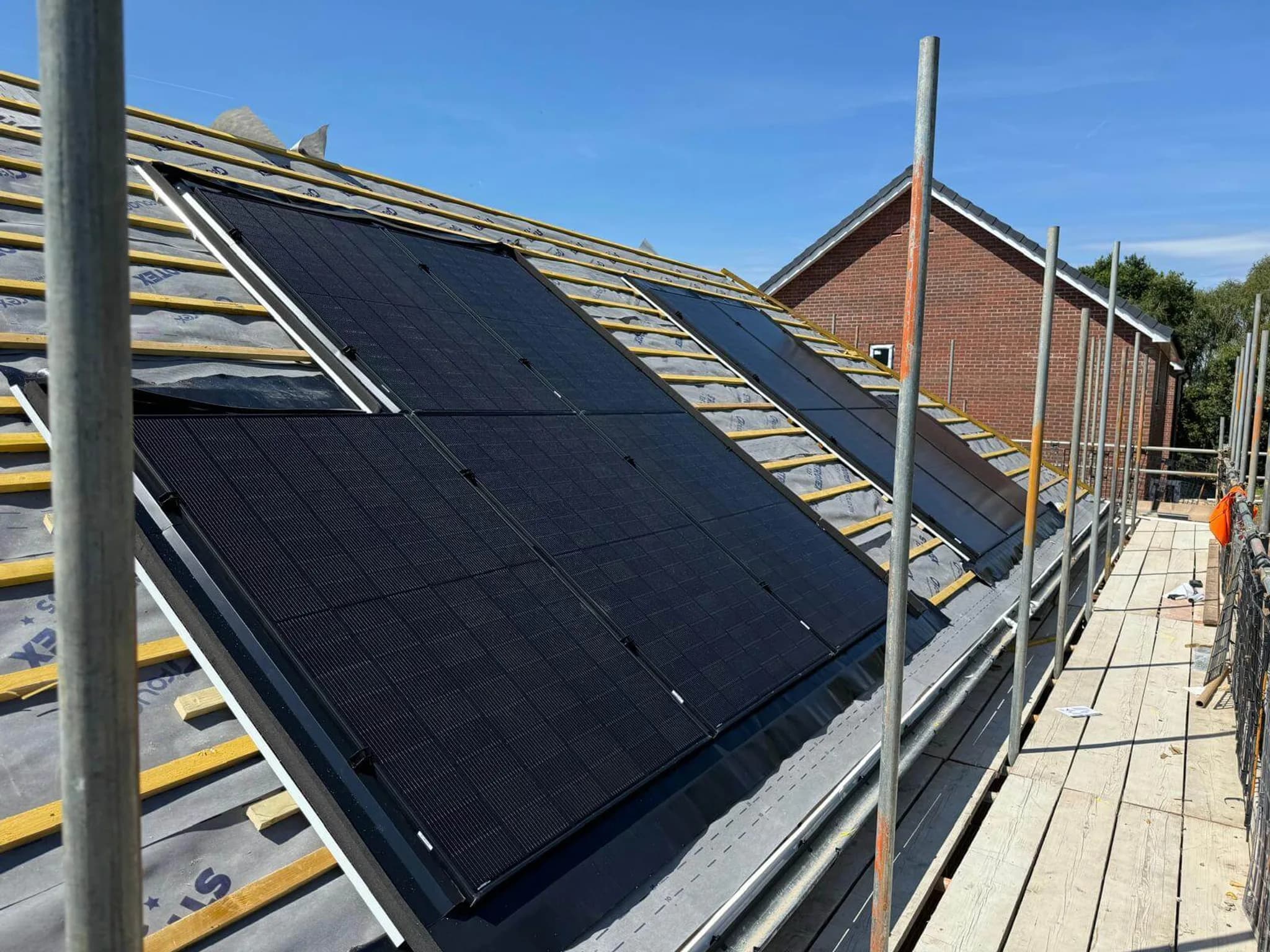
Either way the panels themselves are rarely the limiting factor. Modern panels degrade slowly and carry performance warranties running to twenty five years or more, so a ten year old array is usually still producing close to what it always did.
What we see fitting storage onto generation
Most of what we know about pairing storage with panels comes from doing it at both ends of the scale.
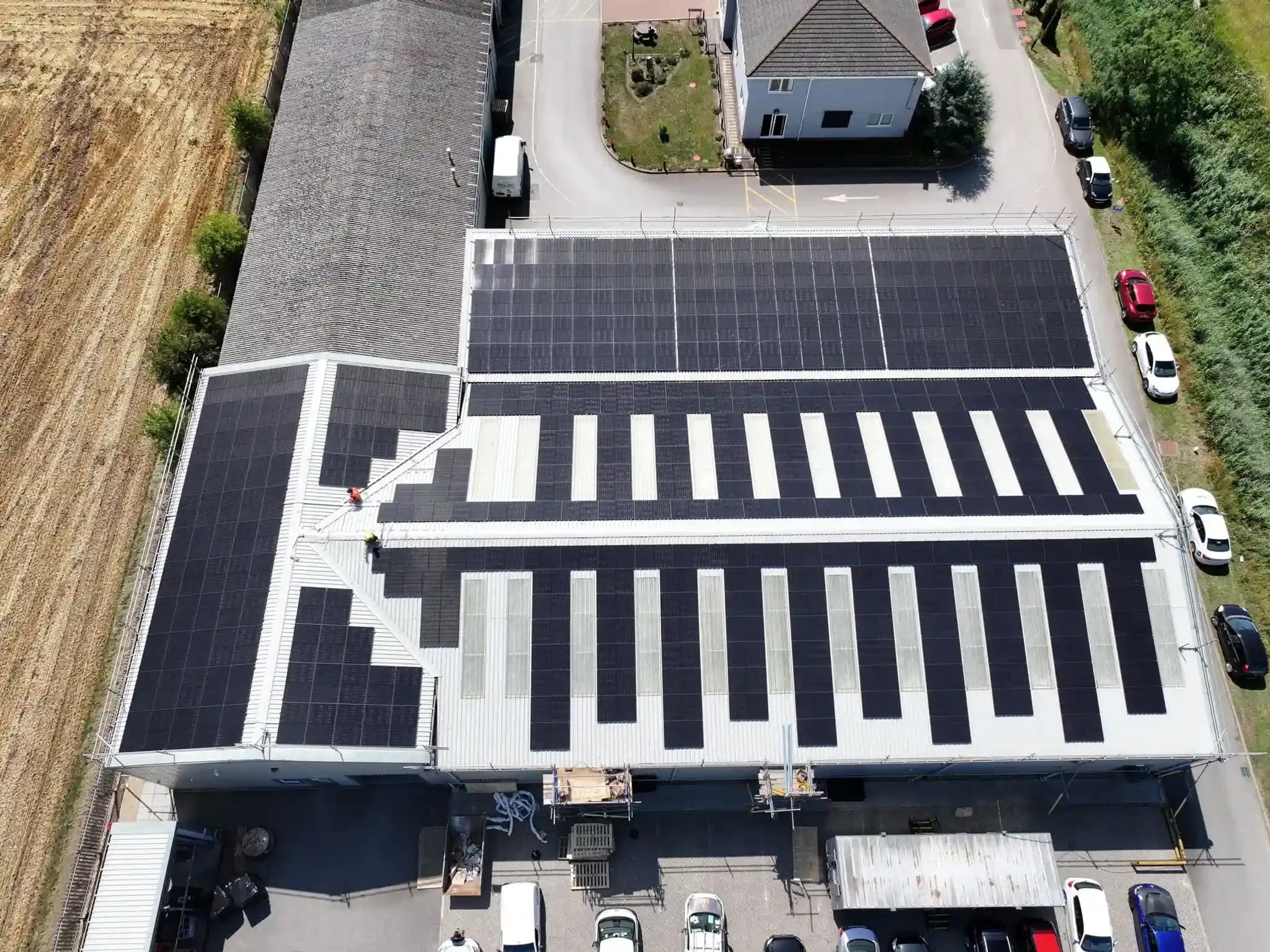
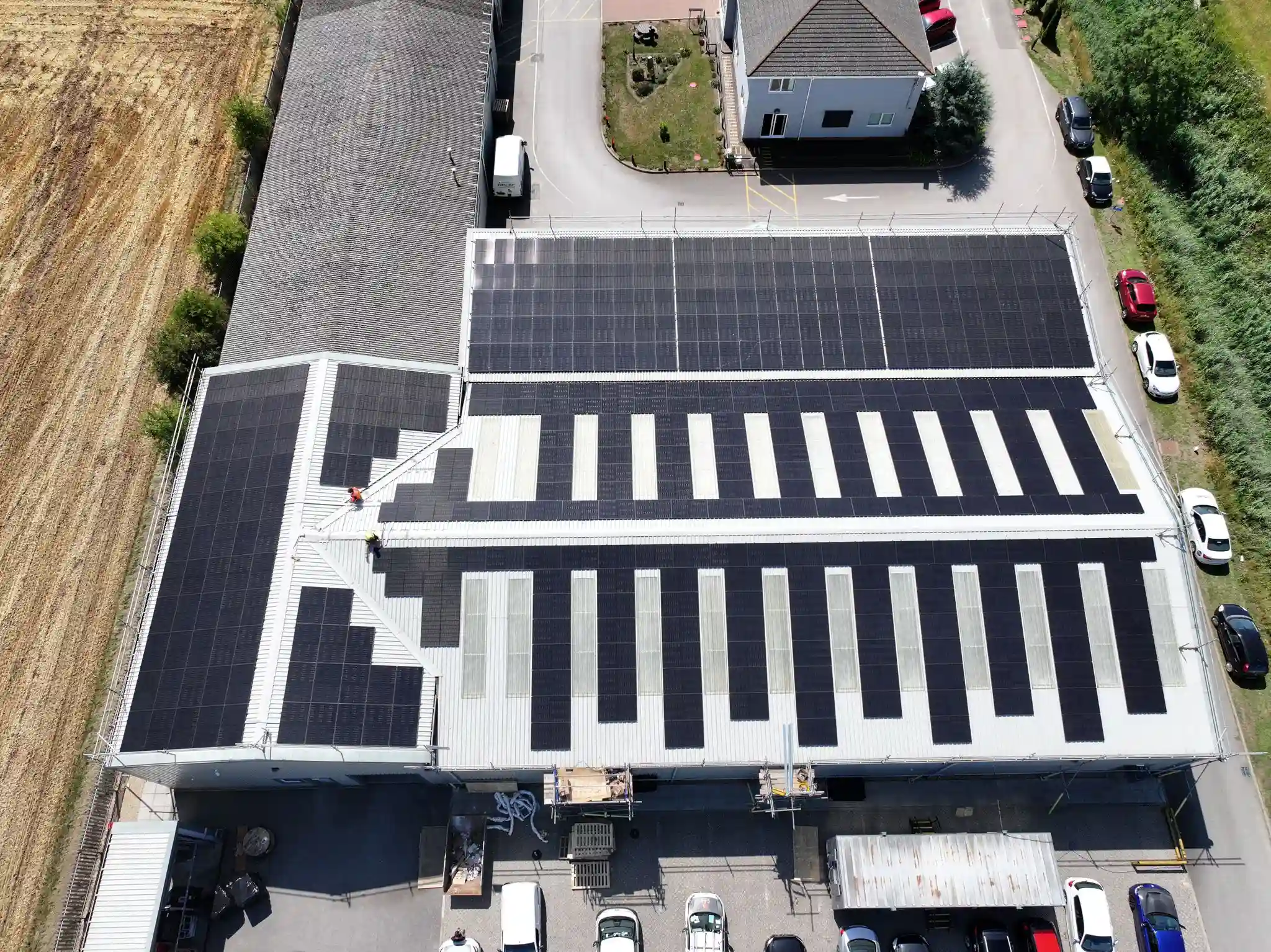
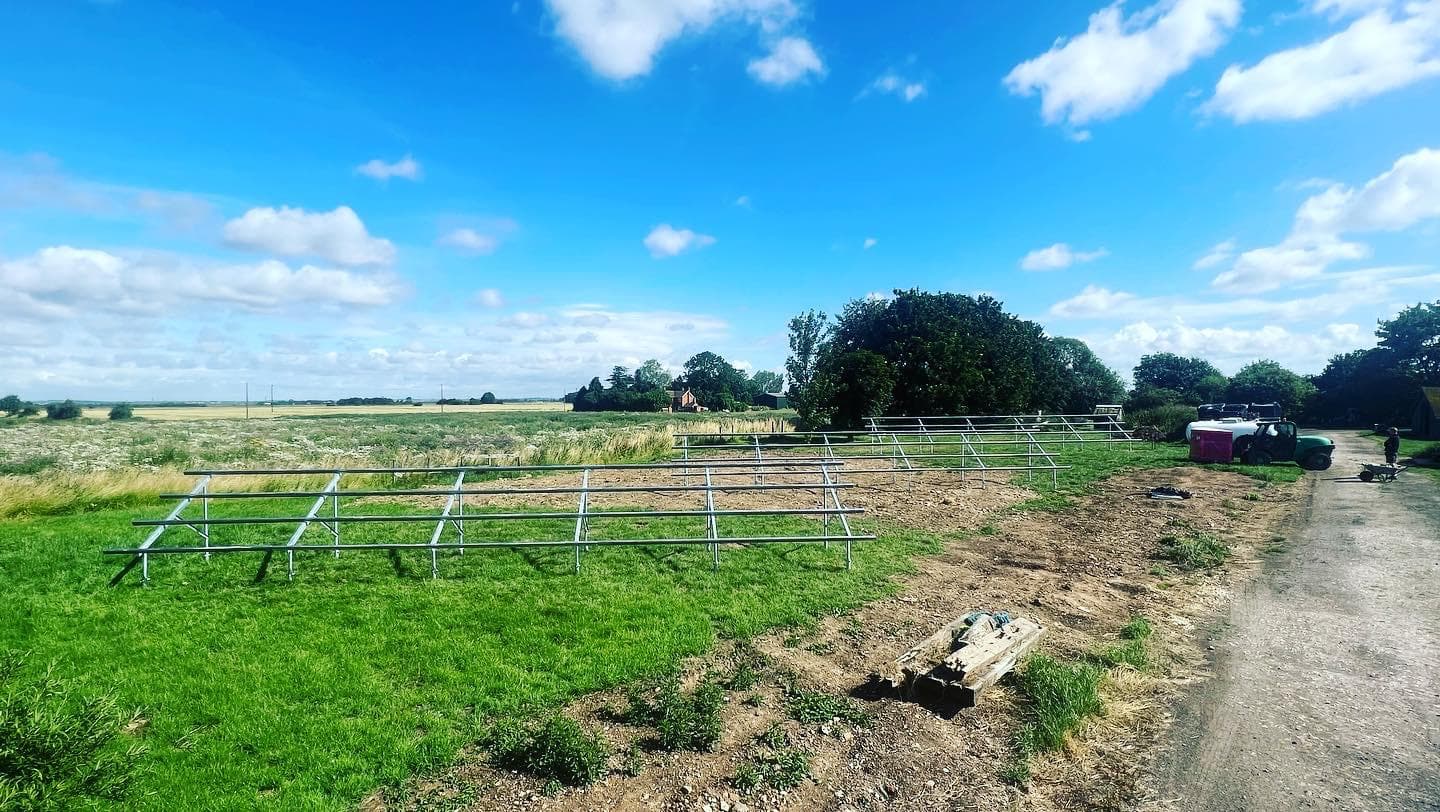
On a poultry farm near Friskney we installed a 30.24kW ground mounted array, being 72 panels of 420W, with 30kW of battery storage alongside it. That site has heavy daytime demand from ventilation and environmental controls, which is a genuinely different sizing problem from a house, and the storage was specified around maximising what the farm consumed itself rather than what it sold. We have also delivered a 200kW array with 200kWh of storage for Rolec Services Ltd.
At domestic scale, a 6.8kW installation on a flat roofed Lincolnshire home pairs panels with a hybrid inverter and battery working as one system, which is what a DC coupled arrangement looks like when it is designed in from the start rather than retrofitted.
The pattern across all of them is the same. Storage pays when it is sized against the shape of the demand rather than the size of the roof, and the shape of the demand is the part only a survey will tell you.
What it costs and the VAT position
Retrofit pricing follows the same curve as any battery installation, in that the cost per kilowatt hour falls as the battery gets bigger, because the inverter and the electrical work are largely fixed regardless of capacity. That is why a battery twice the size is nowhere near twice the price.
One thing genuinely worth knowing is that battery storage currently carries 0% VAT, and since February 2024 that has applied to batteries fitted on their own rather than only alongside new panels. A retrofit qualifies. The relief runs to 31 March 2027, so anyone weighing it up has a reason not to leave it indefinitely.
Talking to us about adding storage
We work across Lincolnshire from Skegness, and we would rather look at your existing system than quote from a description of it. If you have panels already and want to know what adding storage would actually do for your bills, tell us what you have and roughly when you use electricity.
Get in touch and we will take it from there.