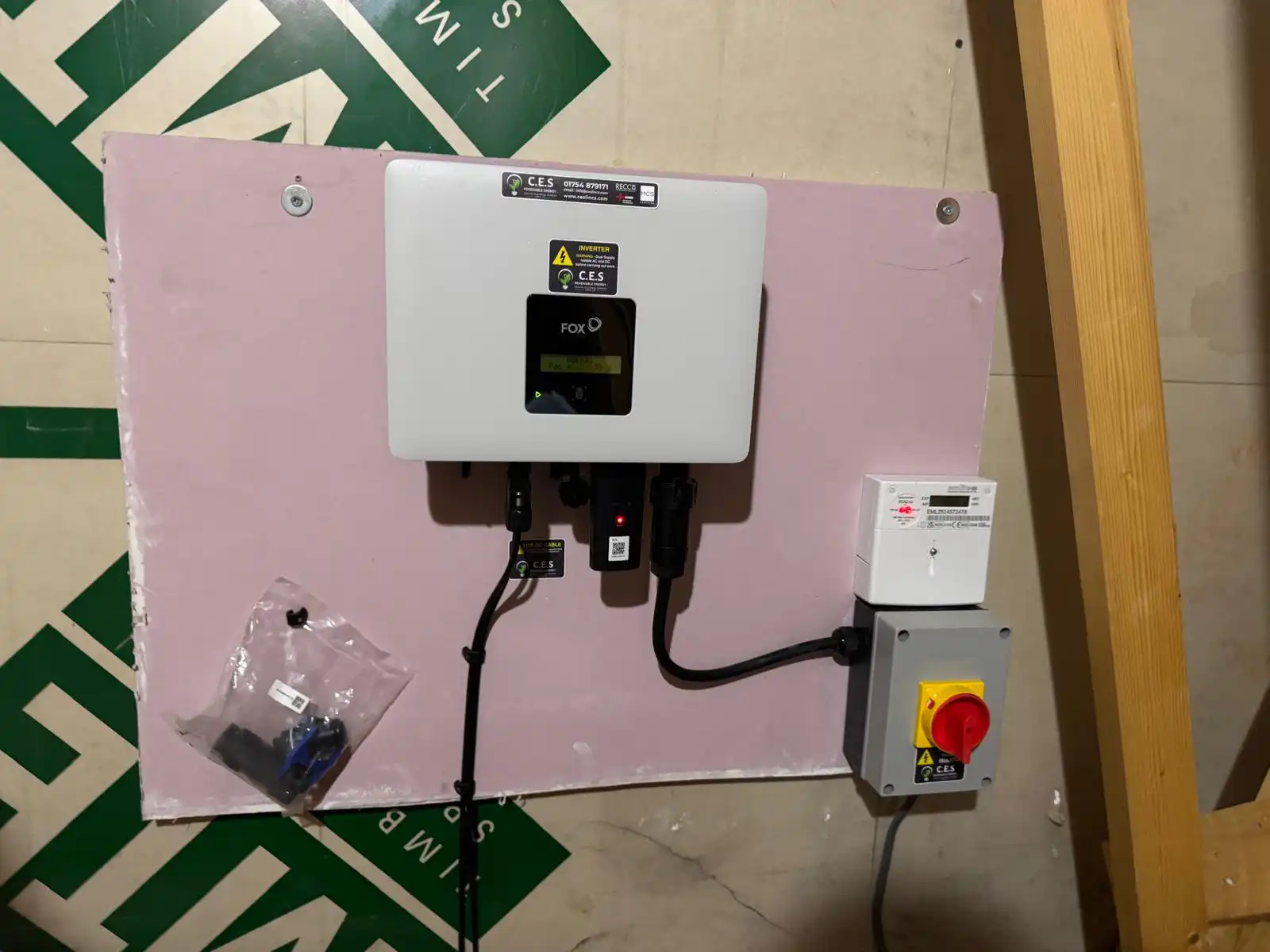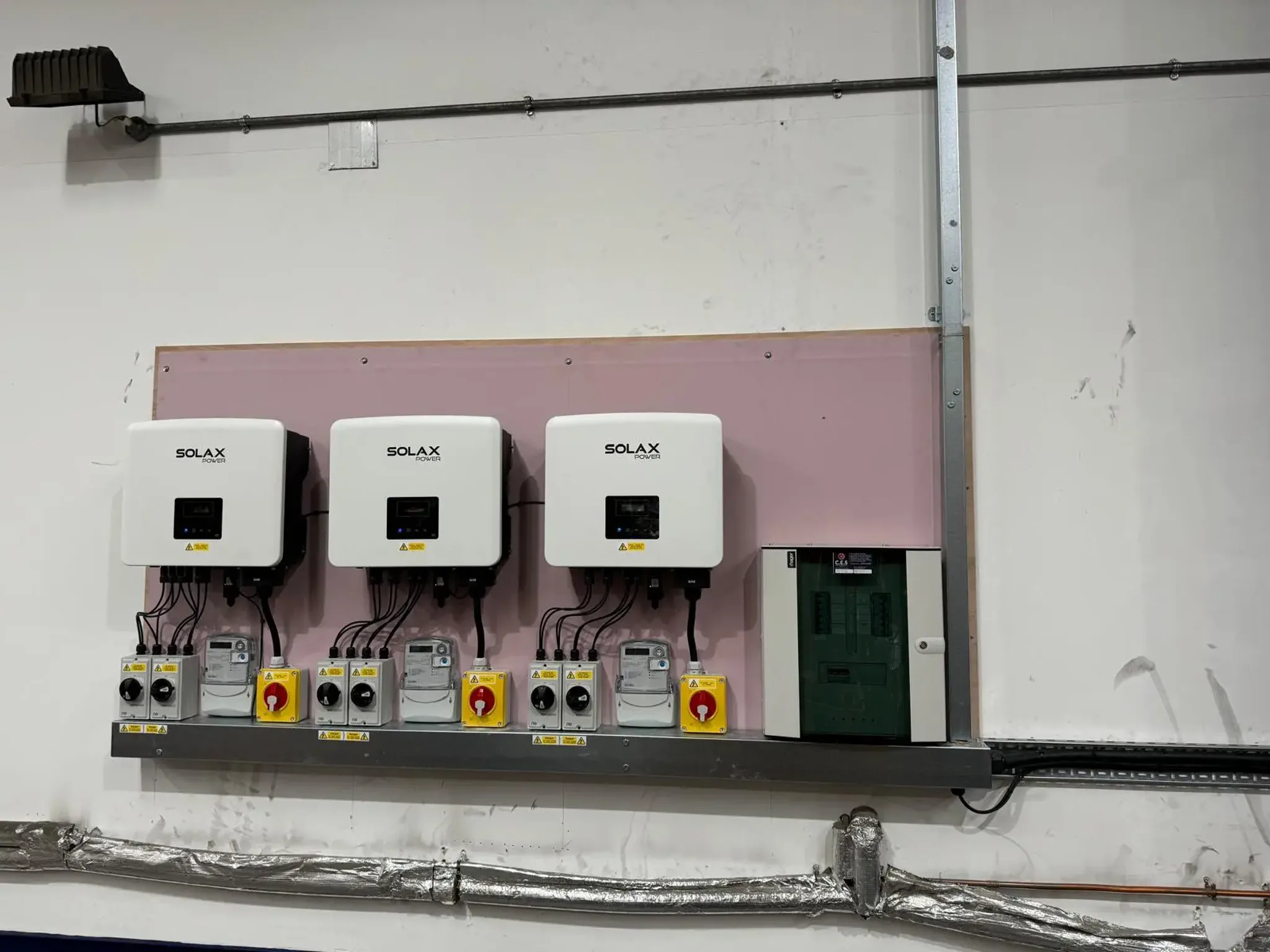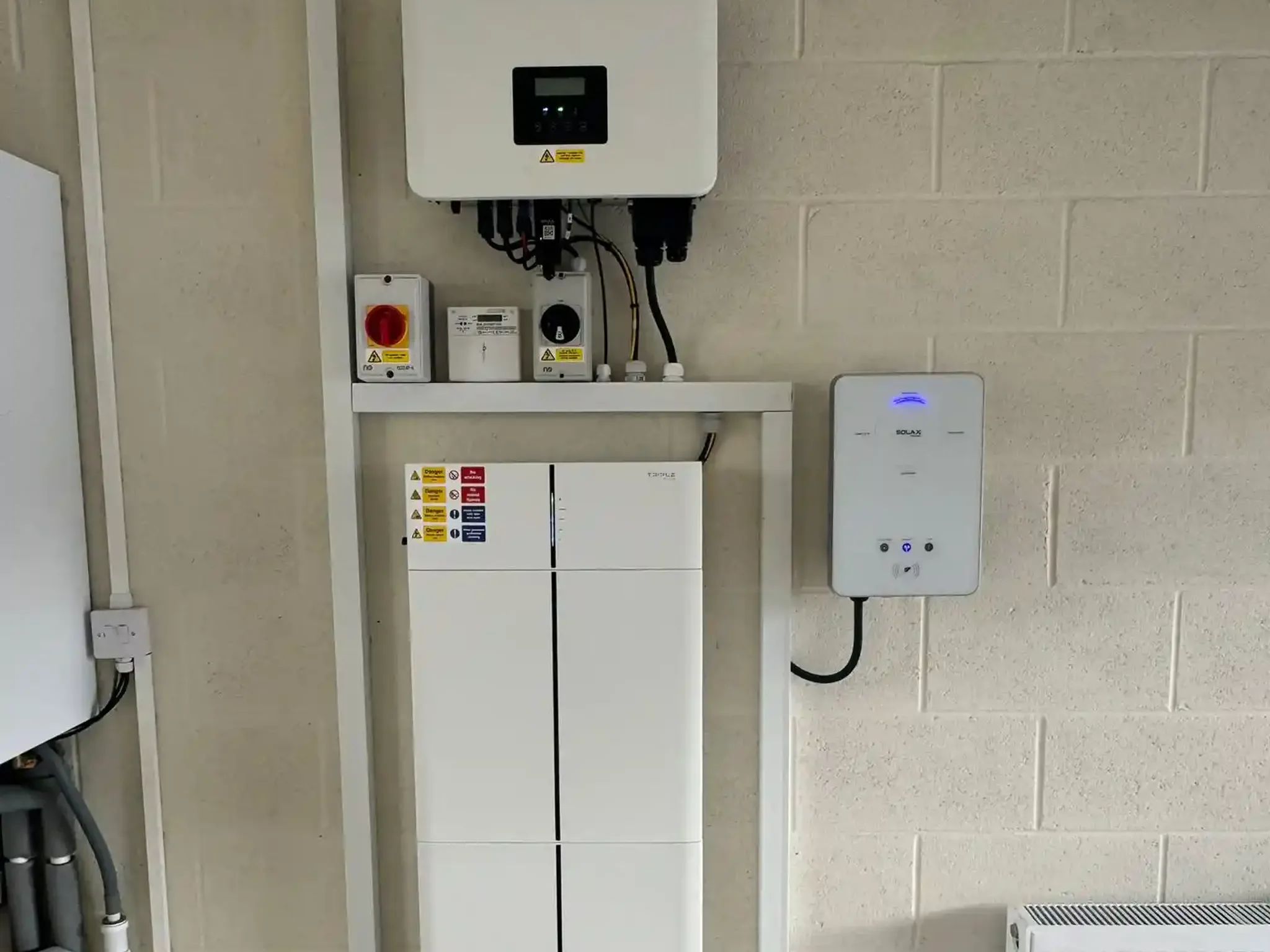

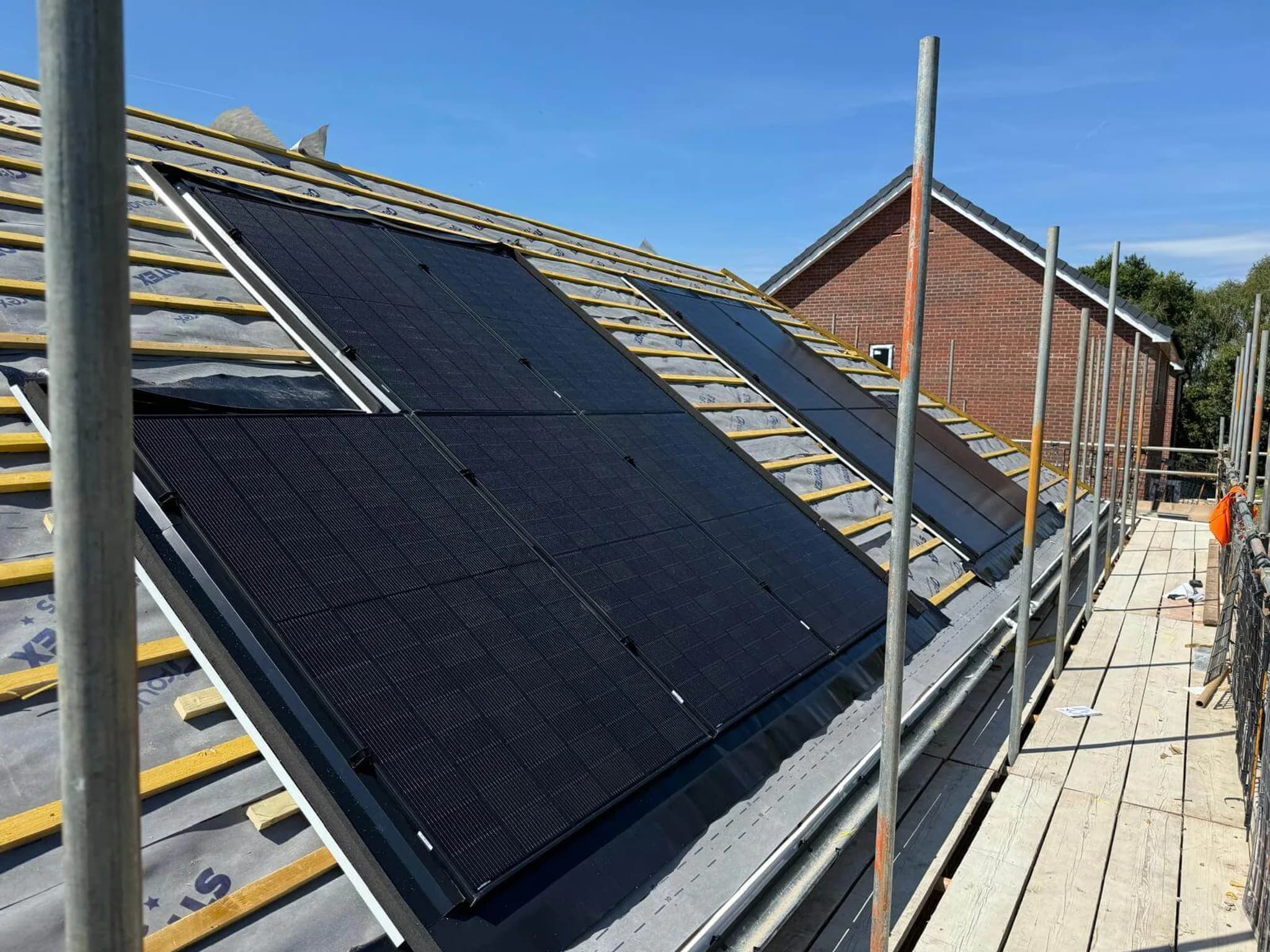

Not on its own, and this is the single most misunderstood thing about home batteries. A standard solar and battery installation shuts down completely the moment the grid goes off. The battery can be sitting at 90% charge and the house will still go dark, because the inverter disconnects itself by design and takes the battery with it.
Backup during a power cut is a separate feature that has to be specified, wired and paid for. It comes in two forms, being a single emergency circuit or a whole house arrangement, and the choice needs making before the installation rather than after. If keeping the lights on through an outage is part of why you want a battery, say so at the survey, because retrofitting backup afterwards is considerably more disruptive than building it in.
Why a standard system shuts down the moment the power goes
Every grid connected inverter in the country is required to disconnect within a fraction of a second of losing the mains. It watches voltage and frequency continuously, and the instant either strays outside its permitted window it stops. This is called anti-islanding, and it is not a fault or a limitation somebody forgot to design out.
It exists to protect the people who fix the network. When a line comes down in a storm, the engineers sent to repair it work on the basis that the line is dead. If thousands of homes carried on pushing electricity back into the network during an outage, those lines would be live, and the person holding them would have no way of knowing. The rule is there so that a de-energised cable stays de-energised.
The consequence for you is simple enough. Without additional equipment, a power cut takes your solar and your battery out along with everything else, and there is no setting anywhere in the app that changes it.
What you need for the battery to keep working
To use stored electricity during an outage, the system has to be able to create its own small island that is properly and provably separated from the grid. That means hardware that physically disconnects the property from the network before energising anything, so there is no possibility of exporting into a dead line.
The simpler version is usually called an emergency power supply, and it typically gives you one dedicated circuit or a single labelled socket that comes alive when the grid drops. It is cheap to include at the point of installation, it is limited in how much power it can deliver, and there is normally a short gap of a few seconds while the changeover happens, so anything sensitive will still reboot.
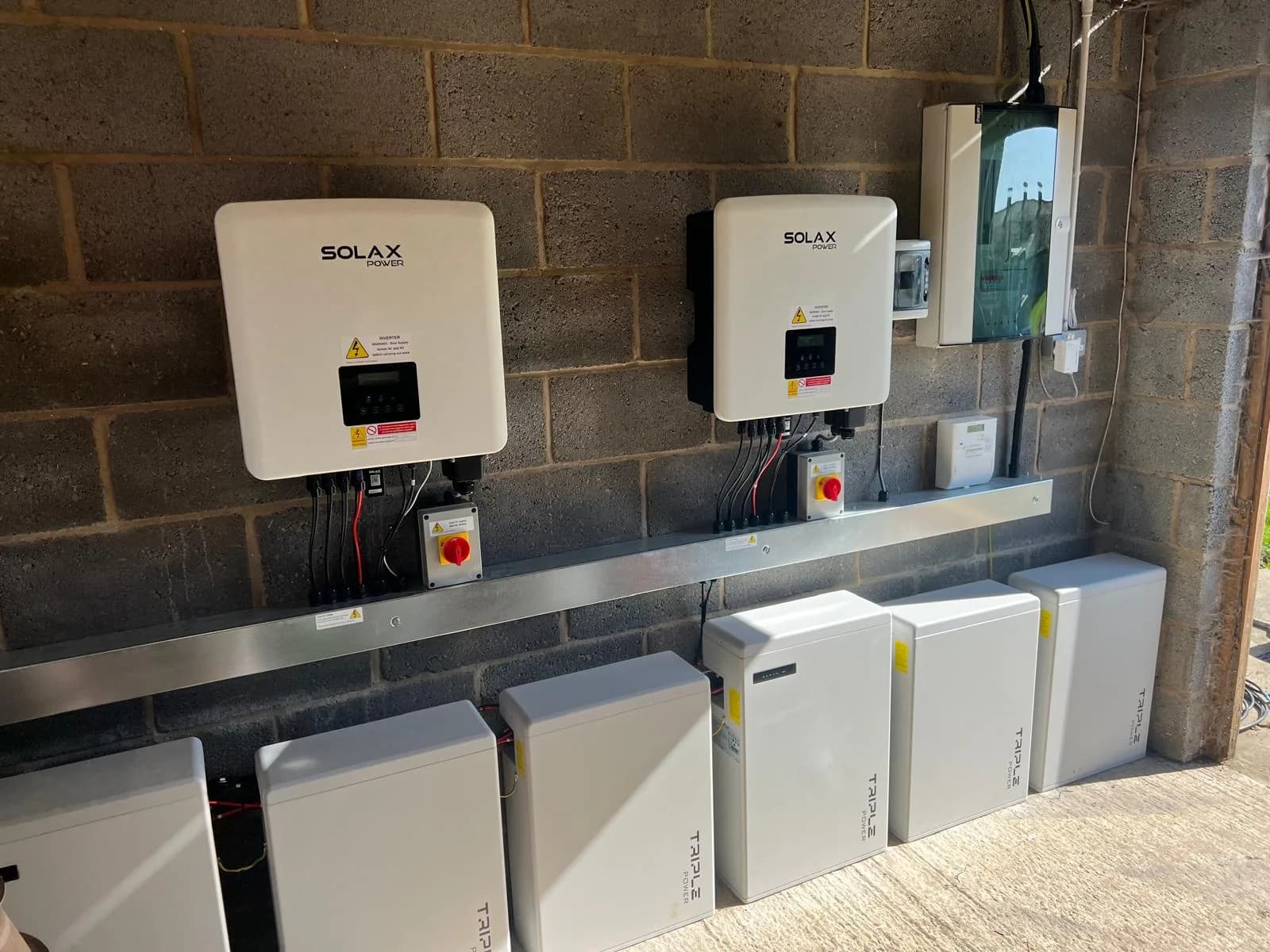
The fuller version uses a backup gateway, which isolates the whole property and can run some or all of the house. The changeover is quick enough that most things do not notice. It costs meaningfully more, it takes up more wall, and it needs the loads working out properly beforehand.
Which of the two is usually the right answer
People almost always ask for whole house backup first and then change their minds once they understand what the battery is being asked to do.
In our experience, backing up three or four carefully chosen circuits works better than whole house backup, because during an outage the battery alone has to absorb every surge in the property, and one electric shower or immersion heater starting up can exceed the inverter's backup output and drop the lot, while a lighting circuit, a socket circuit and the heating controls will run for many hours on the same stored energy.
That is not an argument against whole house backup, which is the right call on some properties. It is an argument for deciding deliberately. A backup arrangement that trips out every time somebody boils a kettle and puts the oven on is worse than one that reliably runs the lights, the router, the fridge and the boiler for a day and a half.
The other half of the calculation is how much of the battery you are willing to hold back. Reserving capacity for an outage that may not come means that capacity is not doing its day job of shifting cheap electricity into expensive hours, which is where a battery actually earns its keep the rest of the year.
Do the solar panels keep generating?
In a standard installation, no. The panels stop when the inverter stops, so a sunny afternoon during a power cut produces precisely nothing.
With backup fitted, this is where the arrangement becomes genuinely useful rather than merely reassuring. A properly configured system can keep the panels running inside its island, which means the battery recharges during daylight instead of draining steadily towards zero. In a short outage that hardly matters. In a multi-day one it is the difference between a battery that lasts until Tuesday morning and a system that keeps a household going indefinitely, weather permitting.
That capability depends on the inverter and how it is set up, not on the battery, so it belongs in the conversation at specification stage.
What we ask before specifying backup
Three questions, in this order.
First, what actually has to stay on. Not what would be nice, but what causes a real problem if it stops. For most households that is lighting, the internet, the fridge and freezer, and the heating controls, which together draw far less than people assume. For a working building it can be considerably more specific.
Second, for how long. An hour of protection is a different specification from three days, and the capacity you need follows from the answer rather than from the size of the roof.
Third, how often it is likely to be needed. That is largely a question of whether your supply is underground or comes in on poles, and it varies enormously between two houses a mile apart.
Whether it is worth it where you live
Across much of Lincolnshire the honest answer is that it deserves a proper look rather than a shrug. A great deal of the county is fed by overhead lines across open ground, which are exactly the lines that come down in a winter storm. Restoration in a rural area also takes longer than in a town, simply because a fault has to be found along miles of line before it can be fixed. On the coastal strip, wind driven weather does the same job with more salt attached.
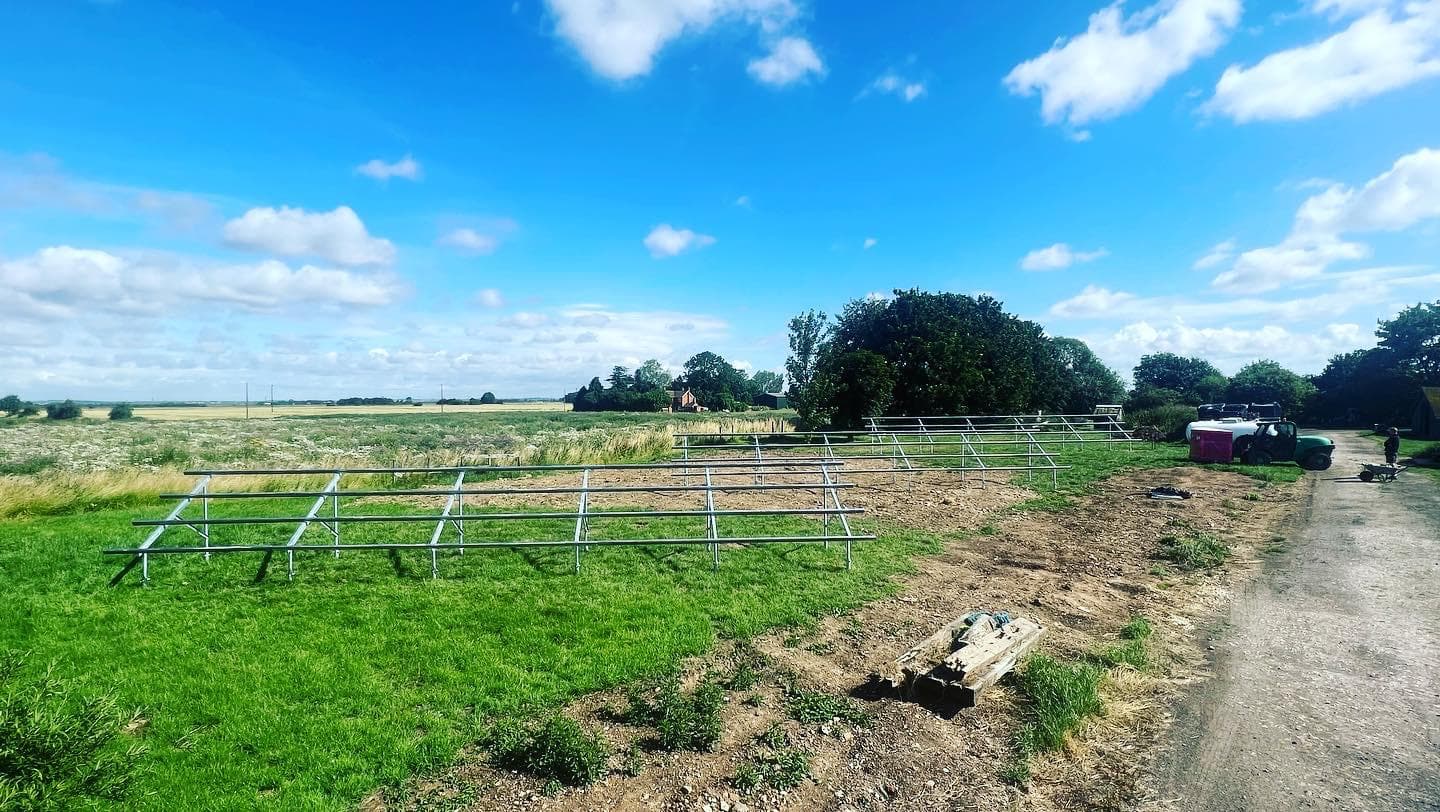
Where it moves from a comfort to a genuine requirement is on working premises. The poultry farm near Friskney we built a 30.24kW ground mounted array and 30kW of storage for runs ventilation and environmental controls, and on a site like that a loss of power is a welfare problem rather than an inconvenience. Agricultural and commercial buildings often have a small number of loads that genuinely cannot stop, which is precisely the pattern that suits a chosen circuit approach rather than an attempt to back up everything.
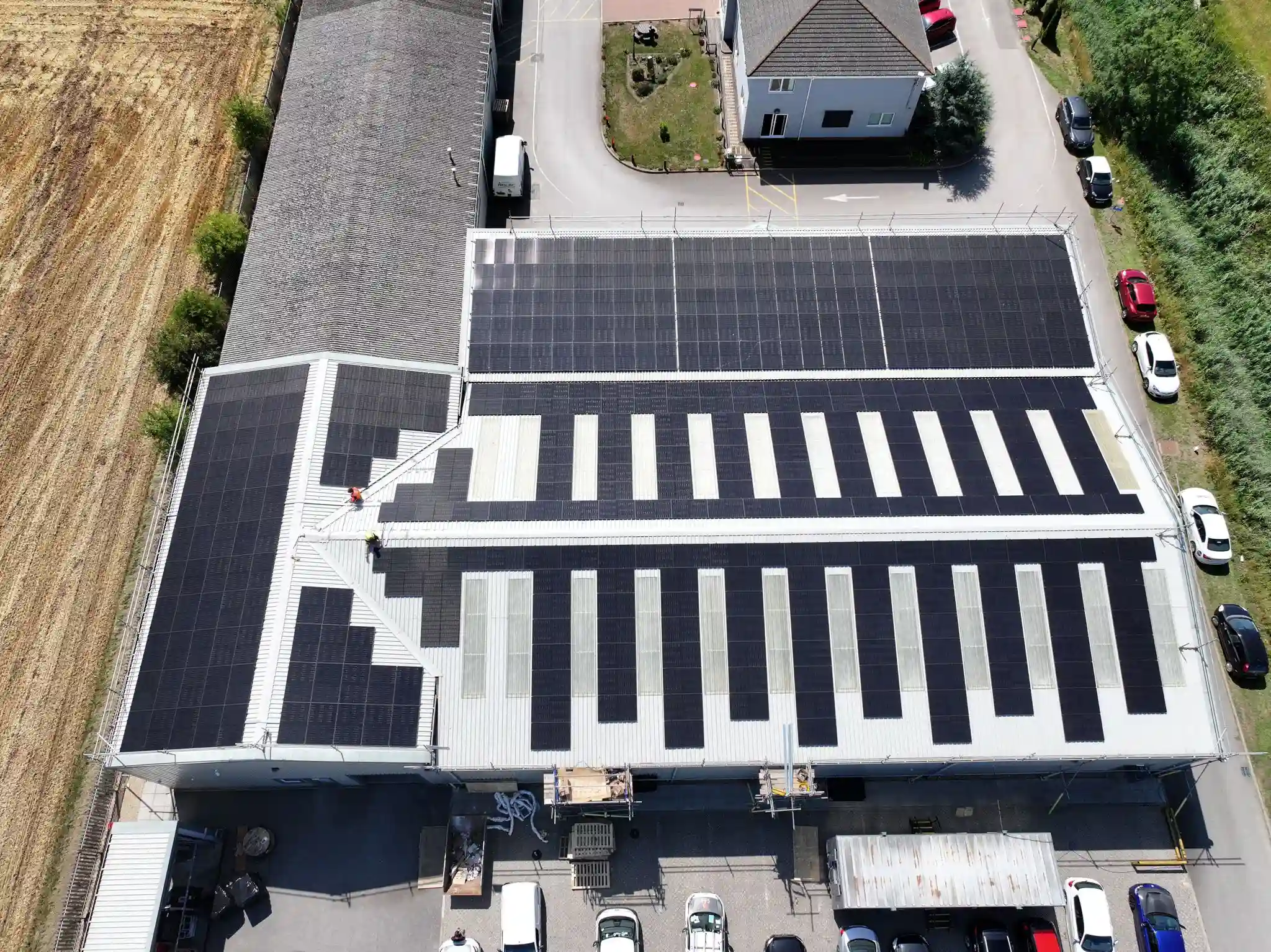
At the larger commercial end, where we have paired 200kW of generation with 200kWh of storage, continuity planning stops being a domestic conversation altogether and becomes part of how the site is designed.
Getting it specified properly
Backup wiring is electrical work with real consequences if it is done badly, since the whole point is a guaranteed separation from the network. It belongs with an installer who is assessed for electrical competence as well as certified for the renewables side, because the two parts of the job are genuinely different disciplines.
Ask any installer directly whether their quote includes backup, and if it does, exactly which circuits and for how long. A quote that simply says battery storage almost certainly does not include it.
Talking to us about backup
If you already have solar and a battery and want to know whether backup can be added, that depends mostly on your inverter, so it is worth a look rather than a guess. If you are planning a system from scratch, tell us at the outset that outages matter to you.
Get in touch and tell us what cannot be allowed to stop.