So, How Does Solar Battery Storage Work?
Solar battery storage is a system that captures the electricity your solar panels produce during the day and holds onto it so you can use it later, rather than sending that surplus to the grid and then buying power back at a higher price after dark. In short, it lets you use far more of your own free solar electricity instead of giving it away cheaply and paying full price once the sun goes down.
The basic process is simpler than it sounds. Your solar panels generate electricity whenever there is daylight, and your home uses whatever it needs at that moment first. Any surplus that would otherwise be exported is instead diverted to charge the battery. Then, in the evening and overnight when the panels have stopped producing, your home runs on that stored energy rather than the grid, only buying in power once the battery is depleted. Many systems can also be set to charge from the grid during cheap, off-peak hours, so you can store low-cost electricity and use it when rates are at their highest. Below we explain how all of this works in more detail, what a system is made up of, how much storage you actually need, and how long it lasts.
Why solar panels on their own leave value on the table
The catch with solar is one of timing. Panels produce the most electricity in the middle of the day, yet most households use the most power in the early morning and the evening, when people are home, cooking, washing and putting the heating on. Solar generation and household demand rarely line up neatly.
What we see in practice is that a home without storage uses only around half of the electricity its panels generate, exporting the rest to the grid for a few pence per unit, then buying power back later at four or five times that price. A battery closes that gap. By holding your midday surplus until the evening, it lets you use the electricity you have already generated instead of selling low and buying high, which is where the real value of storage comes from.
How solar battery storage works step by step
Solar panels produce direct current, or DC, electricity. Your home runs on alternating current, or AC, so an inverter sits between the two to convert one into the other. In a system with storage, the flow of electricity is managed automatically and follows a clear order of priority.
First, the power your panels generate is used to run whatever is switched on in your home at that moment. Second, any surplus is sent to charge the battery instead of being exported. Third, once the battery is full, any remaining surplus is exported to the grid. When generation drops in the evening, the process reverses, and your home draws first from the battery and only turns to the grid once the stored energy is used up. Overseeing all of this is a battery management system, which controls charging and discharging, protects the cells and keeps everything operating safely. Most systems also come with an app, so you can see your generation, usage, battery level and savings in real time.
The main parts of a solar battery system
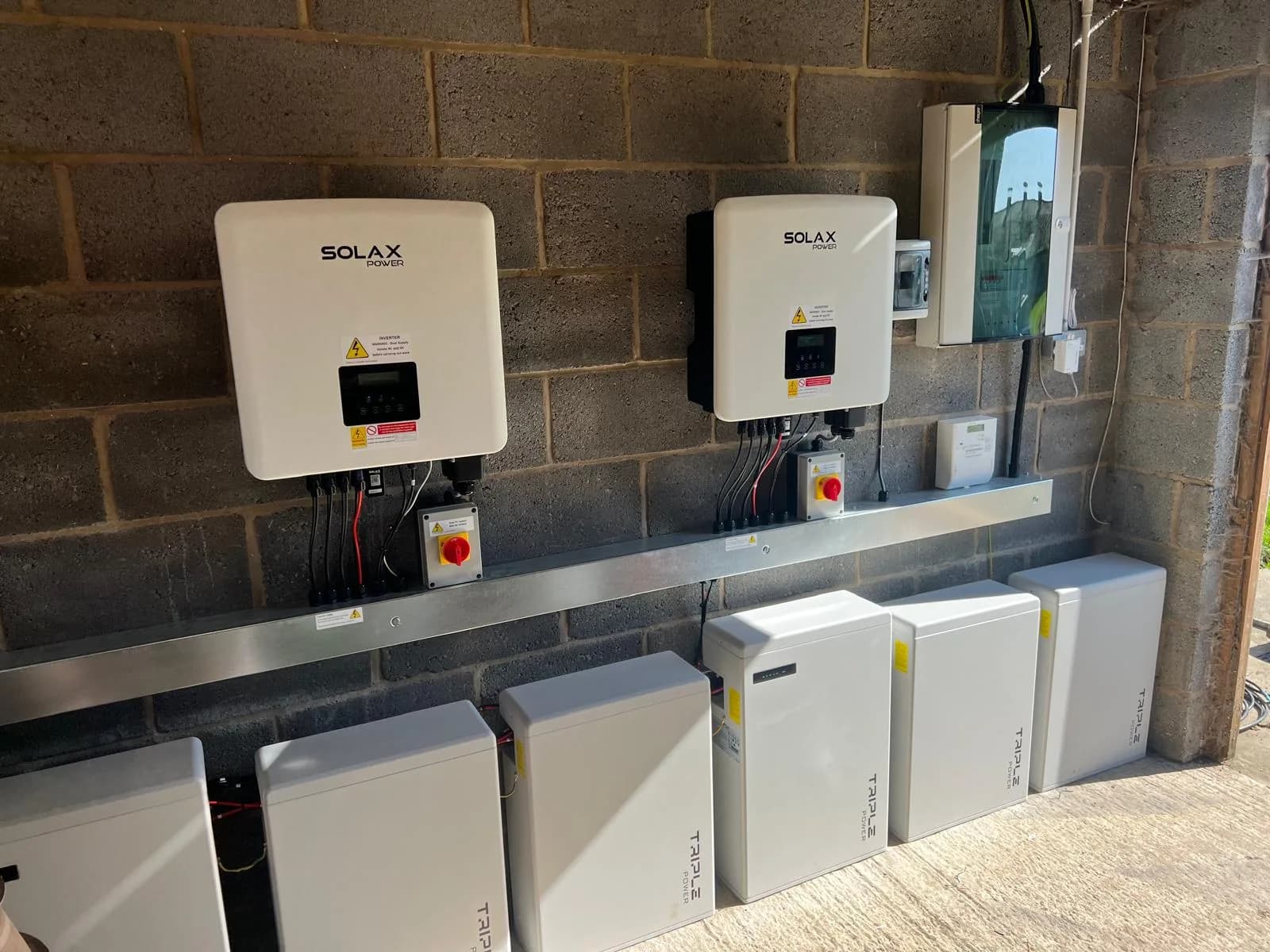
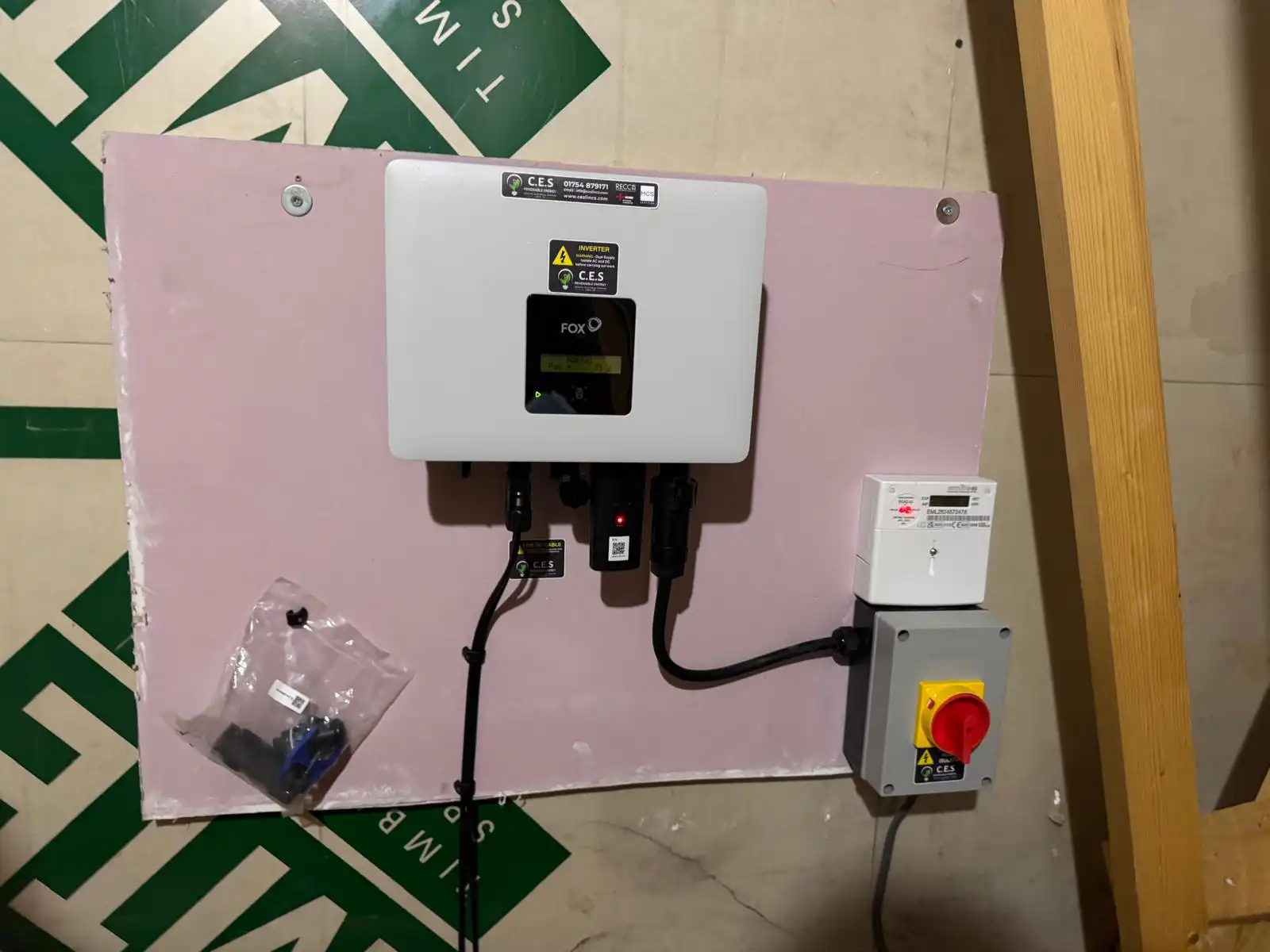
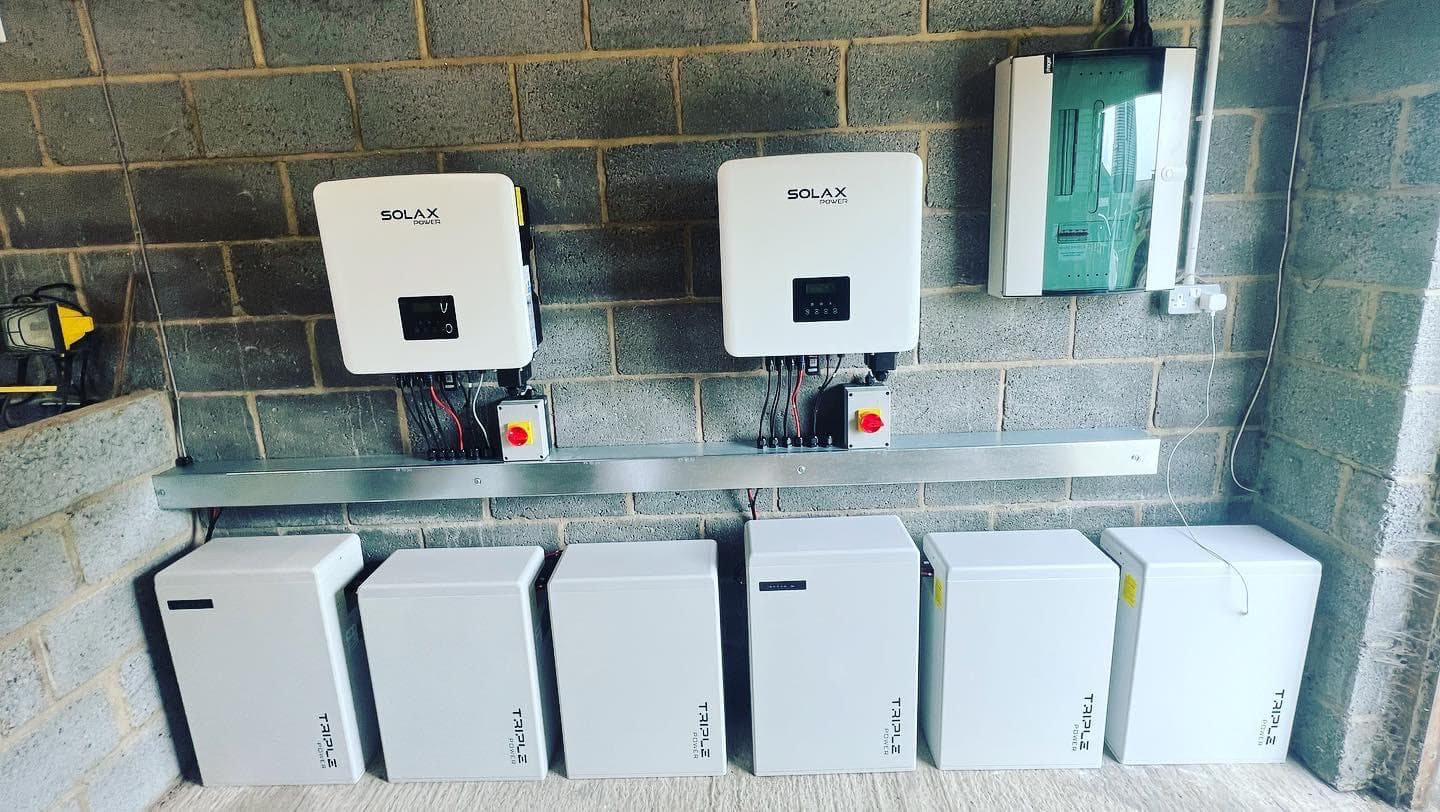
A storage setup is built from a few key components working together. The battery itself, almost always lithium based in modern installations, which stores the energy. There is an inverter, which converts power between DC and AC and may be a dedicated battery inverter or a hybrid unit that handles both the panels and the battery at once. There is the battery management system that protects and regulates the cells, and there is the monitoring that lets you and us keep an eye on performance.
In our experience, a hybrid inverter works better than fitting a separate battery inverter on most brand new installations because it runs the panels and the battery through one efficient system with fewer conversion losses and a tidier setup. For adding storage to solar that is already on the roof, the picture changes, and an AC-coupled battery with its own inverter is usually the better retrofit, since it bolts onto the existing system without replacing an inverter that is already working perfectly well.
Adding a battery to existing solar panels
A question we are asked constantly is whether a battery can be added to an existing solar array, and the answer is almost always yes. If your panels were installed without storage, an AC-coupled battery can be added afterwards without disturbing the original setup. This is a popular upgrade among households who fitted solar some years ago, watched their export figures climb, and realised they would rather use that surplus themselves than keep selling it cheaply.
The main things we assess for a retrofit are how much spare generation you are currently exporting, your evening and overnight usage, and where the battery can be sited, since the units need a suitable indoor or sheltered location with room around them. From there it is usually a clean addition to what you already have.
What you can do with stored energy
Stored solar energy is most commonly used for self-consumption, meaning you run your home on your own electricity in the evening instead of paying peak grid rates. Beyond that, a battery opens up smart, time-of-use tariffs, where you charge from the grid when electricity is cheapest overnight and discharge during the expensive early evening peak, saving money even in winter when solar generation is low.
A battery can also provide backup power. On systems set up with this feature, it will keep essential circuits running during a power cut, which is reassuring on the coast where exposed weather can occasionally bring outages. Anything you still do not need can continue to be exported to the grid through the Smart Export Guarantee, so nothing goes to waste.
The benefits of solar battery storage
The headline benefit is a much bigger reduction in your electricity bills. By lifting the share of your own generation that you actually use from around half to as much as 80 or 90 per cent, a battery cuts the amount of expensive grid power you need to buy. We have found that the combination of solar and storage, paired with a good smart tariff, delivers noticeably better savings than panels alone, because you are squeezing value out of nearly every unit you generate rather than exporting half of it.
There is also the resilience that backup power brings, the independence of relying less on the grid and its rising prices, and the simple fact that storage lets a solar system earn its keep around the clock rather than only while the sun is up. On the cost side, battery storage currently qualifies for 0 per cent VAT, whether it is installed alongside new panels or added to an existing system on its own, a relief that runs until the end of March 2027.
How much battery storage do you need
Sizing is where a lot of online advice goes wrong, because the right battery is not simply the biggest one you can afford. In our experience, sizing a battery to a household’s actual evening and overnight usage works better than matching it to the size of the solar array, because a battery far larger than your real demand just sits part empty and takes much longer to pay back.
For a typical home, storage somewhere in the region of 5 to 10 kilowatt hours covers most evening and overnight needs comfortably. The right figure for you depends on how much electricity you use after dark, whether you have an electric vehicle to charge, and whether you plan to lean on a time-of-use tariff. This is exactly the sort of thing we work out from your real consumption rather than guessing, so the system fits how you actually live.
How long do solar batteries last
Modern lithium batteries are rated by charge cycles, and a quality unit will typically carry a warranty of around ten years, often guaranteeing it will still hold a high proportion of its original capacity at the end of that term. In practice they tend to keep working well beyond the warranty period, gradually losing a little capacity over time in much the same way a phone battery does, only far more slowly.
Maintenance is minimal. There are no moving parts to service, and beyond keeping the unit clear and occasionally checking the system through its app, there is very little for you to do. It is a genuinely low-effort piece of equipment once it is correctly installed and commissioned.
What we have found fitting battery storage across Lincolnshire
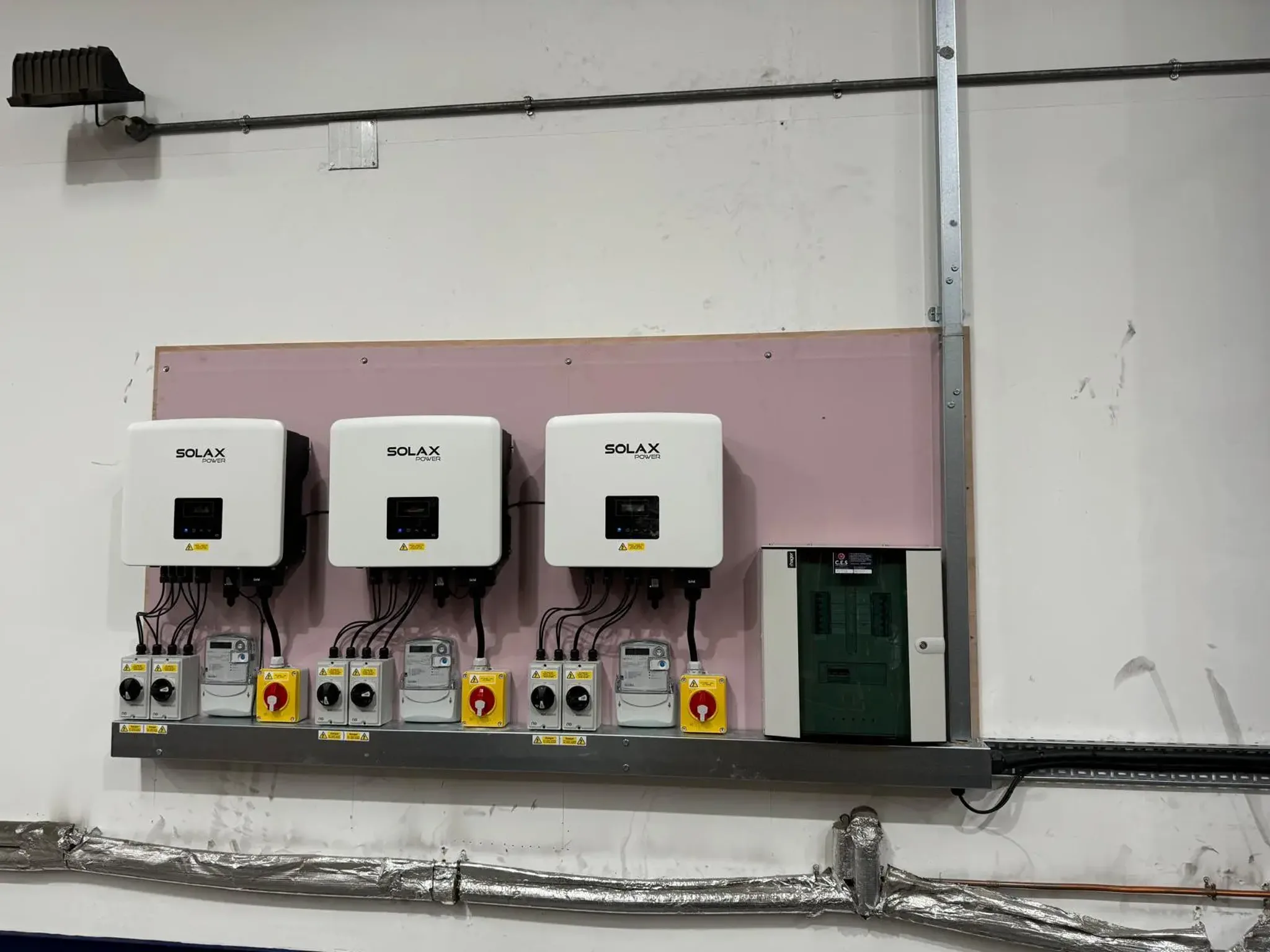
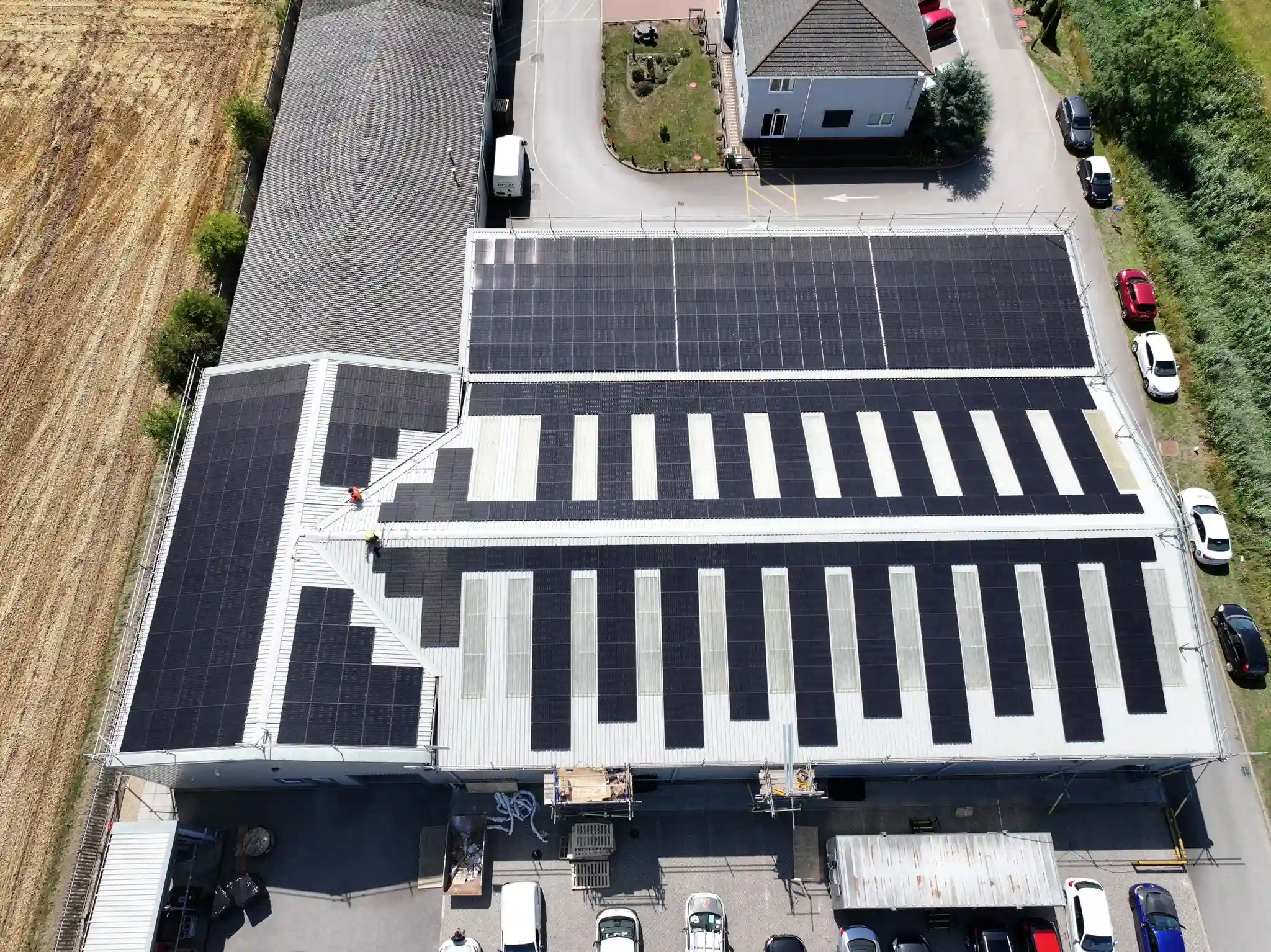
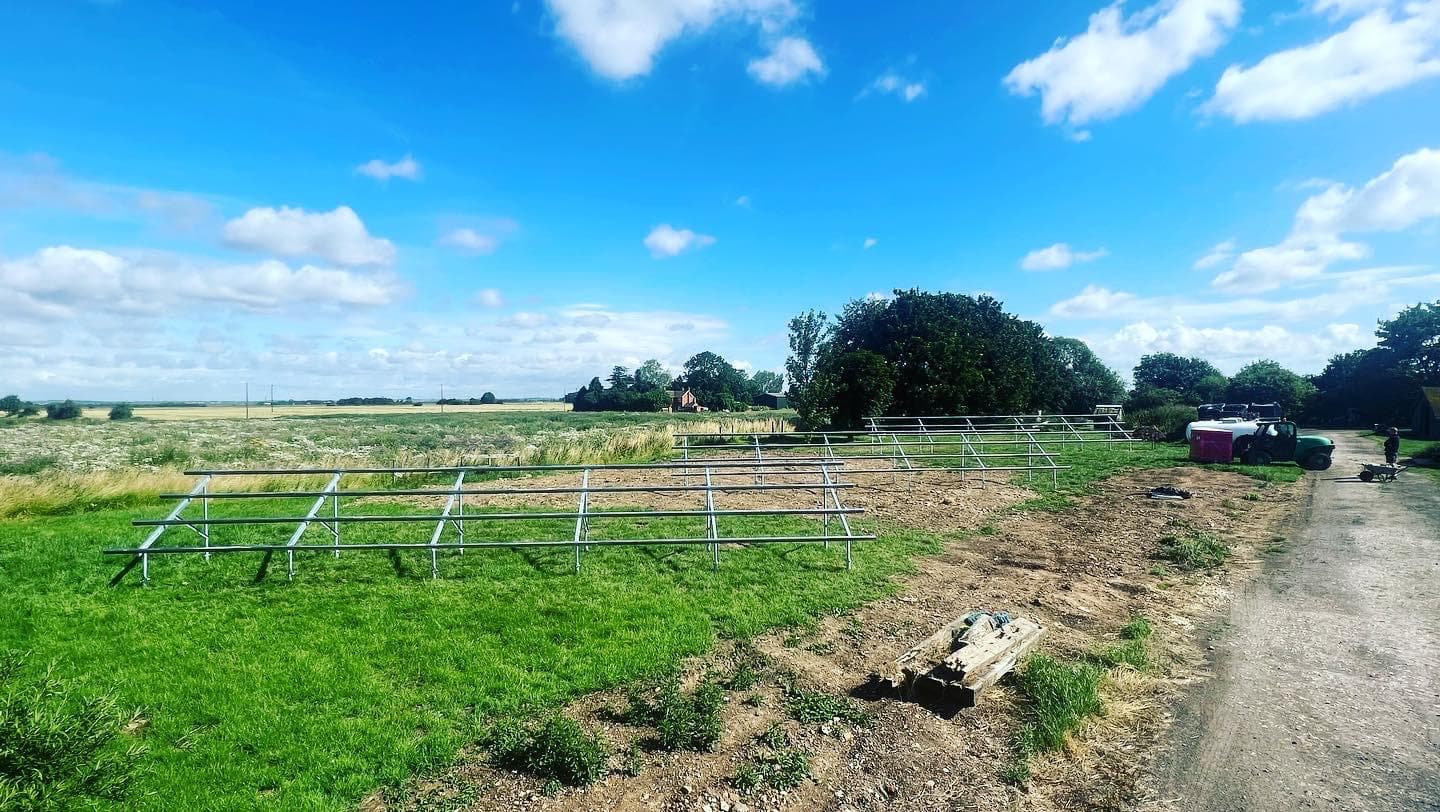
Over more than 30 years in the electrical and renewables trade, we have fitted storage at every scale, and the principle holds whether the system is large or small. On a commercial project we paired a 200kW solar array with 200kWh of battery storage, giving the site a substantial reserve of its own electricity to draw on outside of peak generation. For a poultry farm in Friskney, we designed a ground-mounted solar system with 30kW of battery storage so that stored daytime energy could support the evening and early morning loads that come with running ventilation and environmental controls around the clock.
At the domestic end, we completed a 6.8kW solar and battery installation on a home with a flat roof, proving that an awkward roof is rarely a barrier to a tidy, well integrated system. Being based in Skegness, we also build every system with local conditions in mind, specifying equipment that copes with the salt air and exposed weather of the Lincolnshire coast. As an NICEIC approved, MCS certified and RECC registered installer, and an Octopus installation partner, every battery we fit is installed safely, kept compliant with the regulations and set up to get the most from your solar.
Talking to CES about solar battery storage
Solar battery storage is one of the most effective upgrades available for getting more out of your panels and cutting your reliance on expensive grid electricity, whether you are installing a complete solar and battery storage system from scratch or adding a battery to an array you already have. The key is a system that is sized to how you genuinely use power and installed properly, which is what we do on every job.
If you would like to know what battery storage would realistically save on your property, or whether a retrofit makes sense for your existing solar, get in touch with our team for honest advice and a tailored quote.