
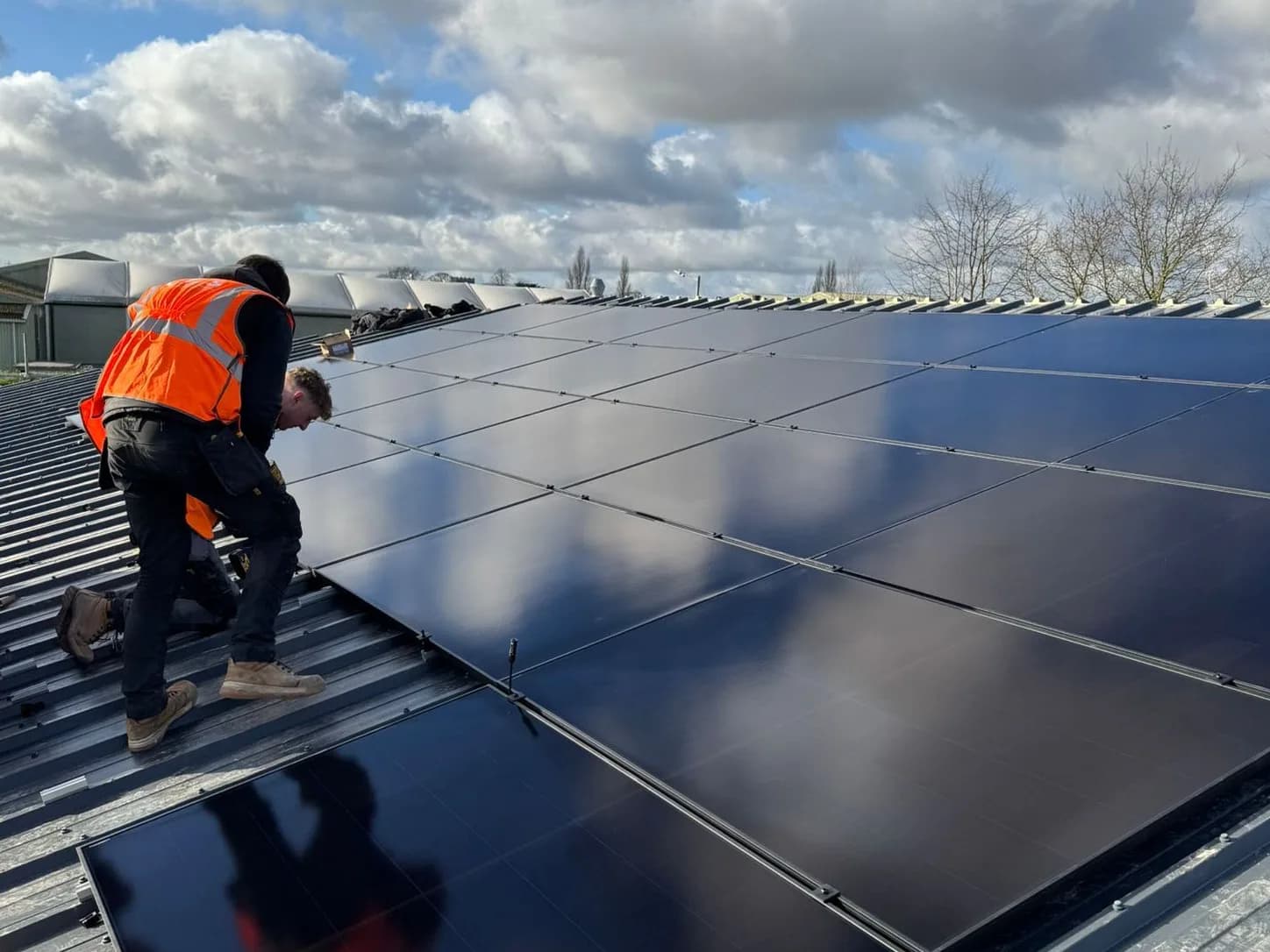
For most Skegness homes, a solar PV installation takes a few weeks from the first visit to a working system, and the part you actually live through, with scaffold and an installation team at the house, is usually two or three days. The scaffold goes up, the panels and inverter are fitted over a day or two, the system is tested and switched on, and you are shown how it works before we leave.
What follows is the whole process in the order it happens, along with the things that are specific to installing solar on this stretch of the coast.
The survey comes first
Everything starts with a visit to your property. We look at the roof, its pitch, which way it faces, its condition and what it is covered with, and at anything that will shade it during the day. We go into the loft to check the timbers and plan the cable route. We look at your consumer unit and your earthing, and we ask how and when your household uses electricity, because that decides the size of the system and whether a battery makes sense.
In Skegness the survey also settles the coastal specification. How close the property is to the sea and how exposed the roof is determines the grade of fixings, the choice of panel and the layout of the mounting. None of that can be judged properly from a satellite image.
The survey is where problems surface early rather than on the day. An older consumer unit that cannot take a new connection, a roof that needs repairs first, a loft with no easy route for the cables. Because we are NICEIC approved electricians as well as MCS certified solar installers, a consumer unit upgrade can be done by the same team as part of the same job, rather than you having to find an electrician separately.
Design, quote and paperwork
From the survey we design the system and send a written quote, with the panels, the inverter, the mounting system and any battery set out by make and model, along with an estimate of how much electricity the system should generate in a year.
Once you go ahead, the network operator has to be dealt with, and for this part of Lincolnshire that is National Grid. A smaller system is notified within 28 days of being switched on. A larger one needs approval before it can be fitted, which can add several weeks, and we make that application for you.
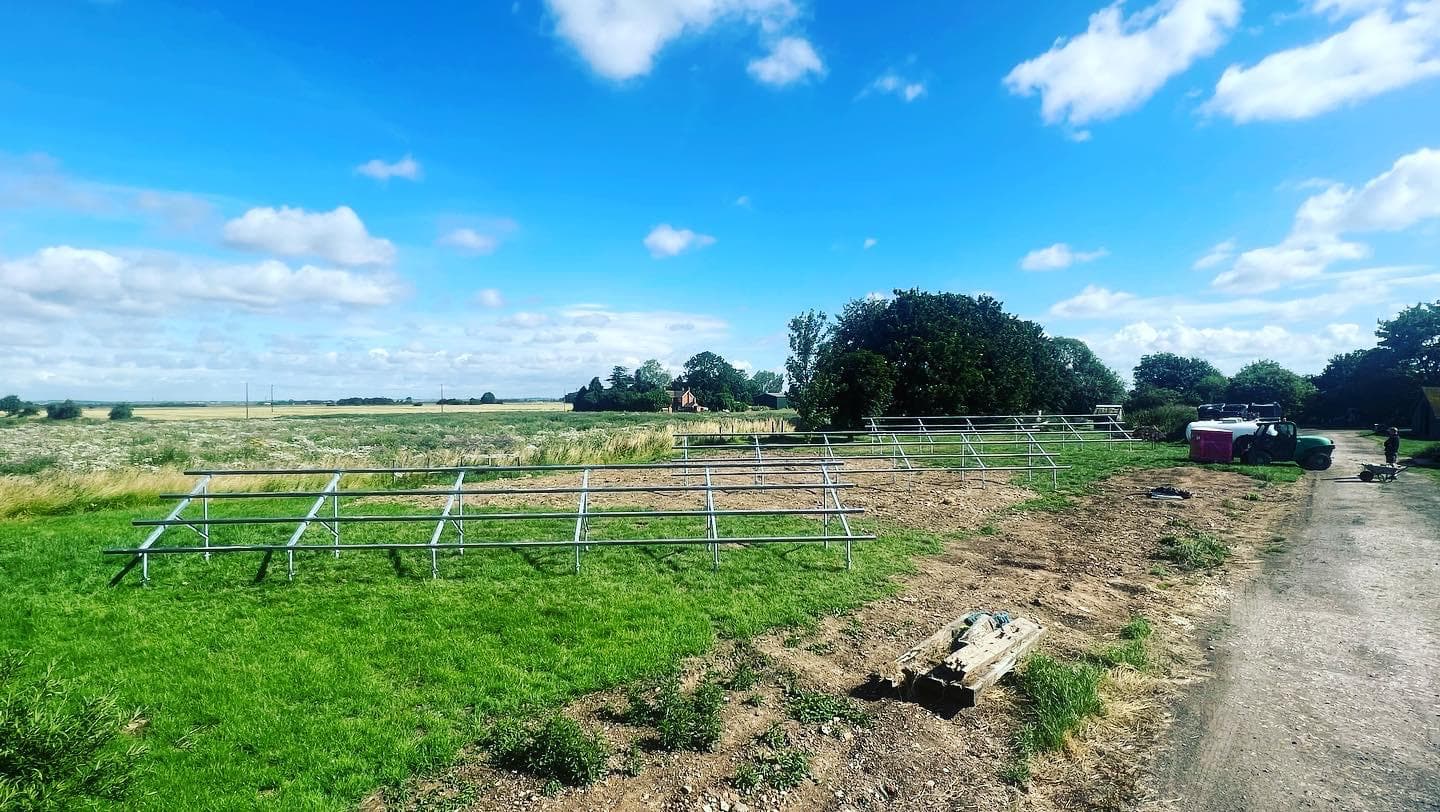
Most home installations do not need planning permission, but there are exceptions, including listed buildings and some ground mounted and flat roof systems, and we check where your property stands at the design stage.
Scaffold day
The scaffold normally goes up a day or so before the installation. Roof work needs proper edge protection, and a scaffold also keeps ladders off your gutters and fascias.
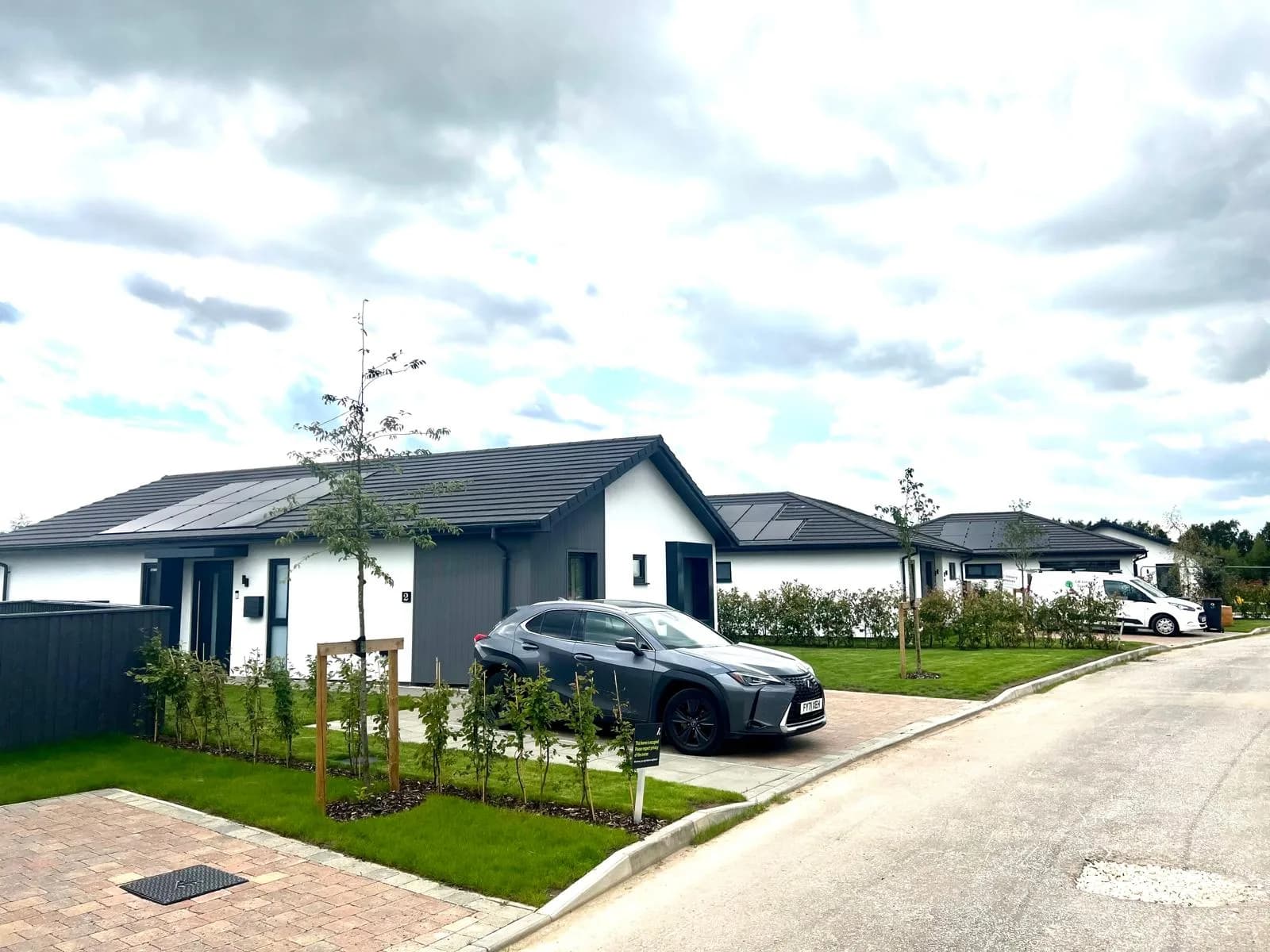
Skegness has a great many bungalows, and single storey scaffold is quicker to put up and far less intrusive. On a two storey house, or a guest house on a narrow street, access is worth thinking about early. If the scaffold has to stand on the pavement it needs a licence from the council, which takes time to arrange, and if it needs to go on a neighbour's land, it is only polite to ask them well in advance.
Installation day
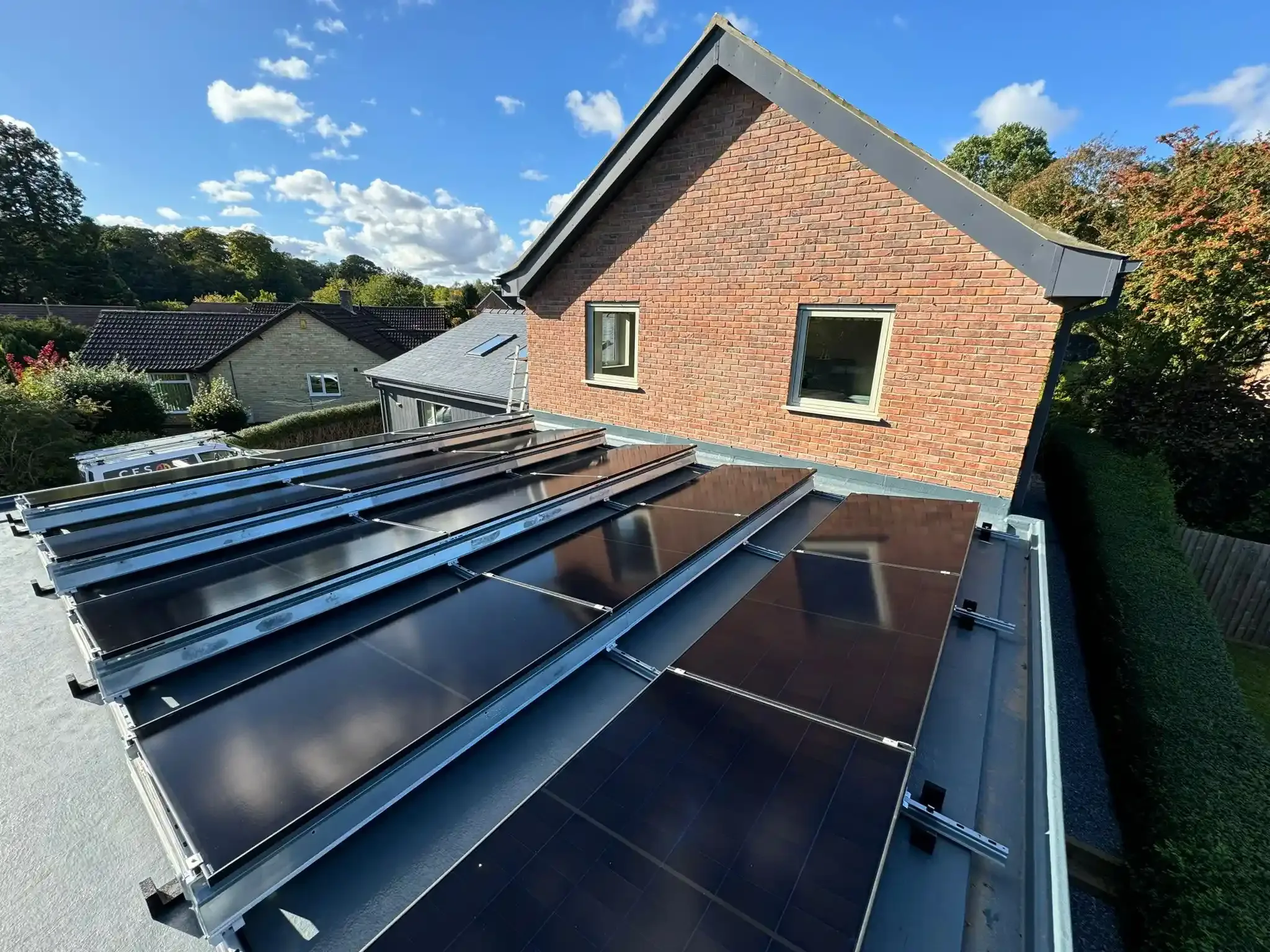
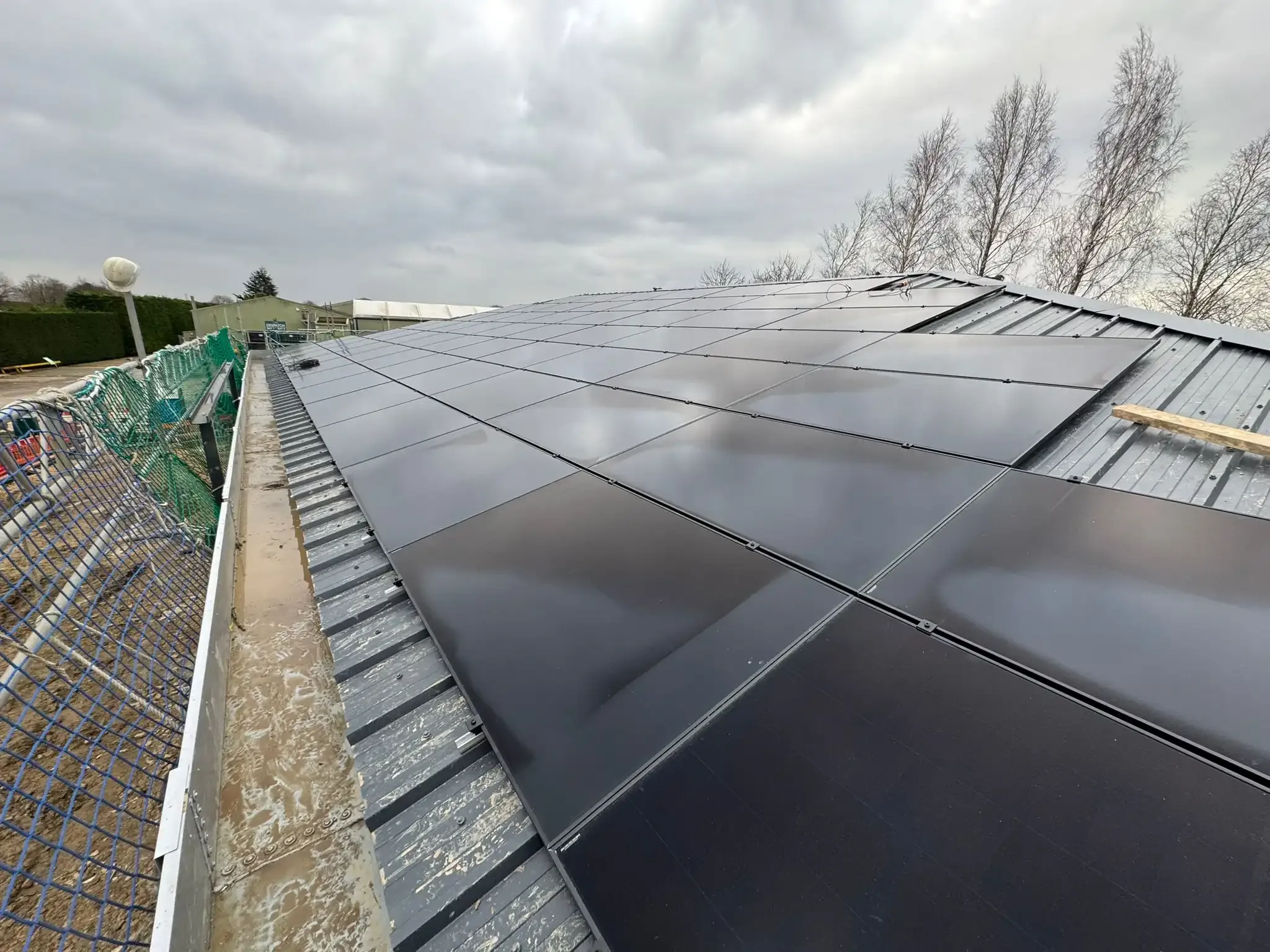
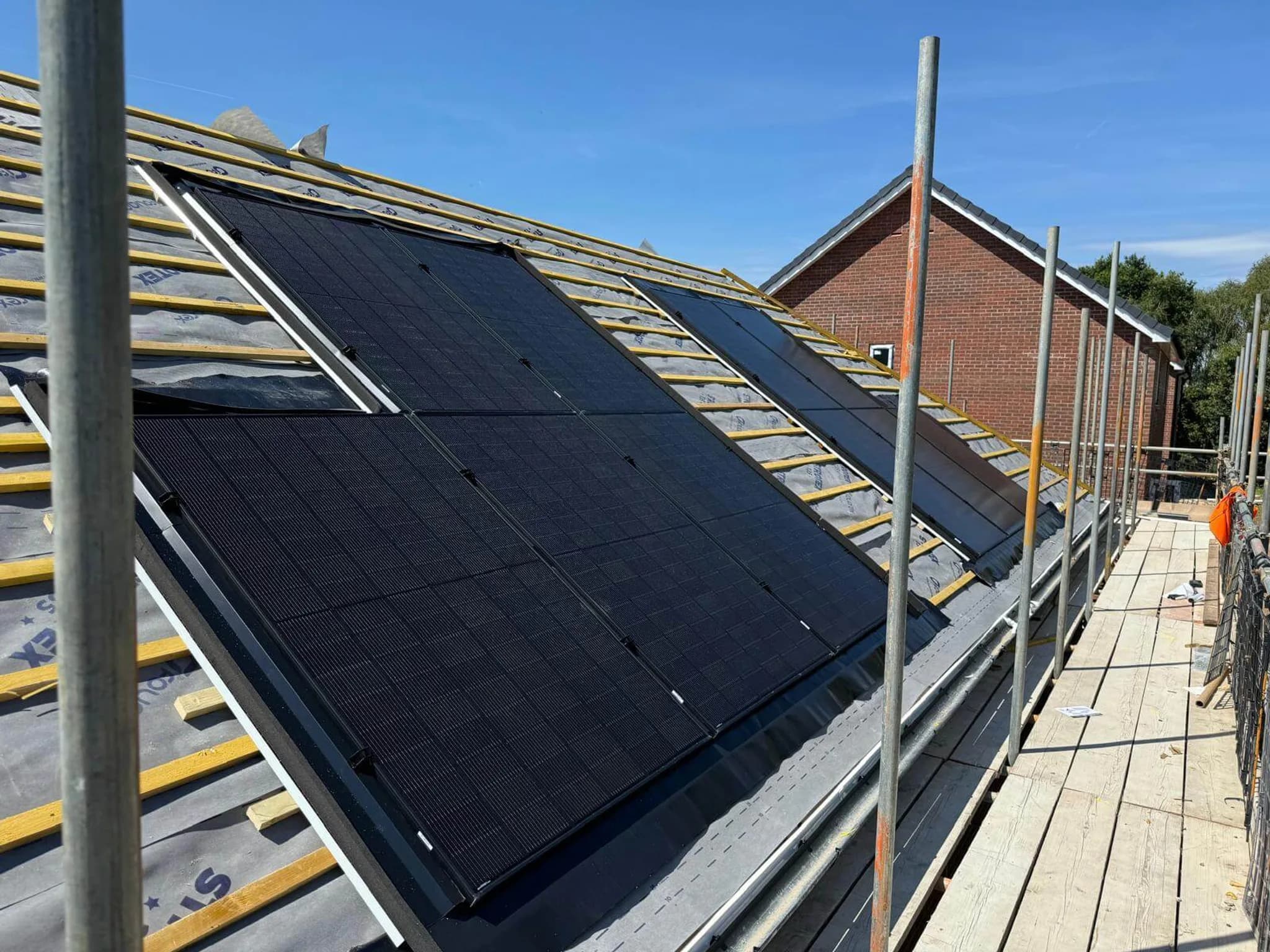
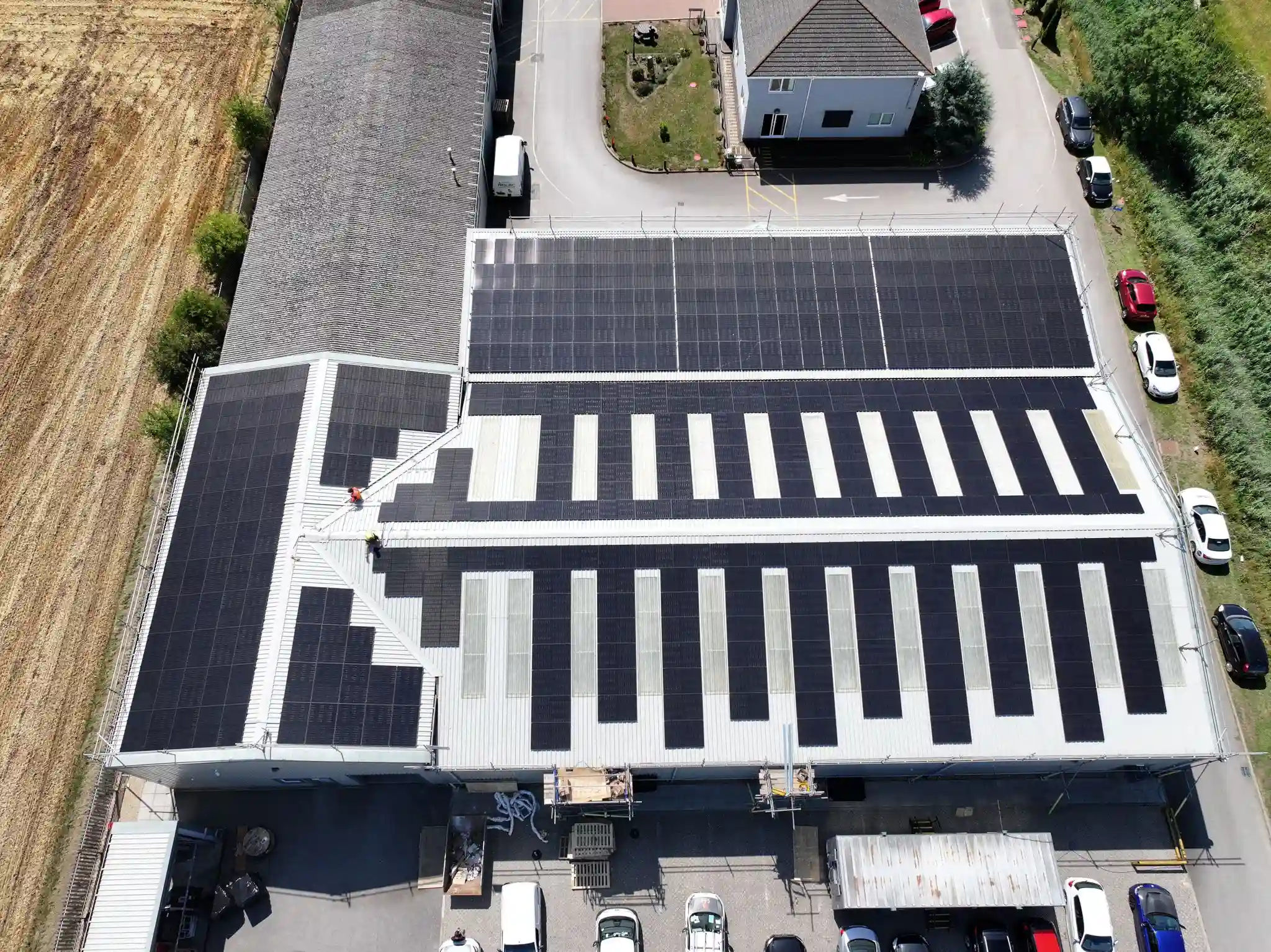
On a typical home the roof work takes a day, sometimes two. Roof hooks are fixed to the rafters beneath the tiles, rails are fitted to the hooks and the panels are clamped to the rails. On a flat roof the panels sit on a tilted frame instead. On our 6.8kW flat roof installation, fifteen 455W AIKO panels went onto a VanderValk flat roof mounting system, with optimisation fitted where part of the roof caught some shade.
While that is going on, the electrical side goes in. Cable runs from the array through the roof to the inverter, which usually lives in a garage, utility room or loft, and on from the inverter to your consumer unit, with isolators at each stage so every part of the system can be switched off safely. If you are having a battery, it goes in at the same time, normally in the garage or a utility room.
At some point the power to your home has to be switched off while the new circuit is connected. It is usually a short interruption, and we agree the timing with you beforehand so it does not catch anyone out.
Most of the noise and activity is outside. Inside, we need access to the loft, the consumer unit and wherever the inverter and battery are going, and we clear up as we go.
Testing and switching on
Before anything is switched on, the system is tested. The panel strings are checked for voltage, current and insulation resistance, the AC side is inspected and tested to BS 7671, and the inverter is set up to meet the network operator's requirements. Then the system is energised and we check that it is generating as it should.
We also connect the inverter to its monitoring platform, so you can see what the system is doing on your phone. It matters more than it looks, because a system that nobody is watching can stop generating without anyone noticing.
What you are left with
At handover you receive the paperwork that proves the system was installed properly. That means the MCS certificate, which you need to claim export payments under the Smart Export Guarantee, the electrical installation certificate, a Building Regulations compliance certificate, confirmation of the network notification or approval, and the warranty documents for the panels, the inverter and any battery. Keep them together, because a buyer's solicitor will ask for them if you ever sell.
We also talk you through the inverter display and the app and explain what normal looks like for your system, so you can tell if something changes.
Holiday lets and guest houses
A large part of Skegness earns its living from visitors, and solar suits holiday lets and guest houses well, because they use the most electricity in summer, exactly when panels generate the most. The installation just needs a little more planning around the bookings.
For a holiday let, the quieter months between October and March are the better time to book, rather than squeezing the job into a gap between summer bookings. The scaffold can stay up as long as the job needs without a changeover day forcing the pace, any roof repairs found along the way can be done properly rather than patched, and the system is commissioned and reporting on the app before the first guests of the season arrive.
If the installation is on your own home, there is also the VAT deadline to think about. Solar and battery installations on homes are zero rated for VAT until 31 March 2027, and a job booked for this winter lands comfortably inside that.
After the installation
A solar system asks very little of you. Near the sea it is worth having it inspected from time to time, checking the fixings, the cable entry through the roof and the connections. Our aftercare covers those checks, and because we are based at Skegness Business Centre, we are never far away if something needs looking at. If salt or gull droppings build up on the panels, they are worth cleaning too.
Talking to us
If you are in Skegness or one of the villages around it and thinking about solar, the first step is a survey. Get in touch with CES and we will arrange a visit.