

Consumer unit replacement in Lincolnshire
A new consumer unit fitted and tested by NICEIC approved electricians, with every existing circuit checked before it is reconnected. We size it for the solar, battery or car charger you may add next, so it does not need changing again.
Metal clad boards with RCBOs and surge protection.
- Metal clad consumer units
- RCBO protection on each circuit
- Surge protection
- Circuits tested before reconnection
- Part P notification and certificate
How we work
- 1Free consultationWe look at what you have and what you need, with no obligation.
- 2Tailored designA written quote with the kit list and the numbers before you commit.
- 3Professional installOur own engineers, certified and notified properly.
- 4AftercareServicing and support once the job is signed off.
Signs a consumer unit needs replacing
Most boards do not fail outright. The case for changing one is usually about what it lacks. Rewireable fuses holding a length of fuse wire, no RCD protection at all, or a single RCD that takes half the house down whenever anything trips are the commonest reasons we are asked to look. A plastic consumer unit is not dangerous simply because the rules have moved on, and nobody should tell you it has to go on age alone.
Some signs should not wait. Scorch marks on the casing, a hot or fishy smell near the board, a buzzing you can hear, or a breaker that trips again the moment it is reset all point to a problem inside the board or on a circuit feeding it. Switch off what you safely can and call us. An EICR is often where this starts, and if the report comes back unsatisfactory a landlord has twenty eight days to put it right.
What the current rules expect of a new board
Consumer units in homes have had to be non combustible since 2016, which in practice means metal. Under BS 7671:2018+A4:2026, the edition of the IET Wiring Regulations in force since April 2026, socket circuits up to 32 amps and the lighting circuits in a home need 30mA RCD protection, and surge protection is now the normal expectation in most homes.
We fit an RCBO on each circuit rather than splitting the house across two shared RCDs, so a fault stays on the circuit that caused it. Arc fault detection devices are required in some higher risk buildings, such as houses in multiple occupation, and are worth discussing in any home where they are not. We explain each choice and fit what the installation needs, not every optional device in the catalogue.
Room for solar, batteries and a car charger
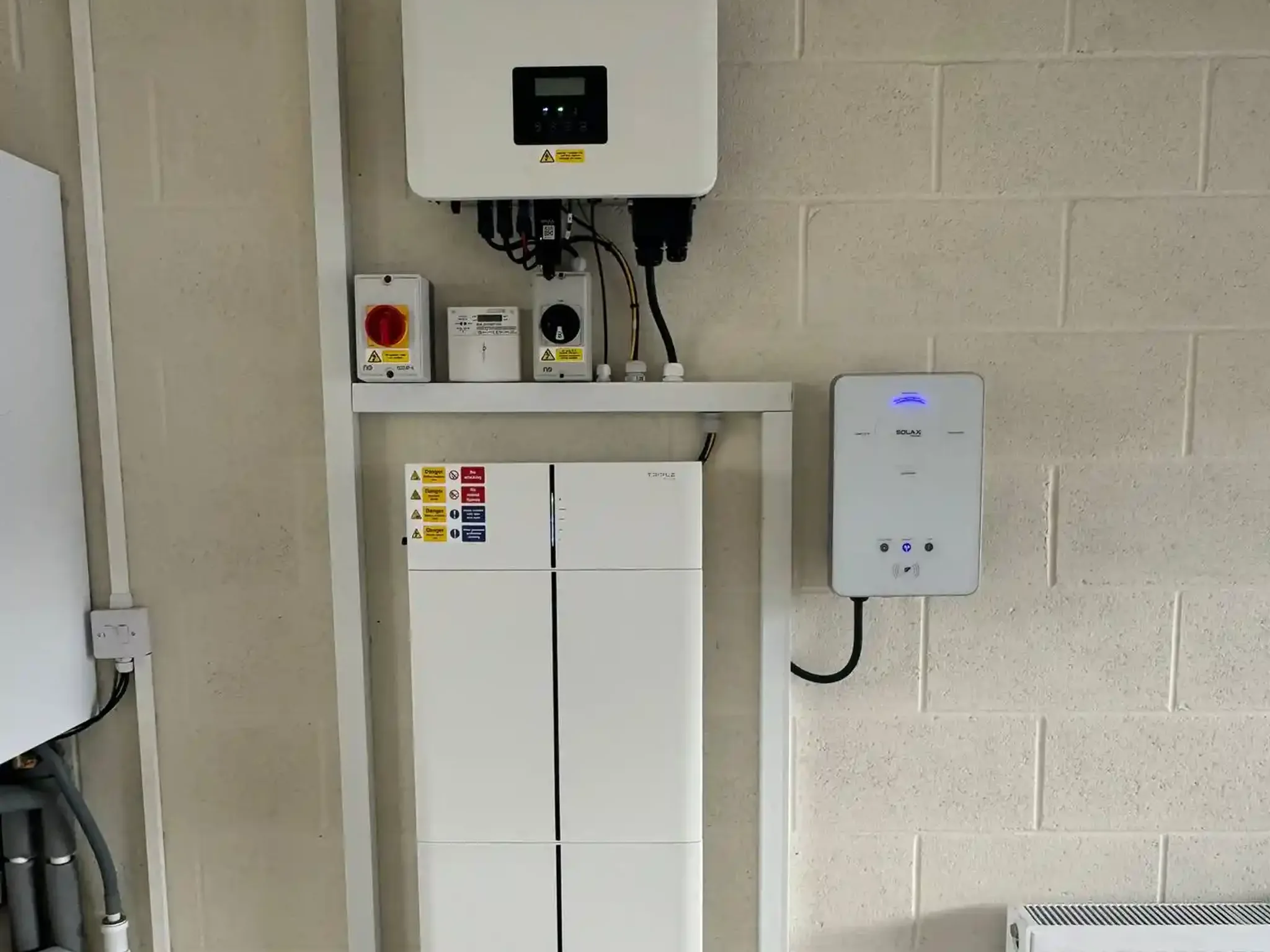
A board changed today should suit the house for the next twenty years, and in this county that increasingly means solar, a battery or an EV charger. Each one wants its own protected circuit and space in the board, and a charge point needs the right type of RCD or built in DC fault protection. We ask about those plans before choosing the board, so it is not being changed again in two years.
Generation changes the labelling too. A board that can be fed from both the grid and an inverter has to carry dual supply warnings, so whoever works on it later knows to isolate both sources. It is exactly the kind of detail that goes missing when one firm changes the board and another fits the panels, which is one reason we prefer to do both.
On the day, and the paperwork you keep
A straightforward change is usually a day on site with the power off for most of it, so we agree the timing in advance and ask about anything that cannot lose supply, such as a freezer, a stairlift or medical equipment. Before the new board goes live, every circuit is insulation tested. A modern RCBO will trip on a slow earth leak the old fuses never noticed, and it is better to find a damp junction box with the test kit in hand than with the lights out on a Sunday night.
If the meter tails or the main fuse need attention, or there is no safe way to isolate the supply, we arrange it with the network operator or your energy supplier rather than breaking a seal. Replacing a consumer unit is notifiable under Part P. As NICEIC approved contractors we notify building control ourselves, you get an Electrical Installation Certificate from us, and a Building Regulations compliance certificate follows. Keep both with the deeds.
We have done this before.
 Case study13 Eco Bungalows at Burton Waters, LincolnCoastal Electrical Services & Renewable Energy were appointed to deliver the full electrical installation for a high-spec eco bungalow development consisting of 13…
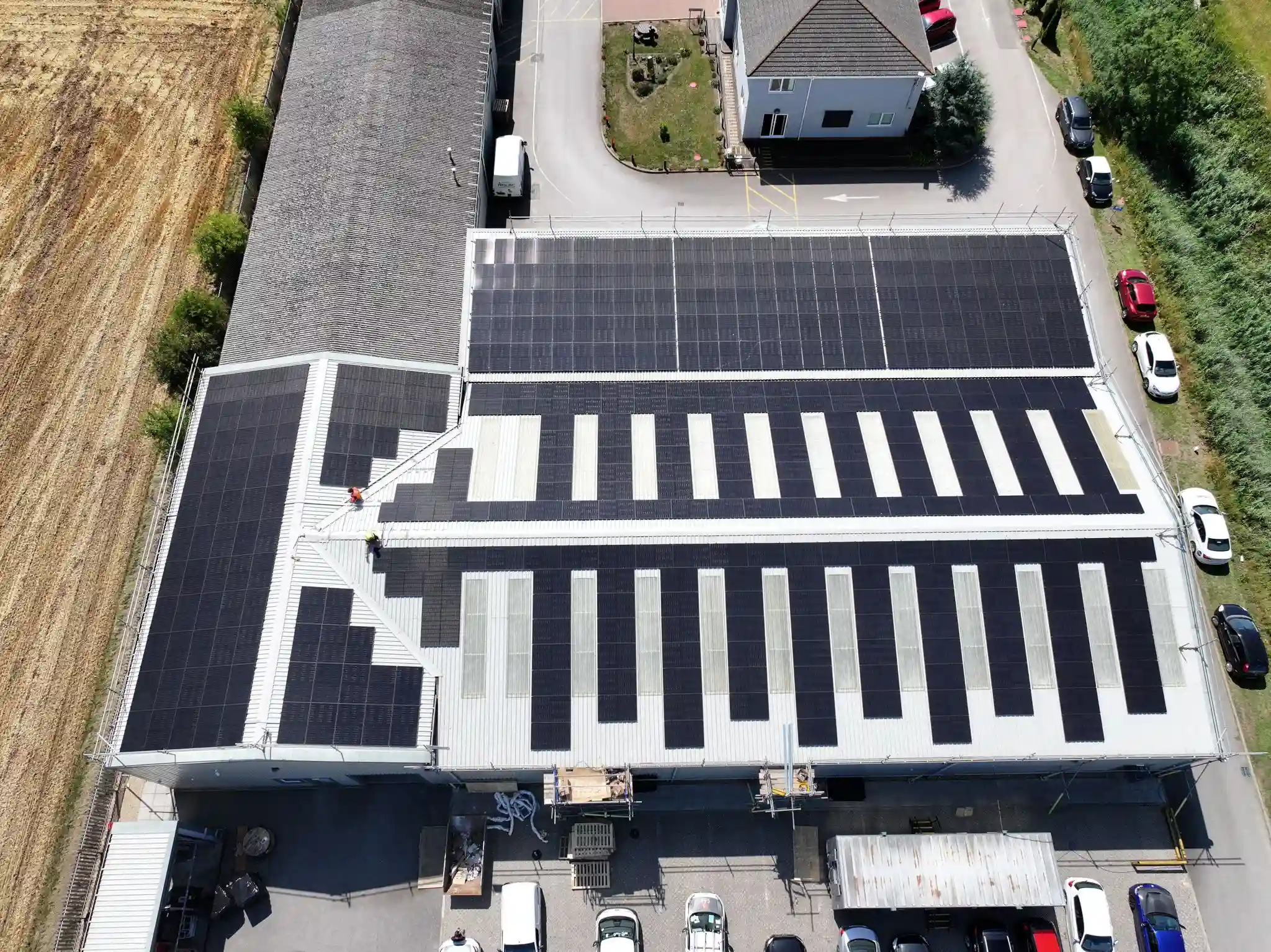
 Case study6.8kW Flat Roof Solar and 9kWh Battery for a HomeCES Renewables has successfully completed another high-quality domestic renewable installation. This 6.8kW Solar PV system was designed for a flat roof application,…
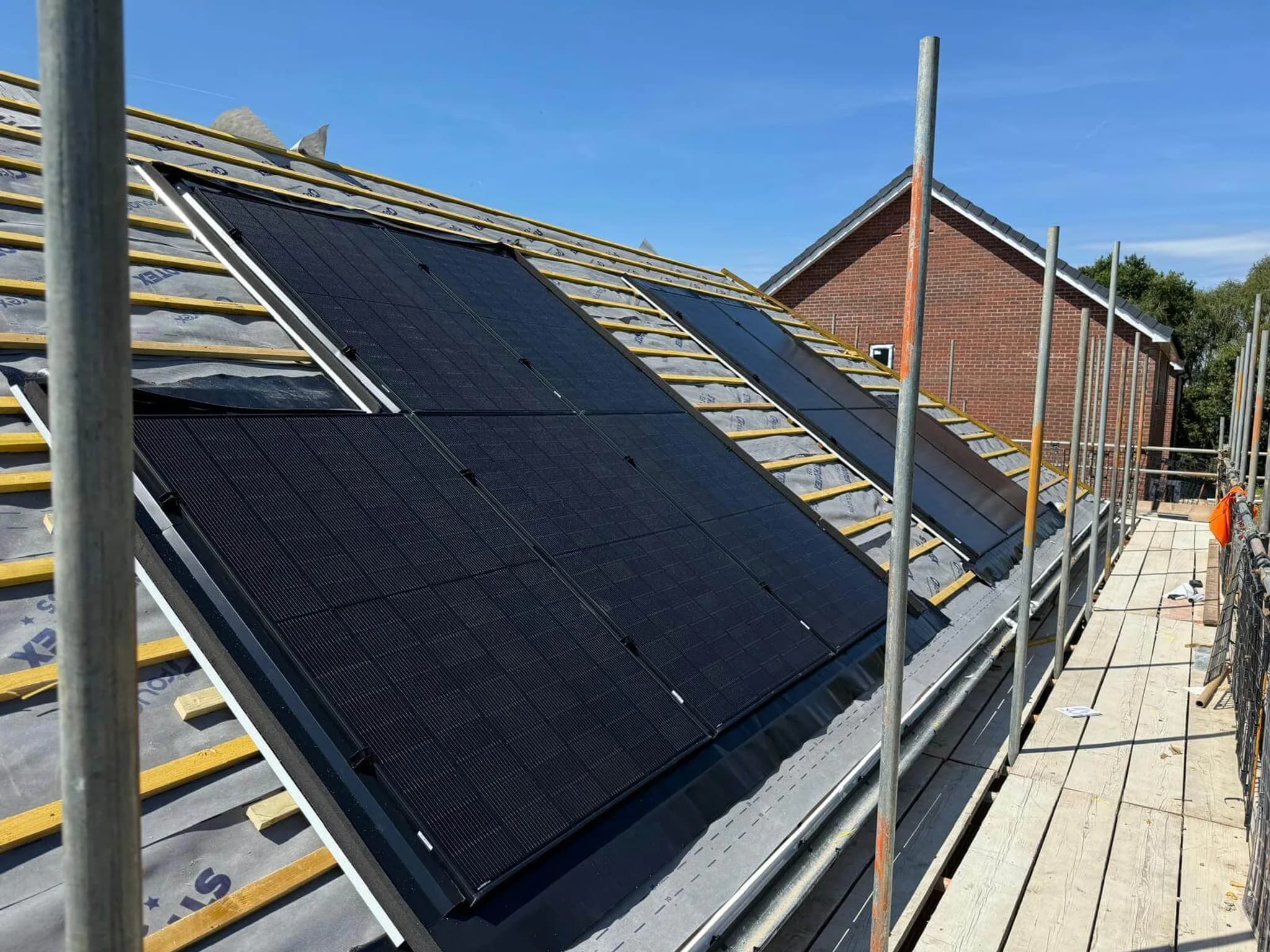
 Case studySix In-Roof Solar Systems on a New Build DevelopmentWe partnered with a new build housing developer to install 6 brand-new Solar PV systems, ensuring each property is future-ready and powered by clean, renewable energy…
Everything else we do.
Consumer unit replacement across Lincolnshire.
Based in Skegness and covering the county. If you are not sure whether we reach you, just ask.