
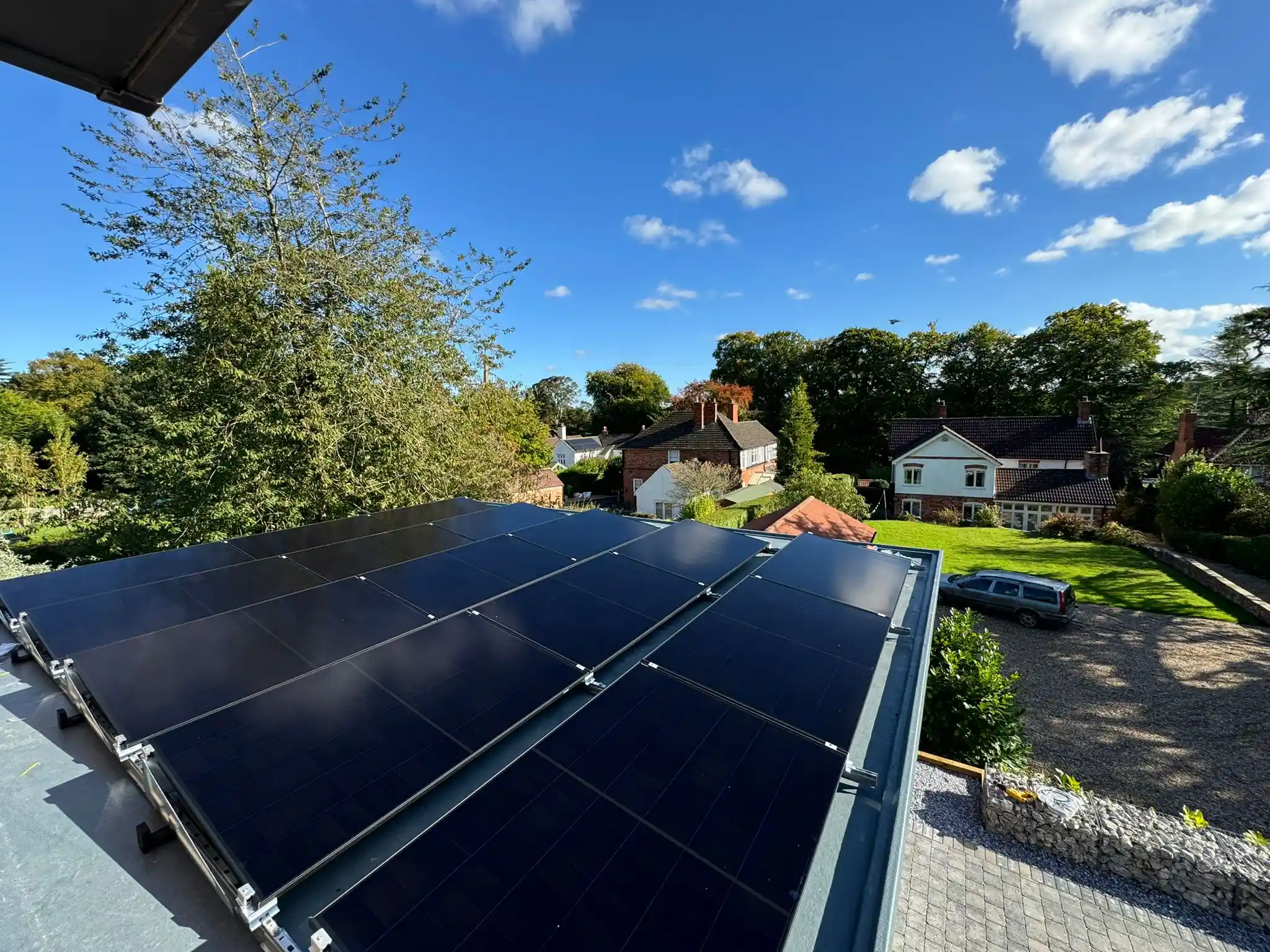
So, How Can Coastal Weather Affect Solar Panels in Skegness
Coastal weather affects solar panels in Skegness in two quite different ways, and the balance is more positive than most people expect. On the plus side, the cooler air and steady sea breezes along this coast keep panels running closer to their rated output than they manage on a baking, still inland roof, and the open aspect of many properties here means less shading from trees and neighbouring buildings. Eastern England is also one of the driest and sunniest parts of the country, so there is more usable daylight on this coast than in much of the UK.
The challenges are real but entirely manageable, and they come down to how a system is specified rather than whether solar works here at all. Salt-laden air accelerates corrosion of metal components, exposed sites carry higher wind loads, gull fouling is a genuine nuisance in a seaside town, and sea fret can knock out generation on some mornings. None of this stops a well-built system performing strongly. What it does mean is that a system specified for a sheltered inland garden will not last as long on the seafront as one designed properly for it. Below we go through each factor and what a coastal installation should do differently.
Why the Skegness coast is genuinely good for solar
Panels are often assumed to want heat, but they run on daylight, and they actually lose a little efficiency as they warm up. Every panel has a temperature coefficient, meaning its output drops slightly for every degree above the standard test temperature. On a still inland roof in high summer, that loss is measurable. On the coast, near-constant air movement passes over and around the array and carries heat away, keeping panels closer to their rated performance through the hottest part of the day.
We have found that this cooling effect is one of the more underrated advantages of installing on the coast, and it offsets a fair amount of what people assume they lose to sea air and cloud. The open aspect helps too, since many properties around Skegness have low surroundings and little tree cover, so shading is less of a problem than in wooded inland villages. Combined with the dry, bright climate of eastern England, the fundamentals here are strong, which is why solar panels are worth it in Lincolnshire for the great majority of properties.
Salt air and corrosion
This is the single biggest difference between a coastal installation and an inland one. Salt carried on the wind settles on every exposed surface, and in the presence of moisture it accelerates the corrosion of metal. The components at risk are the mounting rails and roof hooks, the clamps holding the panels in place, the fixings themselves, the module frames, and the earthing and bonding connections that keep the system safe.
The panels themselves can be specified to cope. There is an international standard for exactly this, BS EN IEC 61701, which tests how well a module resists salt mist corrosion and grades it by severity level, with the highest levels intended for the harshest marine environments. Choosing modules tested to a suitable level is a straightforward way of making sure the array itself is built for a seafront rather than a suburb.
In our experience, marine-grade stainless steel fixings work better than standard stainless on coastal roofs because the higher grade resists chloride corrosion far more effectively, and within sight of the sea that difference starts to show in years rather than decades. The other thing we watch closely is the pairing of different metals, since salt acts as an electrolyte and speeds up galvanic corrosion wherever dissimilar metals sit in contact. Getting the material choices right at the design stage costs very little and is what keeps a coastal system solid for its full working life.
Wind and exposure
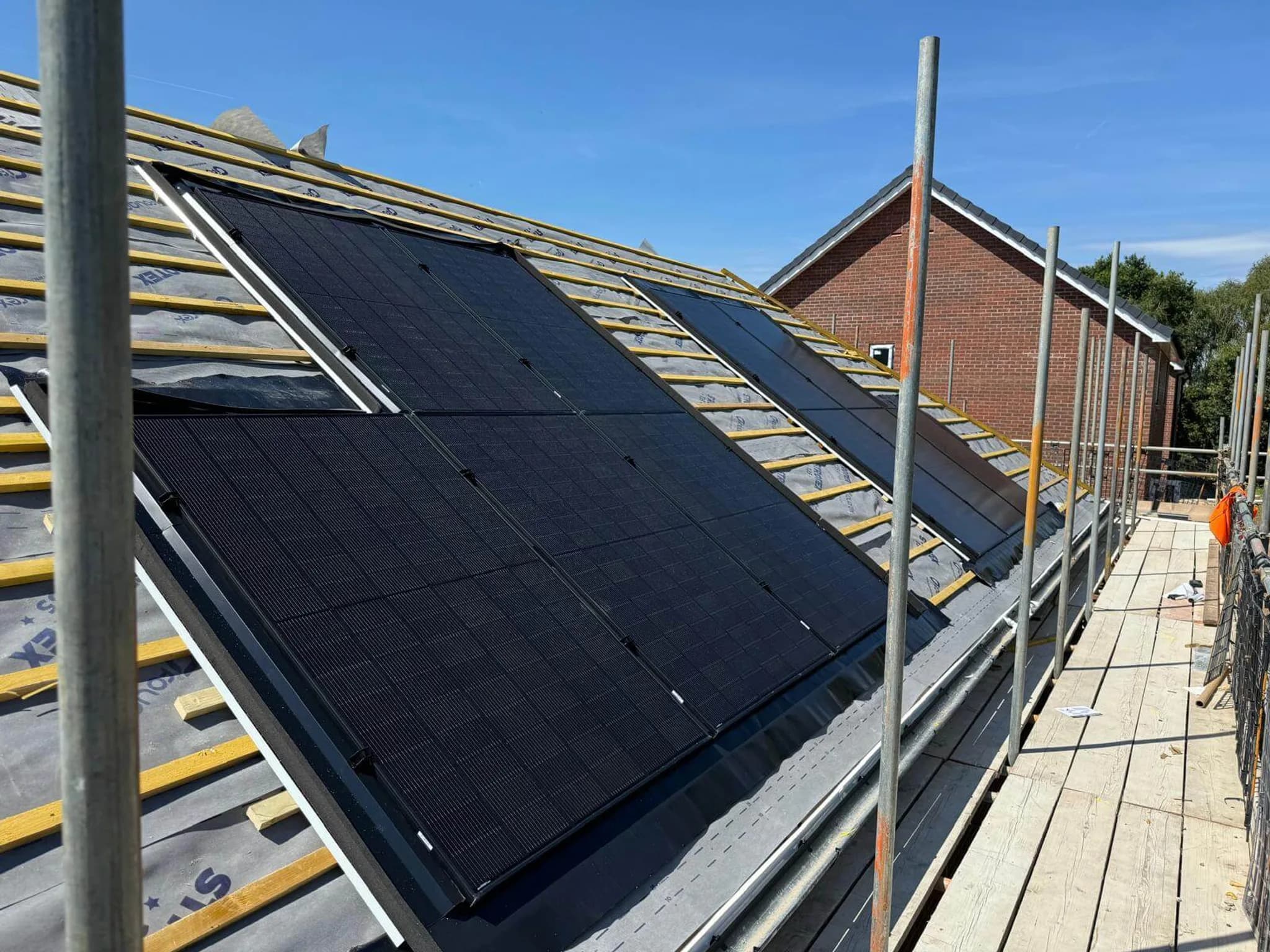
The Lincolnshire coast is open and windy, and mounting systems here have to be designed for it. Wind does not simply push down on an array, it lifts, and the uplift forces on a roof are strongest at the edges and corners rather than in the middle. That means the layout of the array, the number of fixing points and the spacing of the rails all need to be worked out for the specific roof and its exposure, not taken from a standard template.
Flat roofs need particular attention, because those systems are often ballasted rather than fixed through the roof covering, and the ballast has to be calculated for local wind loading rather than guessed. We also tend to keep arrays set back from the most exposed roof edges where the design allows. It is worth saying plainly that a properly engineered mounting system handles coastal wind without difficulty. The problems we get called out to are almost always systems that were specified as though they were going somewhere sheltered.
Sea fret and coastal mist
Anyone living on this coast knows the sea fret, the low mist that rolls in off the North Sea when warm air passes over cold water, most commonly in spring and early summer. While it sits over the town it will cut solar generation noticeably, since the light reaching the panels is much weaker.
The reassuring part is that fret is usually a morning affair that burns back through the day, and it affects a limited number of days across the year. Set against the annual generation figure, its impact is modest, and it is already reflected in the real-world output we see from coastal systems. It is worth knowing about so you are not alarmed when your monitoring app shows a flat morning in May, but it is not a reason to think twice about solar here.
Gulls, and why they matter more than people think
This is the coastal factor that catches most people out. Skegness has a substantial gull population, and gulls cause solar owners two distinct problems. The first is fouling, since droppings on the glass block light, and a heavily soiled patch can shade cells enough to create hot spots that stress the panel over time. The second is nesting, because the gap between the panels and the roof makes an attractive sheltered space, and nesting material packed under an array restricts the airflow that keeps panels cool while creating a mess that is awkward to clear.
The straightforward answer is bird proofing, a mesh or clip system fitted around the perimeter of the array that closes off the gap without affecting ventilation or access. From working with clients in seaside towns, we would always rather discuss proofing at the design stage than fit it retrospectively after a nesting season has already caused a problem, and on exposed seafront properties in particular it is money well spent.
Cleaning and maintenance on the coast
Coastal panels do tend to pick up more soiling than inland ones, between salt residue, windblown sand and the gull fouling above. Rainfall handles a good deal of this, particularly on a pitched roof where water runs off freely, so panels are largely self-cleaning. Where coastal arrays differ is that they benefit from being checked a little more regularly, both for soiling and for any early signs of corrosion at the fixings and connections. It remains a low-maintenance technology, and none of this is onerous, but it is worth an occasional look rather than complete neglect.
Where to put the inverter and battery
One decision that matters more here than inland is siting the electronics. Inverters and batteries should go somewhere sheltered, typically a garage, utility room or plant room, rather than mounted on an exposed external wall facing the sea. Weather-rated enclosures keep rain out, but sustained salt air is hard on electronics and connections over a period of years, and an inverter is the component most likely to need replacing during a system’s life in any case. Putting it somewhere protected is a small choice at installation that pays off considerably later.
What we have found installing solar on the Lincolnshire coast
We are based in Skegness, so coastal installations are not an occasional job for us but the conditions we work in every week, backed by more than 30 years in the electrical and renewables trade. That local experience shapes the specification decisions above, from fixings and mounting design through to bird proofing and where the inverter ends up.
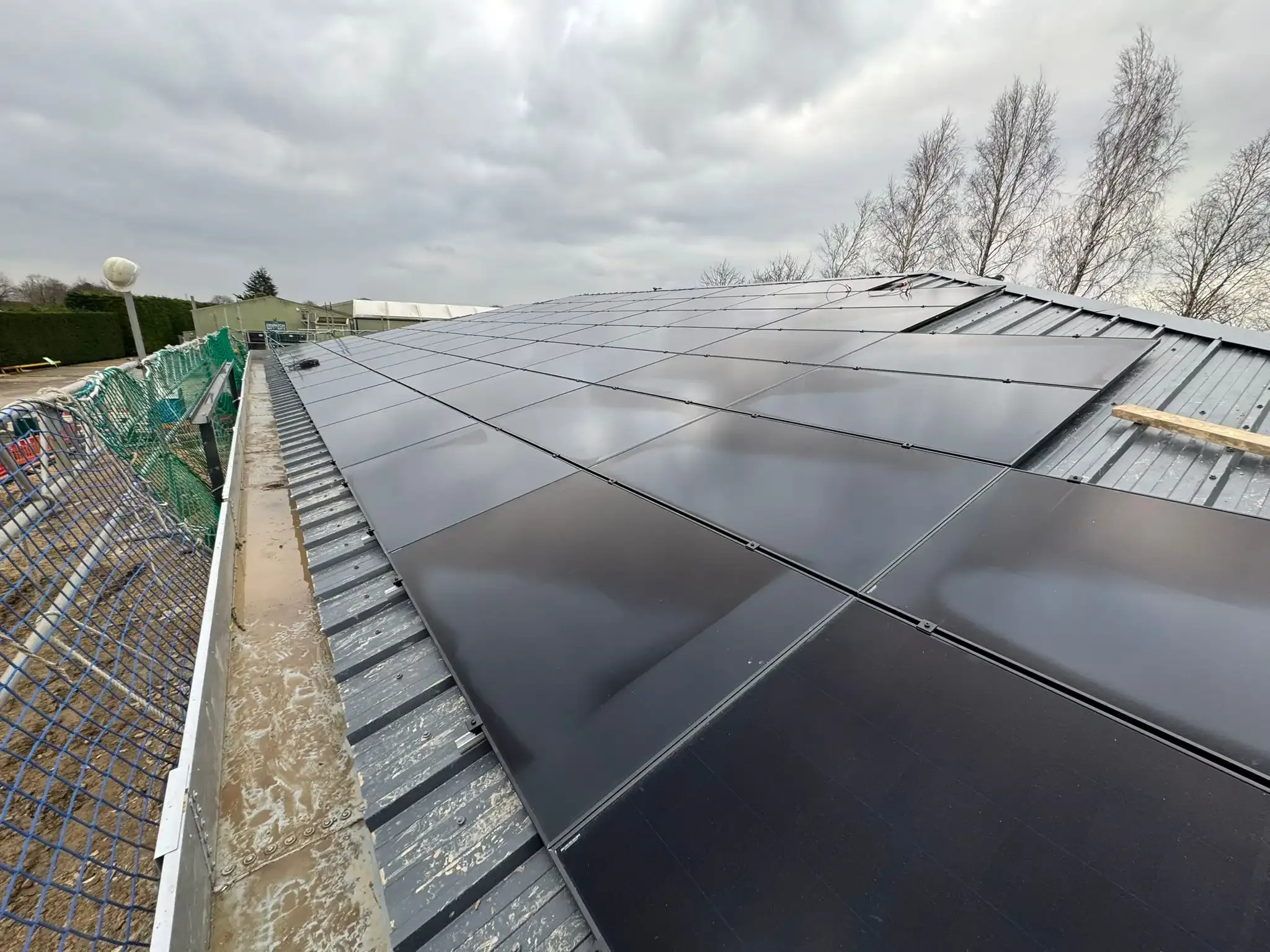
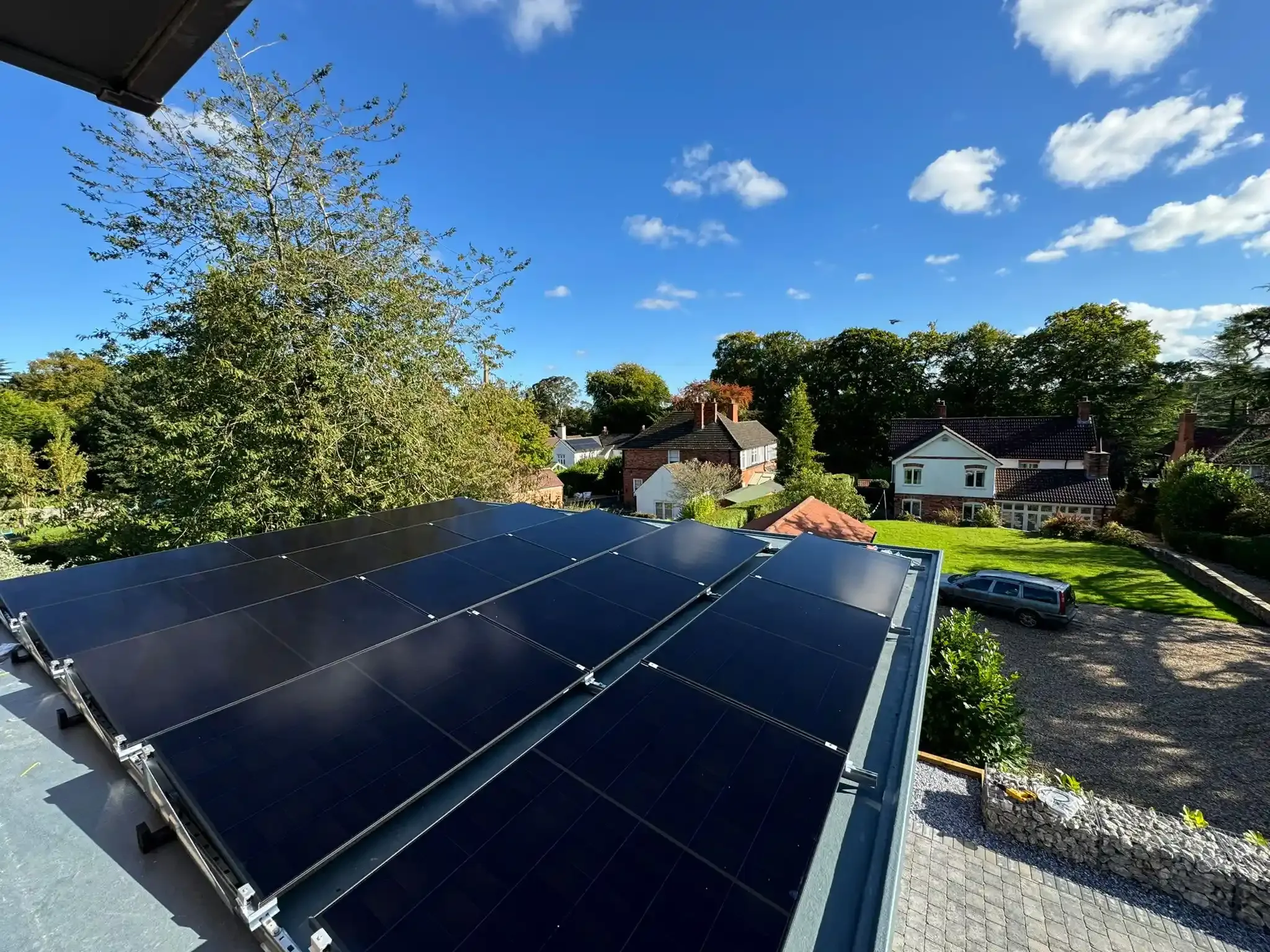
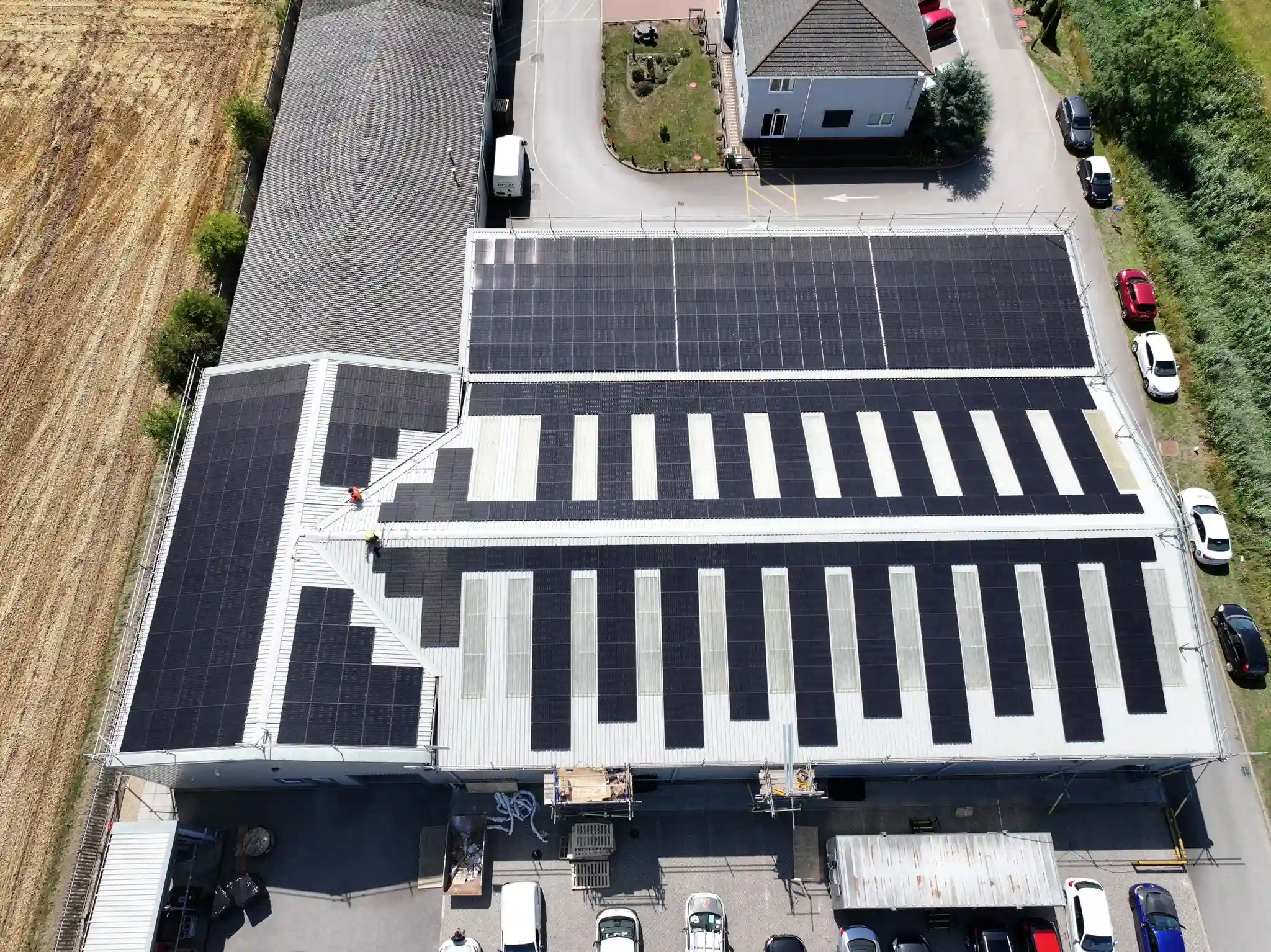
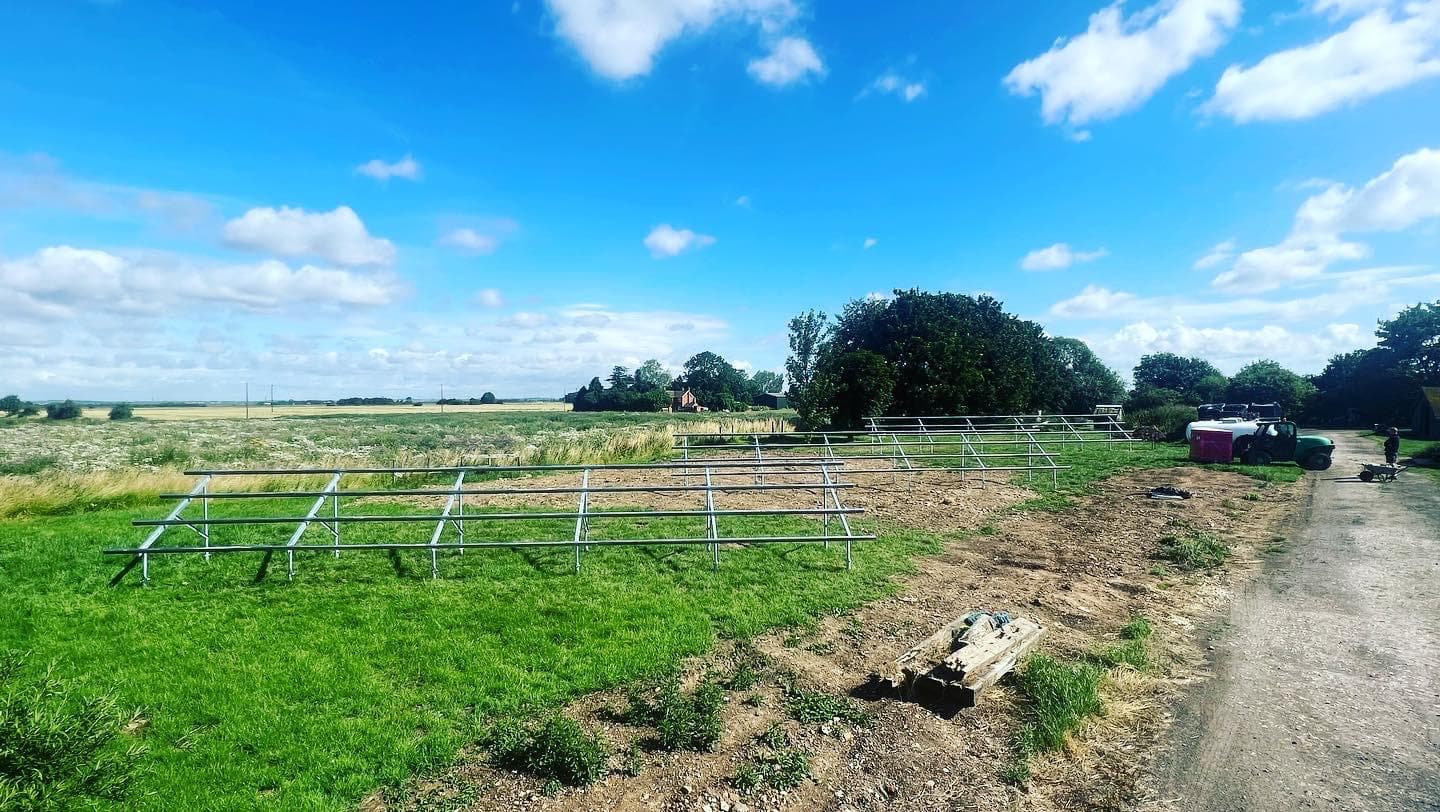
Our work spans everything the coast and its hinterland throws up. We completed a 6.8kW system on a domestic flat roof, the sort of installation where wind loading and ballast need proper calculation rather than assumption. Inland at Friskney we designed a 30.24kW ground-mounted array with 30kW of battery storage for a poultry farm, where exposure across open agricultural land brings its own demands. As an NICEIC approved, MCS certified and RECC registered installer, and an Octopus installation partner, we design every solar PV system around the property in front of us and the weather it will actually face.
Talking to CES about coastal solar
Coastal weather does not hold solar back in Skegness. Handled properly, the cooler air and open aspect work in your favour, and the challenges of salt, wind and gulls are all dealt with through specification rather than compromise. What matters is working with someone who treats a seafront roof differently from an inland one, which is worth bearing in mind when choosing a solar panel installer.
If you would like honest advice on what solar would deliver on your coastal property, and how we would build it to last here, get in touch with our team for a tailored quote.