
Solar panels last around twenty five to thirty years, and a good many carry on well past that. What confuses the question is that panels do not stop working at the end of their life the way a boiler or a washing machine does. They fade, very slowly, at roughly 0.3 to 0.5% of their output a year, so a panel installed today should still be producing somewhere around 85 to 90% of its original figure after twenty five years.
The component that genuinely needs replacing is the inverter, usually somewhere around the ten to twelve year mark. That is the single most useful thing to understand about the lifespan of a solar system, because people budget for replacing panels that will outlive their mortgage while overlooking the box on the wall that will not.
What lasting actually means for a solar panel
A panel has no moving parts. It is silicon cells laminated between glass and a polymer backsheet inside an aluminium frame, and nothing inside it wears out through use. What happens instead is gradual degradation, driven by decades of ultraviolet light, heat cycling and moisture working on the materials.
The rate is well understood and remarkably slow. Most modern panels lose between 0.3 and 0.5% of output annually, and the better n type cell designs now sit at the lower end of that. The first year is slightly steeper than the ones that follow, which is normal and accounted for in every manufacturer's figures.
So a twenty year old array is not a dead array. It is an array producing perhaps 90% of what it once did, which is why we so rarely recommend replacing panels that are merely old. Age on its own is not a fault.
The three warranties, and which one is doing the work
Every properly installed system comes with three separate promises, and they are routinely confused with one another.
The product warranty covers the panel physically failing, so delamination, a cracked cell, a failed junction box, corrosion of the frame. These typically run ten to fifteen years, though some manufacturers now go considerably further.
The performance warranty is the long one, normally twenty five or thirty years, and it guarantees a minimum output at a given year rather than covering a defect. If the panel measurably falls below that curve the manufacturer makes it good. This is the warranty people are thinking of when they say panels are guaranteed for twenty five years.
The workmanship warranty comes from the installer and covers the installation itself rather than the hardware. It is the one most worth asking about, because it is the shortest and the one that depends entirely on the firm still trading. Certified installers must offer a minimum period and many offer a good deal more, and consumer protection under the Renewable Energy Consumer Code sits alongside it.
The inverter is the part you will replace
The inverter converts direct current from the panels into the alternating current your house uses, and unlike the panels it is working hard every daylight hour. It is the component we replace most often by a wide margin.
In our experience, replacing an ageing inverter works better than replacing the whole system because the array is almost always still inside its performance warranty when the inverter gives up, and a modern replacement with better low light tracking can win back some of the output an older inverter was losing.
That last point surprises people. Inverter design has moved on considerably, and a system from the early Feed-in Tariff years fitted with a current inverter frequently performs better than it did when it was new. Replacing the panels at the same time is usually money spent for very little return.
The practical implication is a budgeting one. If you are working out whether solar makes sense over its lifetime, put one inverter replacement into the sums somewhere around year twelve and leave the panels alone. That is a far more realistic picture than assuming either that nothing ever needs doing or that the whole thing needs ripping out at twenty five years.
What actually goes wrong, when anything does
Genuine panel failures are uncommon and tend to be manufacturing defects that show up early rather than wear that appears late. Micro cracks in cells, a failed junction box or delamination at the edges are the usual candidates, and they generally surface inside the product warranty period.
The slow end of life failure, for panels that get that far, is moisture. The backsheet is the weakest barrier a panel has, and after twenty years or more water vapour can begin reaching the cell connections and causing corrosion. That is what eventually finishes a panel off, long after most owners have stopped thinking about it.
The other thing worth mentioning is that most underperformance we are called out to is not a panel problem at all. It is shading that has grown rather than appeared, a tripped breaker, a communications fault making a healthy system look dead on an app, or an inverter quietly derating. Checking the simple things first is most of what aftercare involves.
What the Lincolnshire coast does to the answer
Location changes the lifespan question more than most people expect, and on this stretch of coast it changes it in a specific way.
Salt laden air is corrosive to frames, fixings and mounting rails, which is why panels are tested for salt mist resistance against an international standard graded by severity, running up to the harshest marine levels. On coastal installations the specification of the frame and every fixing matters as much as the cell technology, and stainless fixings that would be an unnecessary expense in Lincoln are simply the right call in Skegness. This is one of several ways the coastal setting shapes how a system should be specified.
The compensation is that eastern England is one of the driest and sunniest parts of the country, and panels generate from daylight rather than heat, so the cooler conditions here suit them rather well. A correctly specified coastal system has no shorter a life than an inland one. A poorly specified one ages visibly at the fixings long before anything happens to the cells.
What we see on the systems we look after
We install across scales, and the lifespan question looks different depending on the job.
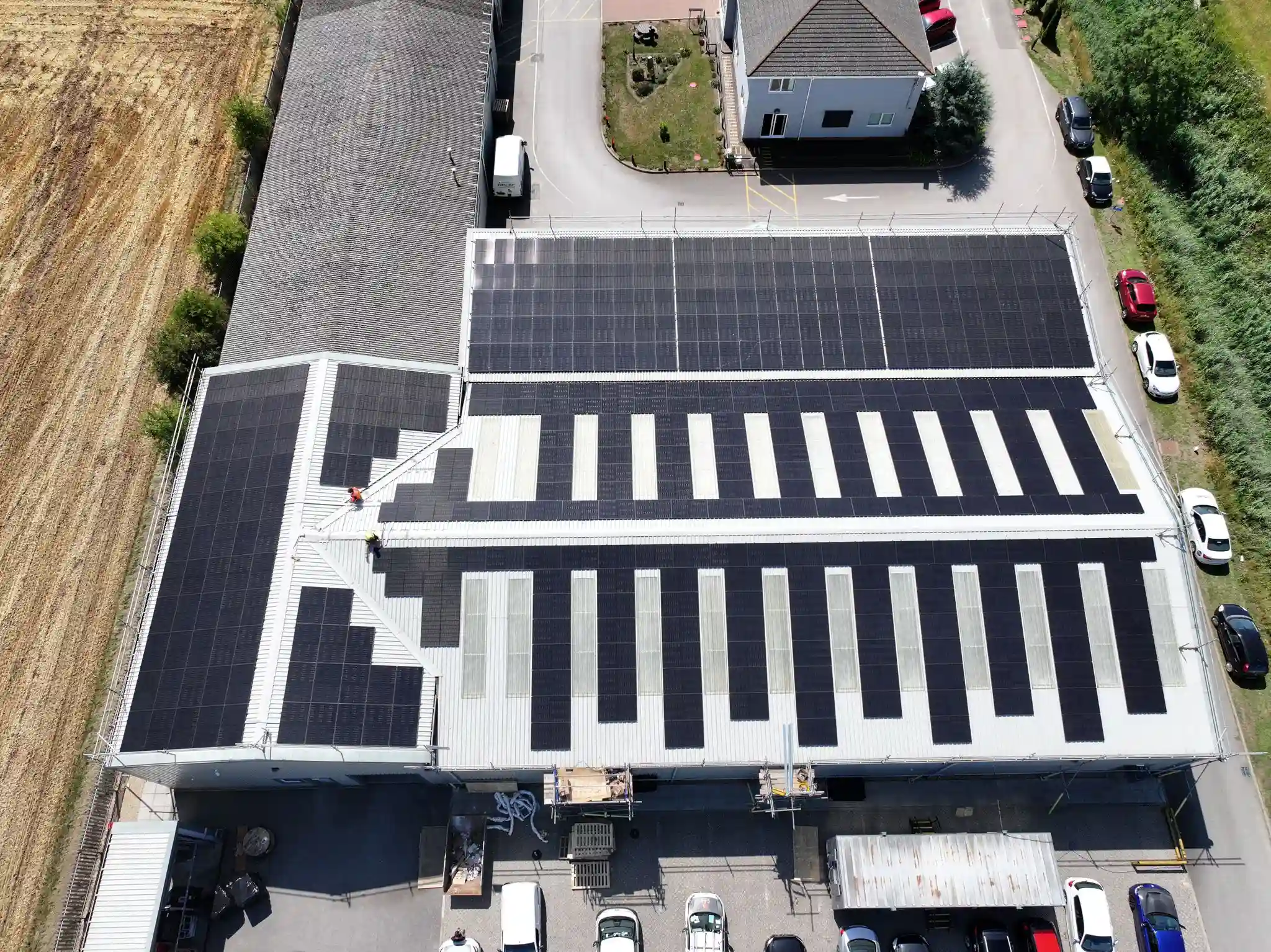
On a 315kW rooftop installation for a distribution centre, longevity is really a question of access. Anything likely to need attention has to be reachable without closing the building down, which shapes the layout before anything is fixed to the roof. The same thinking applied on a 45kW commercial array.
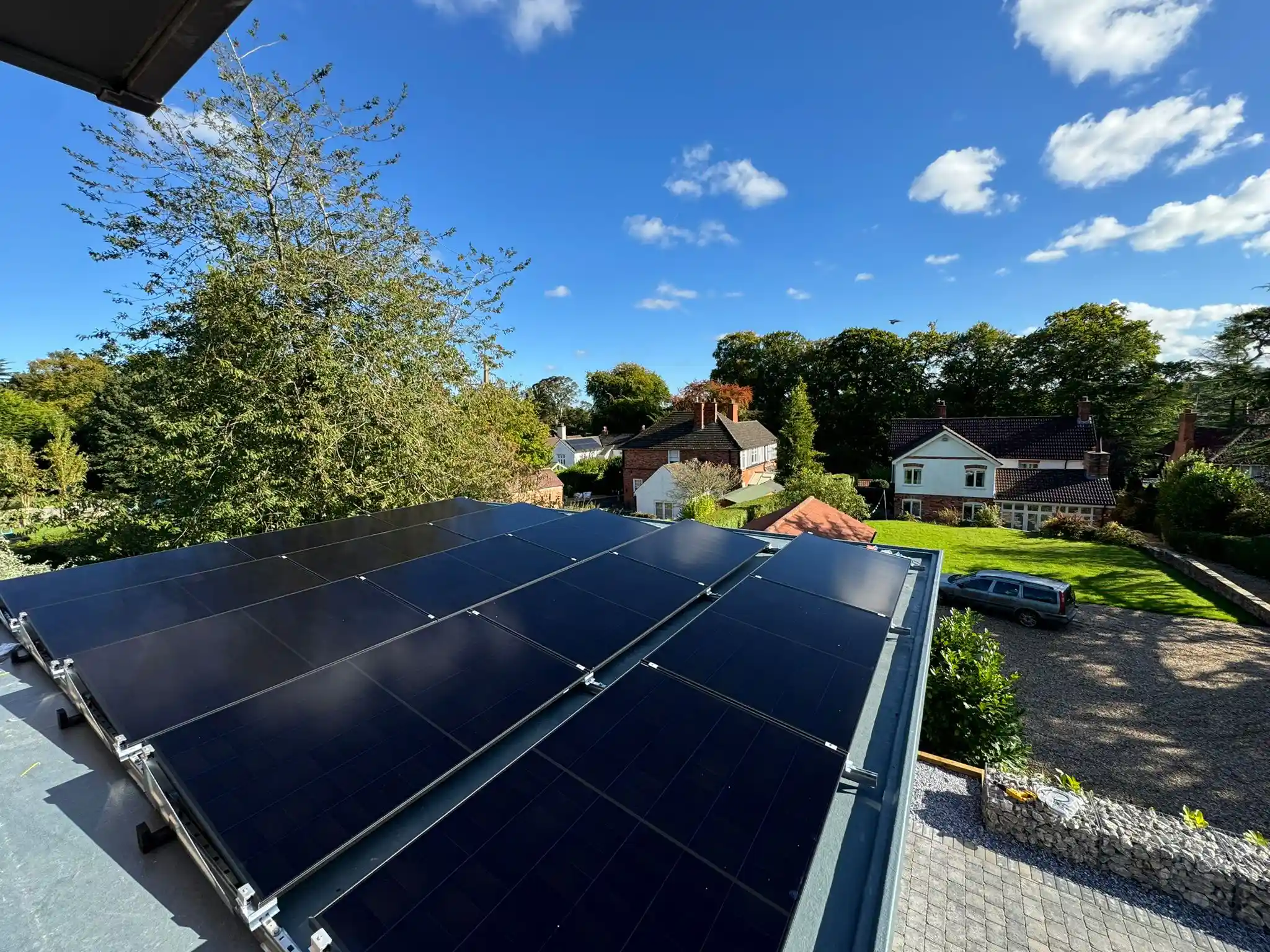
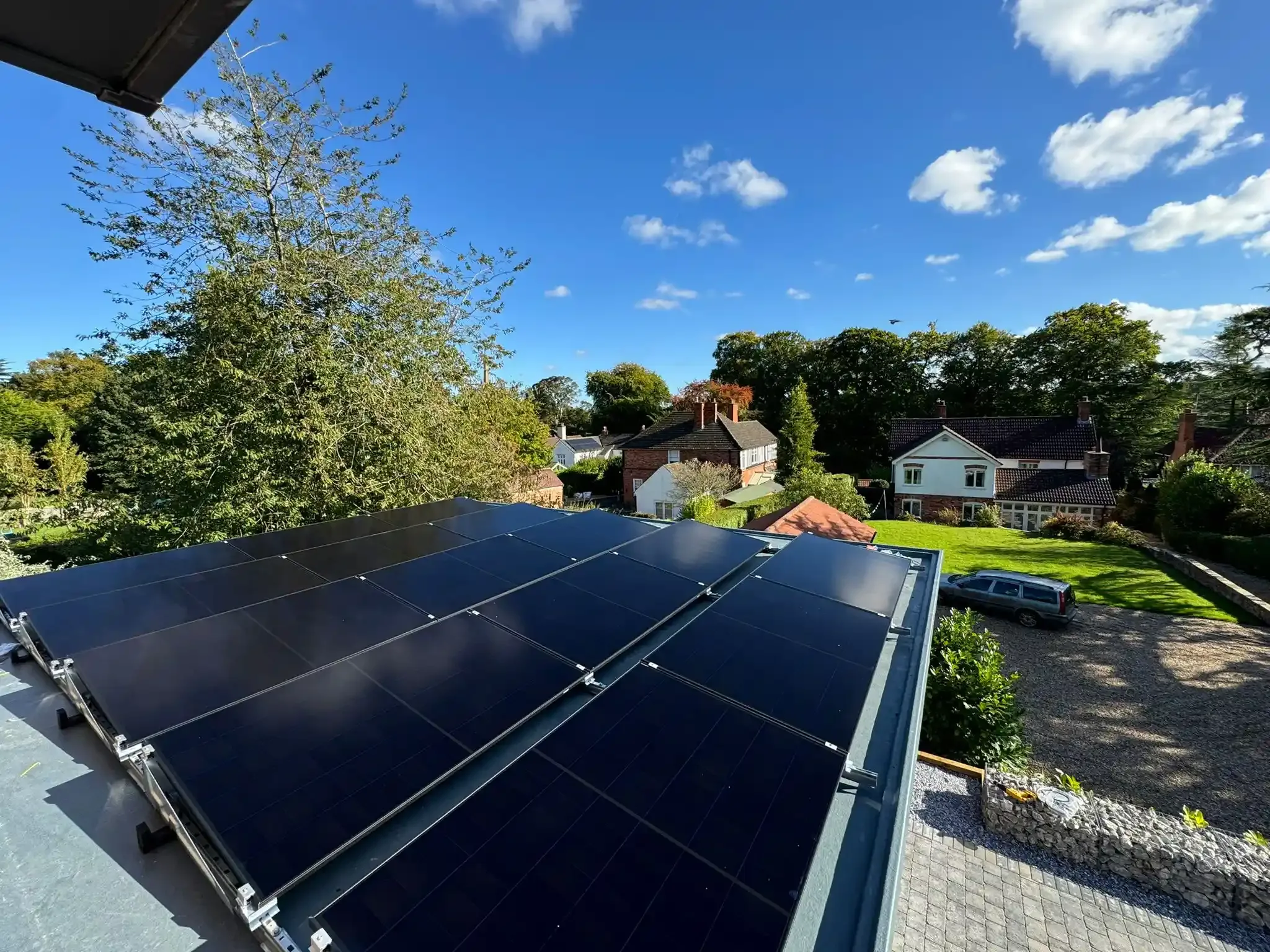
On a domestic roof the priorities invert. The array will most likely outlast the roof covering underneath it, so the fixings and the weathering detail are what determine whether the system reaches thirty years without anyone going back up. That is the part we take most care over on jobs like the 6.8kW flat roof installation we completed in Lincolnshire, where a flat roof brings its own set of ponding and fixing considerations that a pitched roof never raises.
What a long life means for the money
A twenty five to thirty year life is what makes the economics work, and it is worth being clear about the sequence. A system typically covers its own cost well inside its lifespan, and the years after that point are the return, not the wait.
Export income continues throughout under the Smart Export Guarantee, which requires a certified installation, and that is another reason the quality of the original install matters to the lifetime figure rather than just the first year.
Talking to us about an existing system
If you have solar panels that are not producing what they used to, or you have inherited a system with a house and have no idea how old it is, that is worth a look rather than a guess. Most of the time the panels are fine.
Get in touch and tell us what you have.