For most businesses, switching to LED lighting is worth it wherever the lights are on for long hours, and especially where the existing fittings are fluorescent tubes or old high bay lamps. The saving is the difference in wattage, multiplied by the hours the lights burn, multiplied by what you pay for a unit of electricity. With the average business paying around 24.5 pence a unit in 2026, a fitting that is on all working day can pay for its replacement within a few years, and a warehouse high bay can do it a good deal faster.
It is not worth it everywhere. A light in a store room that is switched on twice a week will take far longer to pay back, and a fitting only a few years old is usually best left until it fails. The other reason to plan the change rather than wait is that the traditional fluorescent tubes common in offices have been phased out of sale since September 2023, so replacements are getting harder to come by.
The sum that decides it
Every LED upgrade comes down to the same arithmetic. Take the power the old fitting draws, including its control gear, and subtract the power of the LED replacement. Multiply that by the hours the light is on in a year, and then by your unit price.
As a worked example, take a fitting that draws 400 watts and is replaced by one drawing 150 watts, the kind of change that happens when an old high bay in a workshop or warehouse goes over to LED. That is 250 watts saved. Over 3,000 hours a year, roughly a long working day of eleven or twelve hours on weekdays, it comes to 750 units, and at the government's average business electricity price of 24.51 pence a unit for the second quarter of 2026, that is about £184 a year from one fitting. A unit with twenty of them is saving several thousand pounds a year. The same official figures note that prices vary with the size of the business, so check the rate on your own bill.
Your own figures will differ, so use your own bill and your own hours. The point of doing the sum is that it shows straight away which rooms are worth doing first.
Fluorescent tubes are on their way out
Under the lighting rules that came in after 2021, the government phased out traditional fluorescent tube lighting from September 2023, the long tubes that are still in a great many offices, shops and workshops. Some types, such as T5 tubes, remain on sale.
That does not make existing tubes illegal to use, and nobody has to rip them out. It does mean that when a tube or its control gear fails, a like for like replacement is getting harder to find. Changing a whole area at once, on your own timetable, is often cheaper and less disruptive than replacing failed fittings one at a time as they go, and it keeps the light consistent across the room.
Where LED pays back fastest
The biggest savings are in places where the lights are on for long hours and the old fittings are powerful.
- Warehouses, workshops and factory floors with high bay lighting, often on through a whole shift.
- Shops, showrooms and offices where the lights are on all working day.
- Corridors, stairwells and toilets that are lit around the clock.
- Car parks, yards and building floodlights that run from dusk to dawn.
Maintenance counts as well. Replacing a failed high bay means access equipment and somebody's time at height, not just the cost of a lamp, and LED fittings are generally rated for much longer lives than the lamps they replace. In a tall building that saving can be worth as much as the electricity.
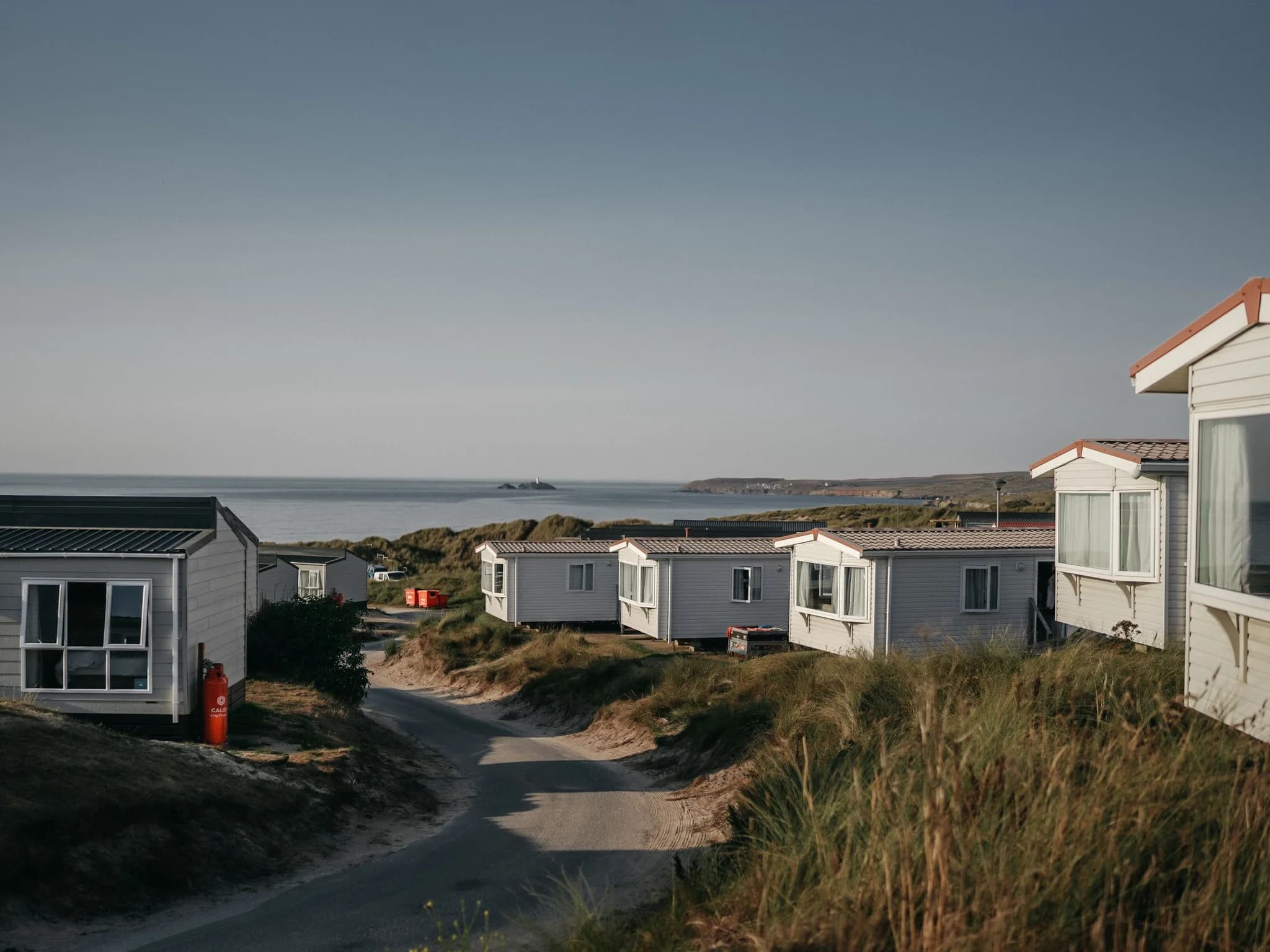
Outside lighting deserves a particular look on the coast, where fittings take salt and wind. A holiday park's road and path lighting, for example, is on through every dark evening of the season and is exactly where efficient fittings rated for the location make sense.
Controls save as much as the lamps
A light that is off uses nothing, so switching is often where the cheapest saving sits. Presence detection in corridors, toilets and stores turns lights off when nobody is there. Daylight sensors dim fittings near windows when the sun is doing the work. Timers stop outside lights burning in daylight. LED fittings suit all of these when they are specified with the right driver, and they come on at full brightness straight away, unlike the old high bay lamps that take minutes to warm up.
New fittings or LED tubes in the old ones?
There are two ways to convert a fluorescent fitting. The cheaper is to put an LED tube into the existing fitting. Some types work with the old control gear, and others need the fitting rewired so the gear is bypassed, at which point the fitting no longer matches its maker's design. The other way is to replace the whole fitting with an LED panel or batten.
A new fitting usually costs more but gives a better result. It is designed around the LED from the start, it comes with its own warranty, and it removes old control gear that may itself be near the end of its life. For a large area, new fittings also let the layout be looked at again, because the light spreads differently and fewer fittings are sometimes needed.
Check the wiring before you change the lights
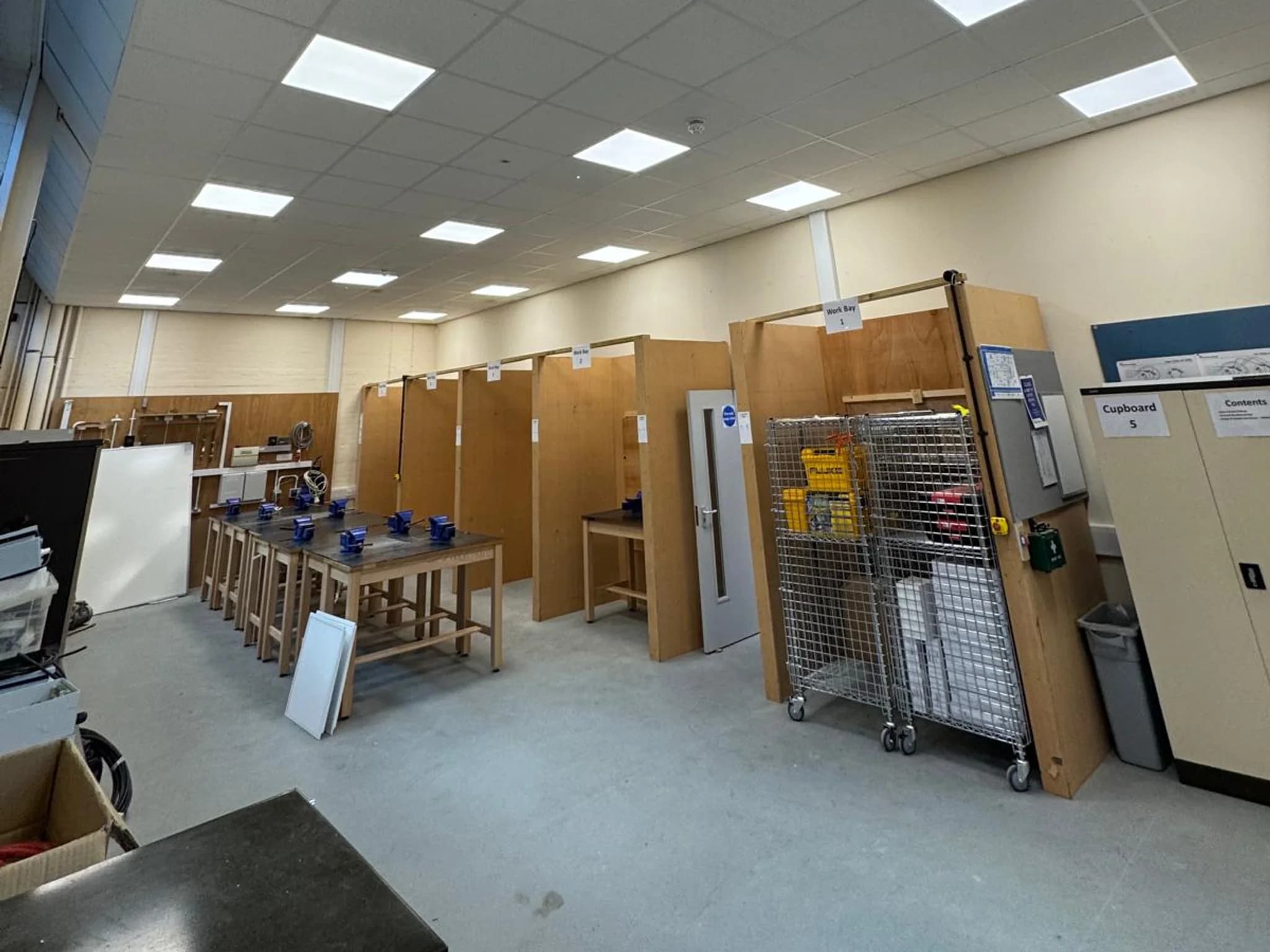
An LED upgrade is a good moment to look at what the lights are wired to. In an older building the lighting circuits may need work before new fittings go up, and doing both together saves opening ceilings twice. At Grantham College we rewired the lighting circuits in the refurbished area and then fitted LED panel lighting throughout, coordinating the work with the site management in a live college.
The same visit is the time to check the emergency lighting, which has to keep escape routes lit if the power fails, and to make sure any new fittings are covered by your next round of fixed wire testing. On the Linkage training centre the new internal lighting, the emergency lighting and the external lighting all went in as one package and were tested and certified with the rest of the installation.
The tax side
For a business, lighting can count towards capital allowances. HMRC lists electrical systems, including lighting systems, among the integral features of a building that count as plant and machinery, and in most cases the cost of plant and machinery can be deducted from profits before tax through the Annual Investment Allowance. How that applies to your business is a question for your accountant, but it can make the real cost of an upgrade noticeably lower.
Pairing LED with solar
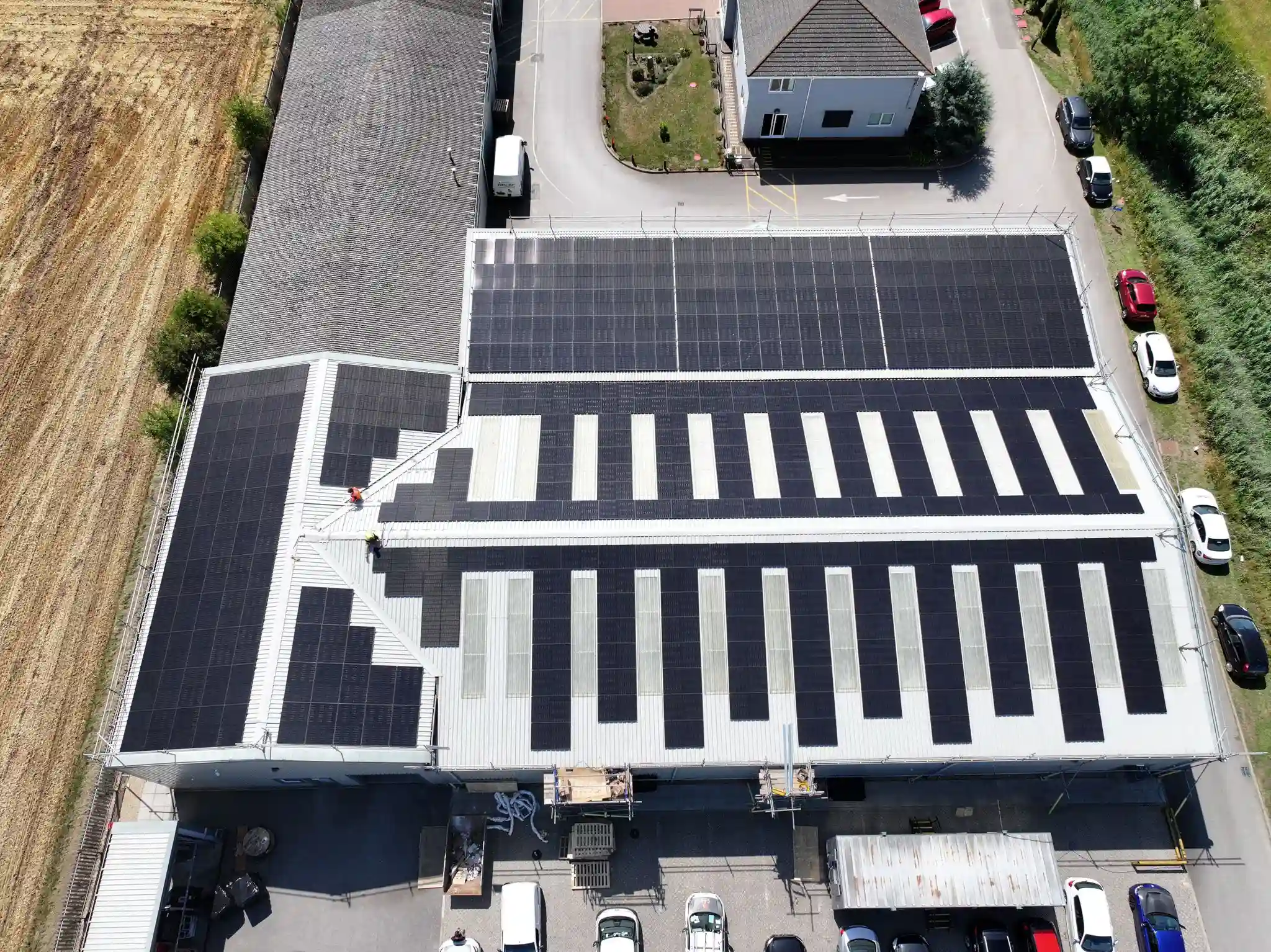
Cutting the lighting load and generating your own electricity work well together. A building that uses less power in the day gets more value from commercial solar panels on its roof, because more of the generation is spare for other loads, or for charging vehicles from solar in the middle of the day.
Planning an LED upgrade
We design and install LED lighting for commercial premises and industrial sites across Lincolnshire, from offices and shops to warehouses and yards, including in Grantham, Lincoln and Boston. If you would like to know which parts of your building are worth doing first, get in touch with CES, or ask for a price on our free quote form.