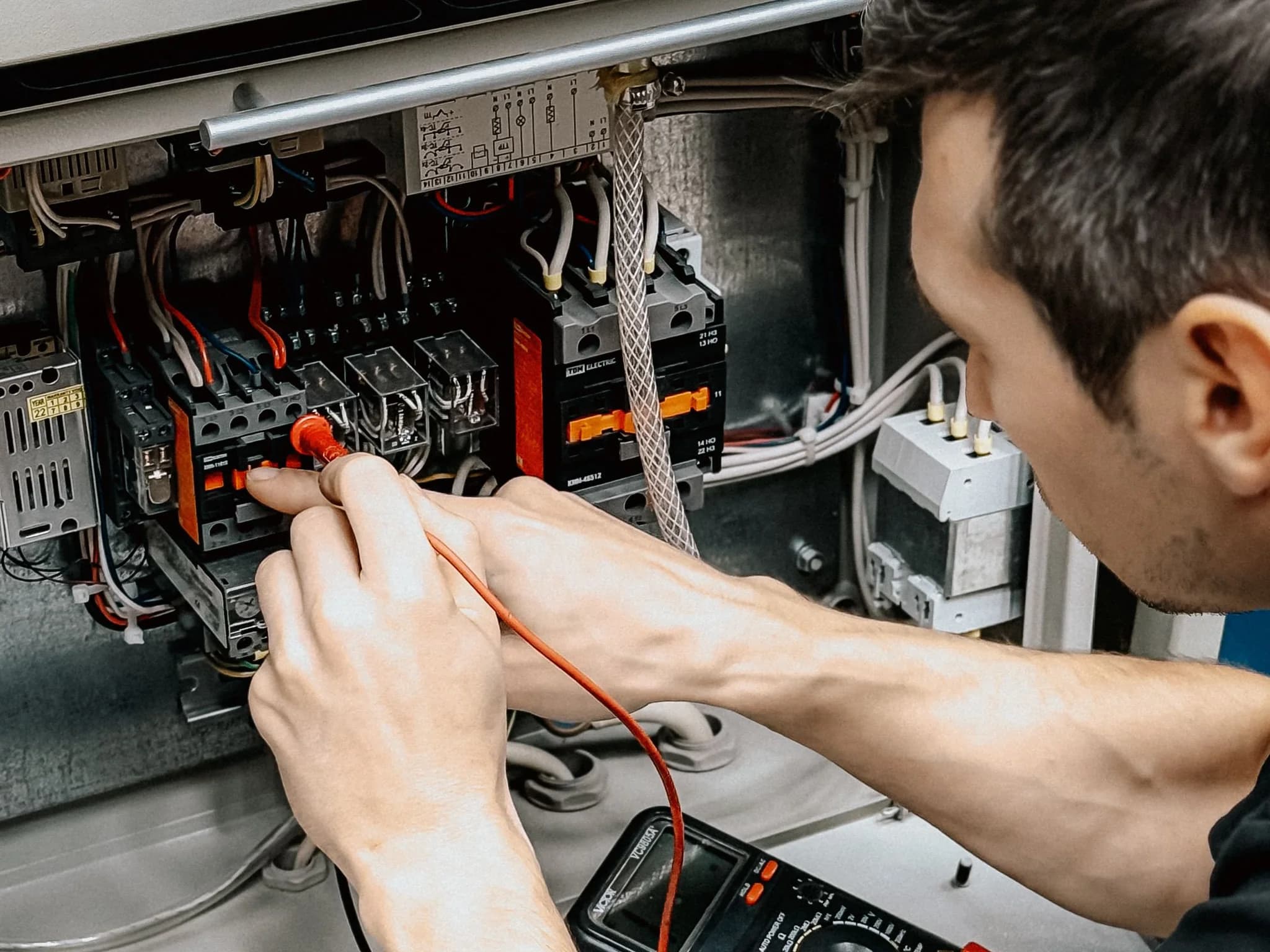

Before a holiday park opens for the season, the electrical checks that matter most are the periodic inspection of the site's installation, every pitch supply point and its protection, the earthing arrangement for the caravans, the sub mains that feed each row, and the emergency lighting in the clubhouse, bars and amenity blocks. The site licence usually expects the electrical installation to be inspected every year, or at a longer interval of up to three years where that is considered appropriate, with the certificate kept and displayed with the licence, so the paperwork needs to be in date before the first guests arrive.
The closed months are the only practical window for most of that work. Testing means switching circuits off, remedial work can mean digging, and neither is welcome on a full park in August. This guide sets out what to check, why each item matters, and how to plan it so the park opens on time with every certificate current.
What the site licence asks for
Every holiday caravan site in England runs under a site licence from its local council, and the licence conditions are usually based on the model standards for holiday caravan sites, which one council's published licence conditions set out in full. Those standards say the electrical installation should be installed, tested and maintained to the wiring regulations in force at the time, and inspected periodically, every year or such longer period, not exceeding three years, as is appropriate for the site. The inspector issues a certificate within a month, and the site operator keeps it and displays it with the licence.
The model standards also say who counts as a competent person for the work, and a contractor approved by the NICEIC is one of them. We are NICEIC approved, so the inspections we carry out are done by exactly the kind of contractor the standards describe.
Your own licence is the document that counts, because each council sets its own conditions. For parks around Skegness, Ingoldmells and Mablethorpe that is East Lindsey District Council. Check the electrical condition in your licence for the interval it sets, then check the date on your last certificate against it.
How often a park should be inspected
The IET's guidance on inspection intervals, the companion to the wiring regulations, has long put the maximum period between inspections on a caravan park at one year. The same table puts leisure complexes and places of public entertainment at three years, and pubs, restaurants and hotels at five.
On a park with a clubhouse, a bar, a shop and an amusements building, that means different parts of the site can fall due in different years. The simplest way to manage it is a rolling schedule, where the pitch distribution is inspected every closed season and the buildings come round on their own cycle, all planned in one go. Each inspection produces its own electrical installation condition report, and anything coded C1 or C2 needs putting right, a C1 straight away.
Pitch supply points and hook ups
The hook up points are the part of a park that takes the most punishment. They stand outside all year, they are opened and closed by hundreds of different people, and on low lying ground near the coast they sit in wind driven rain and standing water.
The wiring regulations are specific about them. According to the IET's guide to caravan park installations, pitch socket outlets must be the industrial type to BS EN 60309-2, with a rating of at least 16 amps and protection to at least IP44. There should be at least one socket for each pitch, grouped in no more than fours. Each socket must have its own overcurrent protection and its own RCD, and that RCD must disconnect every live conductor, the neutral included, so a fault on one caravan cannot take the rest of the row with it.
A pre-season check of the pitch supplies should cover the following.
- Every RCD tested, not just switched with its test button, so you know it trips fast enough.
- Enclosures opened and checked for water, corrosion, insect nests and damaged seals.
- Sockets and plugs looked at for heat damage, which shows as discolouration around the pins.
- Lids, hinges and locks working, because an enclosure that will not close properly lets the weather straight in.
- Cable entries and glands sound, and nothing struck by a mower or a vehicle over the winter.
The earthing rule that is particular to caravans
Most of the UK's supplies use protective multiple earthing, or PME, where the earth comes in combined with the neutral. It is reliable for buildings, but a fault out on the network can raise that earth to a dangerous voltage, and a caravan standing on wet ground is exactly where that matters. So the law is blunt about it. Regulation 9(4) of the Electricity Safety, Quality and Continuity Regulations 2002 says the distributor shall not connect its combined neutral and protective conductor to any metalwork in a caravan or boat.
That is why, where the park's buildings run on a PME supply, the pitch supplies have to be wired as a separate system with their own earth electrodes, kept apart from the PME earth. Those electrodes are part of the installation and need testing like any other part. An electrode that has corroded, been disturbed by groundworks or sits in ground that has dried out over the summer can read very differently from one in good order, and only a test will tell you which you have.
Distribution and the sub mains
On an older park, pitches have often been added a few at a time over decades while the cables feeding them stayed the same. A pre-season check is the time to ask whether each sub main and distribution board still has the capacity for what it now feeds, and whether any of it shows signs of running hot.
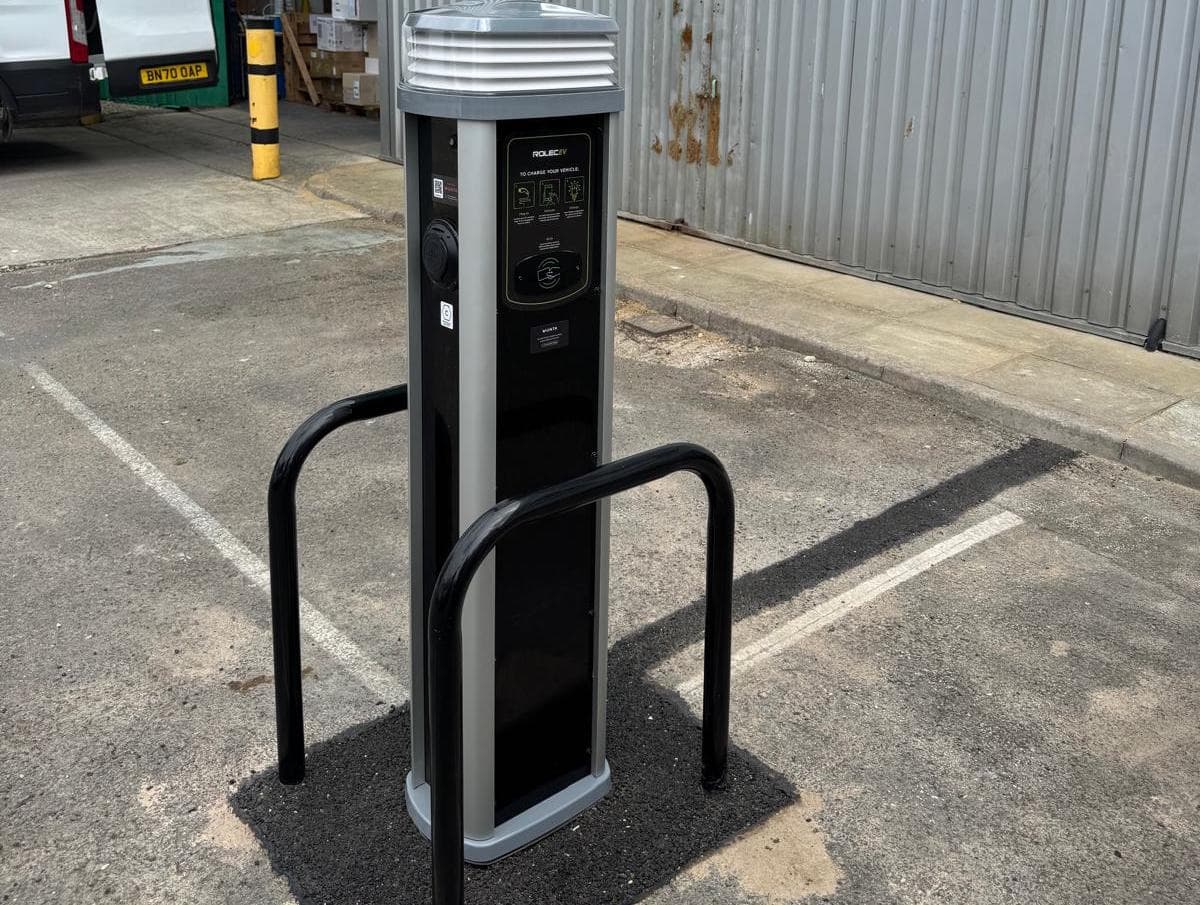
Electric vehicles are what is changing that picture. A touring pitch was designed for a kettle, a heater and some lights, not for a car charging all night. If guests are starting to ask, plan any charging properly, with a load assessment at the intake first. That is how we approached a dual 22kW commercial charger for Micron-Clean, assessing the capacity at the mains intake before feeding it from a dedicated sub main. The costs that drive a charger installation on a park are the same ones that drive it at home, only larger, and our EV charging work covers workplace and multi bay installations.
Clubhouses, bars and amenity blocks
The permanent buildings on a park are covered by the same site installation, but they bring two more things to check.
Emergency lighting comes first. Under fire safety law the person responsible for the premises has to keep it maintained, and GOV.UK's fire safety guide for pubs, clubs and other places of assembly asks for every emergency light to be tested monthly and for the system to be tested and maintained by a competent person. The annual test runs each fitting for its full rated duration, usually three hours, so it has to be done when the building will not be needed straight afterwards. That makes the closed season the obvious time. On the Linkage training centre we installed the internal and external emergency lighting along with the rest of the electrics, and tested and verified it as part of handover.
Portable equipment is the second. The kettles, heaters and appliances a park provides in its own buildings, and in any caravans it lets out, have to be kept safe. HSE is clear that the law does not require testing every year, but it does require equipment to be maintained, and a check before the season is the sensible point to do it.
Outside lighting and the roads
Road lighting, path lights and the lights on bin stores and car parks are easy to forget until a guest walks into the dark in October. Columns and bollards on the coast suffer the same salt and water as the pitch supplies, so they are worth checking at the same time, along with the photocells and timers that switch them. Where fittings are failing, our lighting design and installation team can replace them with LED fittings rated for the location.
Getting the paperwork ready
A licensing officer or an insurer will want to see the current certificate for the installation, and may ask for the emergency lighting records as well. Before you open, make sure the following are in one place.
- The latest inspection certificate, displayed with the site licence as the model standards expect.
- Written confirmation that any C1 and C2 items from the last report have been put right.
- The emergency lighting log, with the monthly tests and the last annual test.
- Records of the checks on park owned appliances.
- Certificates for any new work done over the winter, such as new pitches or a charger.
Plan it in the autumn
The parks between Skegness and Chapel St Leonards sit on our doorstep, and the closed season is short. Booking the inspection in the autumn gives time to quote and complete any remedial work before opening, rather than finding a problem in March with a fortnight to go. As caravan park electricians we work on holiday parks and coastal venues across the coast, and our EICR and electrical testing covers the buildings.
To plan your pre-season inspection, get in touch with CES, or choose a holiday or caravan park on our free quote form.