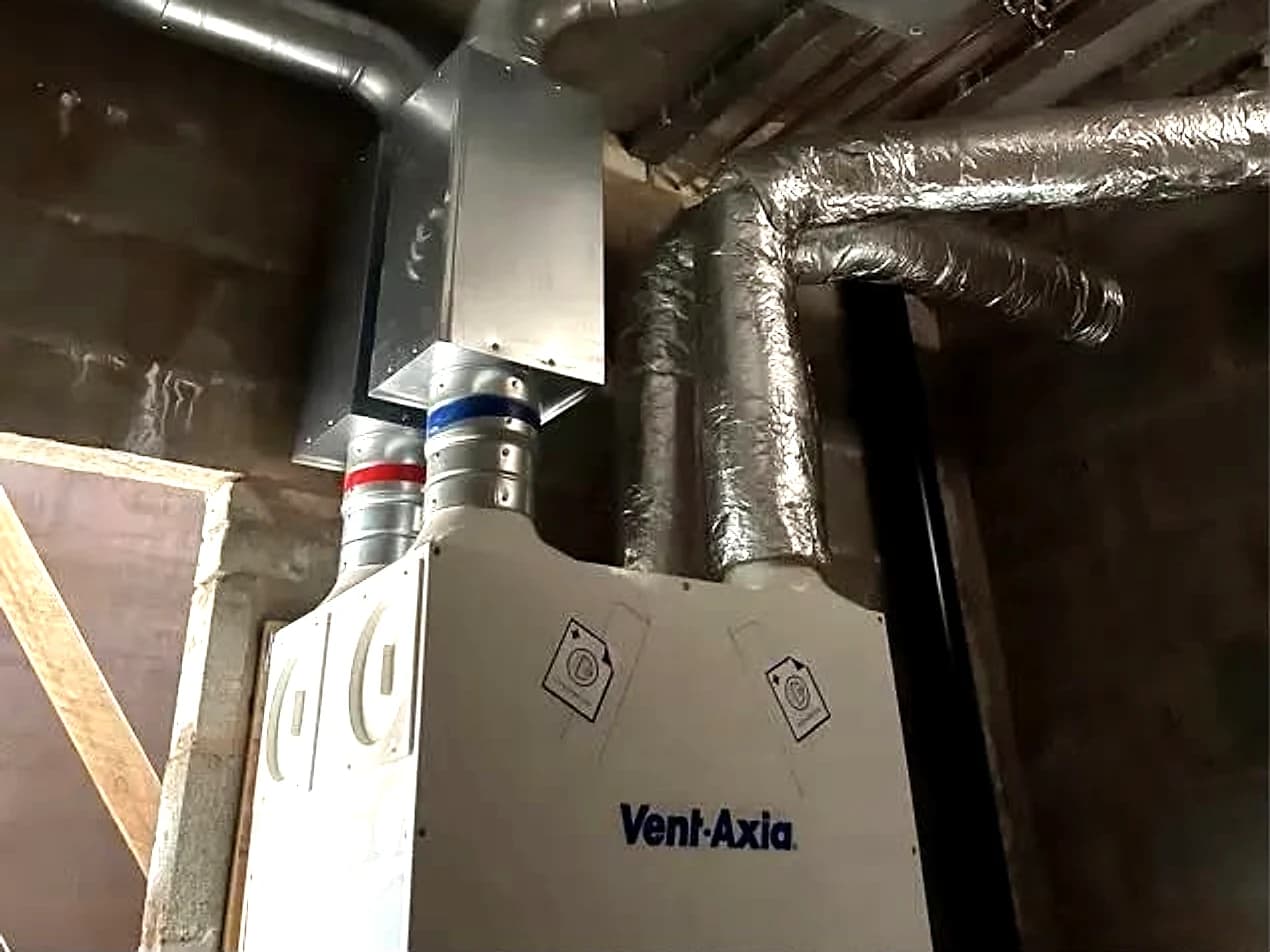



An extractor fan pulls damp air out of one room while it is switched on and sends the heat in that air outside with it, and the air that replaces it leaks in cold through trickle vents and gaps. MVHR, which stands for mechanical ventilation with heat recovery, runs all the time across the whole house. It extracts from the kitchen and bathrooms, supplies fresh, filtered air to the living rooms and bedrooms, and passes both streams through a heat exchanger so that most of the warmth in the outgoing air stays in the house.
Which one a home needs depends mainly on how airtight it is, and that is where the difference between MVHR and extractor fans really shows. Extractor fans and trickle vents rely on a house being leaky enough to let fresh air in by itself. MVHR relies on it being tight enough that the air goes where the system sends it. There is also a middle option, continuous extract ventilation, which sits between the two and is the default choice under the Future Homes Standard that comes into force in March 2027.
What an extractor fan is required to do
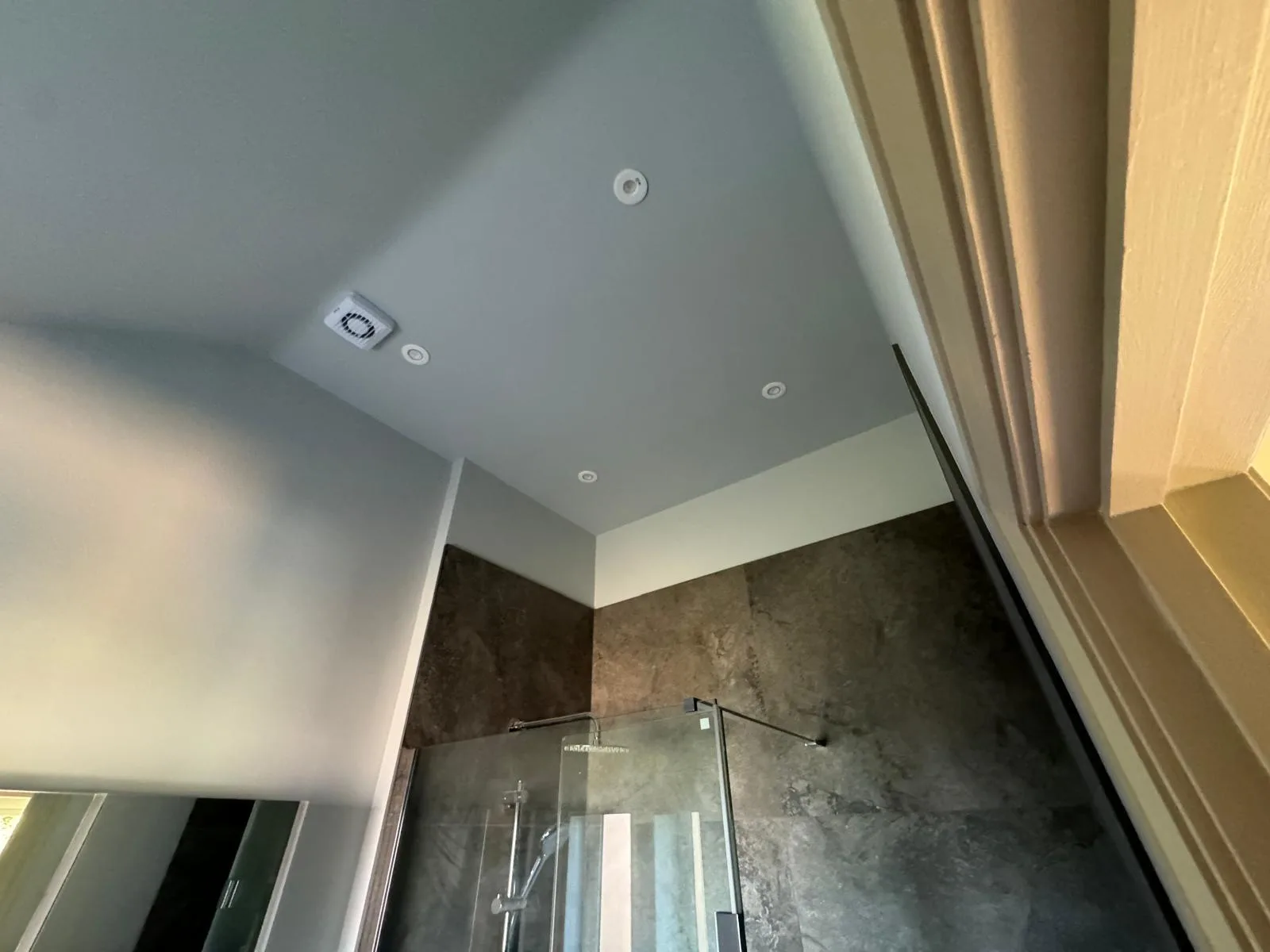
Approved Document F, the part of the Building Regulations covering ventilation, sets minimum rates for intermittent extractor fans. A kitchen needs 30 litres per second through a cooker hood that extracts outside, or 60 litres per second from a fan elsewhere in the room if there is no such hood. A utility room needs 30, a bathroom 15 and a toilet 6.
A couple of rules are easy to miss. A fan in a room with no openable window has to keep running for at least 15 minutes after the room is left. And any automatic control, such as a humidity sensor, has to have a manual override so the occupant can turn the fan on or off.
The bigger point is that the regulations treat intermittent fans and trickle vents as an approach suited only to less airtight homes. Once a house is sealed beyond a certain point, it needs ventilation that runs continuously.
The middle option, continuous extract
Continuous mechanical extract ventilation, usually called dMEV when the fans are fitted room by room, uses fans that run all the time at a low, quiet rate and boost when the room is in use. Because they never stop, Approved Document F sets their boost rates lower than those for intermittent fans, at 13 litres per second in a kitchen and 8 in a bathroom or utility room. It even allows an intermittent fan to be swapped directly for a continuous one.
What continuous extract does not do is supply air or recover heat. Fresh air still comes in through trickle vents, which the regulations require in every habitable room when this approach is used, and the warmth in the extracted air still goes outside. For keeping on top of moisture it is a real step up from intermittent fans, at a fraction of the cost of MVHR.
What MVHR does that neither of them can
MVHR adds the supply side. Every living room and bedroom gets its own supply of fresh air, filtered and warmed by the heat exchanger, while the kitchen and bathrooms are extracted continuously at the same rates a continuous extract system would use. Because the air is supplied deliberately, trickle vents are no longer needed.
The result is a house ventilated evenly and continuously, without the draughts or heat loss of air leaking in wherever it can. Filtered supply air also helps households where pollen or dust is a problem. The trade off is the cost, space for the unit and its ducts, and filters that need regular attention. How much it does for your heating bill depends heavily on the house.
Why wind matters on the coast
Along this stretch of Lincolnshire there is one more difference, and it comes down to the wind. A through the wall extractor fan has to push air out against whatever the wind is doing on that side of the house. On an exposed wall, whether it faces the prevailing south westerlies or the cold easterlies that come in off the North Sea, a stiff breeze can push back hard enough to cut a basic fan's airflow sharply. You hear it as the backdraught shutter rattling while the room stays steamy.
Approved Document F recognises the problem. Where a continuous extract terminal sits on a wall exposed to the prevailing wind, it expects measures to limit the effect, such as ducting to a different wall or using constant volume fans.
That is why a constant volume fan suits a wall that takes the full force of the wind better than a standard axial fan. It senses the resistance building against it and raises its speed to hold the extract rate, where an axial fan's airflow falls away at exactly the moments the weather is pushing back. MVHR sidesteps much of the problem, because the whole house breathes through one pair of terminals, and those can be placed on the most sheltered side of the building.
Living with each one
An intermittent fan is cheap to buy and simple to replace, but it is only as good as the way it is used. A bathroom fan switched off at the isolator because it is noisy, or a kitchen fan nobody remembers to turn on, is ventilating nothing. Continuous extract fans run quietly in the background, and because they are always on, they do not depend on anyone remembering them.
MVHR asks a little more. The filters need cleaning or replacing on the schedule the manufacturer sets, the unit needs an annual check, and the system has to be commissioned and balanced properly at the start or it will never perform as designed. Done properly, it becomes something you stop noticing, which is the point.
The electrical side of ventilation
Whichever system you choose, it has to be wired correctly. BS 7671, the wiring regulations, divides a bathroom into zones around the bath and shower. Equipment fitted in zones 1 and 2 must be rated to at least IPX4 against water, and the switch or isolator for the fan has to sit outside the zones altogether. Adding a new circuit for a fan is notifiable work under Part P of the Building Regulations, and so is altering an existing circuit in the space around the bath or shower.
Timer and humidity controlled fans are usually wired with a permanent supply as well as a switched one, so they can run on after the light goes off, and they need an isolator that breaks both so the fan can be serviced safely. As NICEIC approved electricians, that is how we wire them. An MVHR unit needs a suitable supply with local isolation too, and its boost controls and sensors have to be wired and set up as part of commissioning.
So which does your home need?
If your home is an older, fairly draughty house with windows that open, well chosen intermittent fans that meet the extract rates, with overrun timers or humidity control, may be all it needs. Check they are doing their job, clean them, and replace any that are too weak for the room.
If condensation keeps coming back despite that, or you have improved the insulation and windows and the house feels stuffier than it used to, continuous extract is the sensible next step, and it can usually go in where the old fans were.
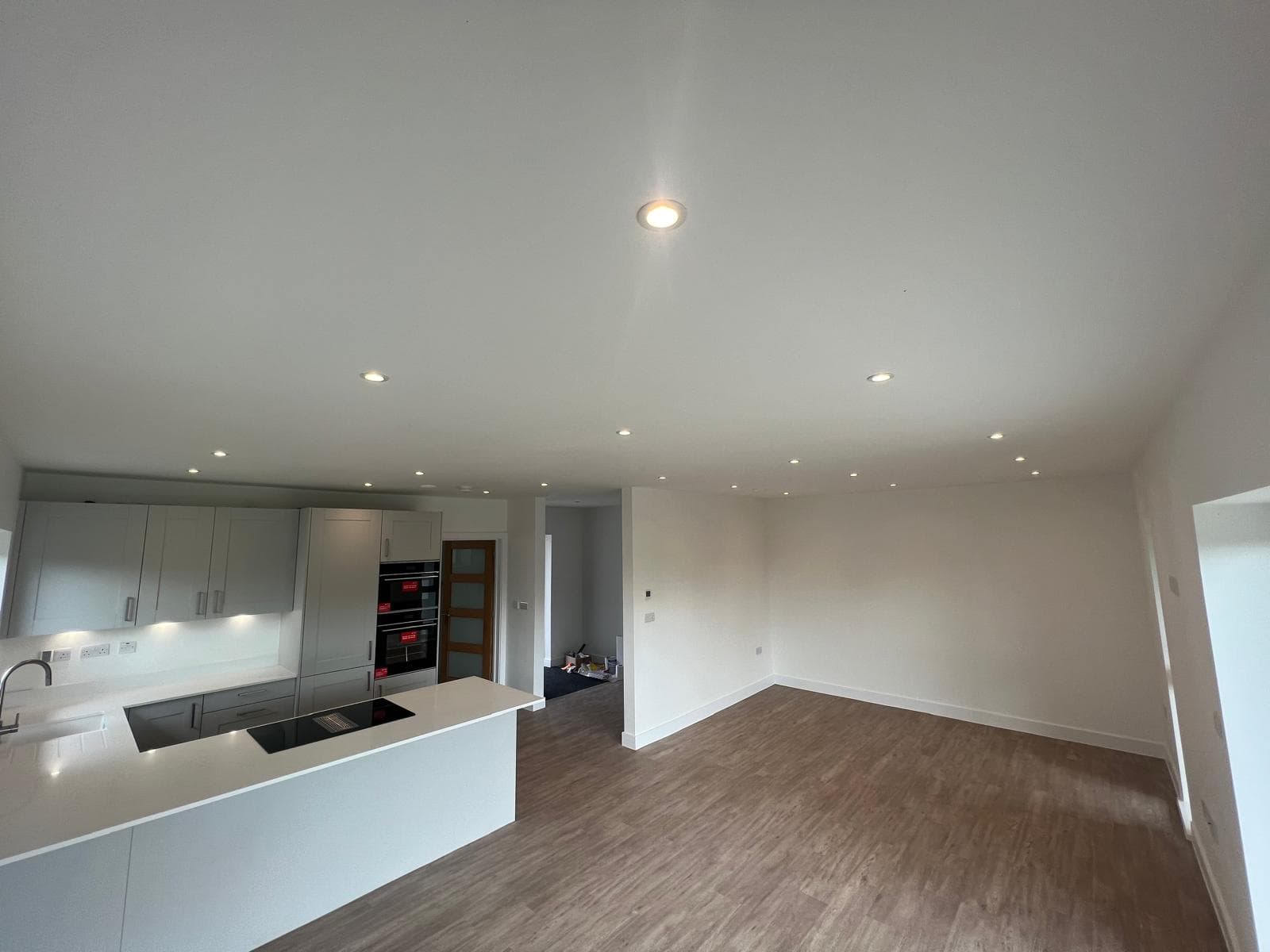
If the house is airtight, whether it is a new build or an existing home that has been through a serious retrofit, MVHR is the system designed for it, and the heat recovery is what repays the extra cost.
If you are not sure which of those describes your home, we can look at it and tell you honestly, including when the answer is a better fan rather than a bigger system. Get in touch with CES and we will arrange a visit.