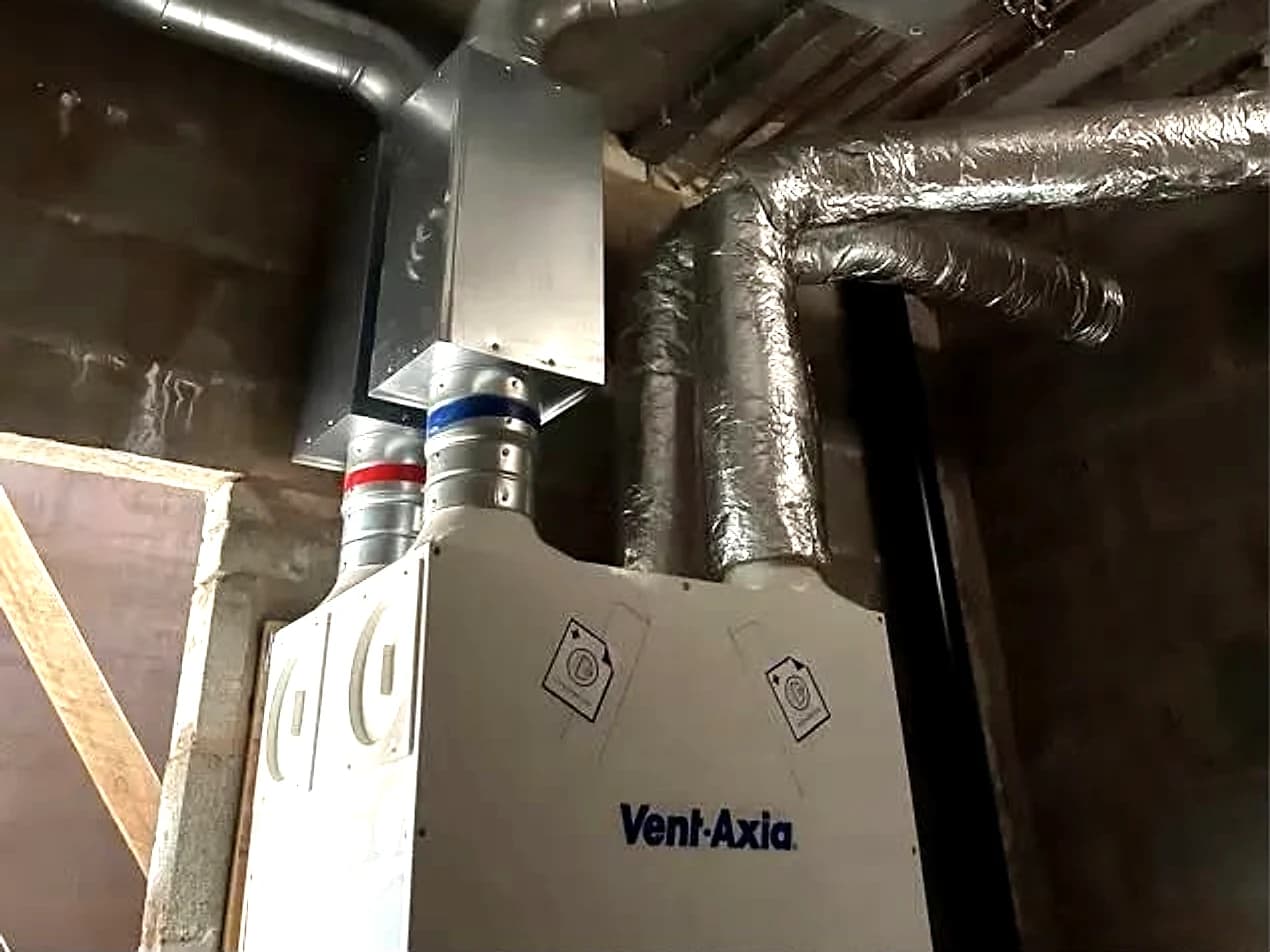




You do not strictly need MVHR specifically in a new build, but you do need a proper ventilation system, and in the airtight homes now being built MVHR is very often the best choice and increasingly the standard one. What the Building Regulations require is adequate ventilation, and as new homes have become far more sealed, natural airflow through gaps and draughts is no longer enough on its own, so a mechanical system becomes necessary. MVHR is the option that supplies that constant fresh air while also recovering the heat that would otherwise be lost.
This matters more than ever because of where new-build standards are heading. The Future Homes Standard, confirmed to come into force on 24 March 2027, tightens the airtightness requirement for new homes dramatically, and at those levels controlled mechanical ventilation is essential to keep the indoor air healthy. MVHR is not the only system that can satisfy the rules, but it is the one that recovers heat as it ventilates, which is why it has become the go-to choice for airtight new homes. Below we explain what the regulations actually require, when MVHR is the right answer, what the alternatives are, and how to get it right.
What the Building Regulations require
The rules do not name MVHR as compulsory. What they require, through Approved Document F, is that every new home has an adequate means of ventilation to keep the air fresh and remove moisture and pollutants. Several ventilation strategies can meet that requirement, ranging from intermittent extract fans with background vents through to continuous mechanical systems.
What decides which is appropriate is airtightness, and this is where new builds differ sharply from older homes. The tighter a building is sealed, the less it can rely on incidental draughts to move air, and the more it needs a designed, mechanical system to do the job. As airtightness standards have tightened, the ventilation strategies that once sufficed no longer do, which is why mechanical ventilation has moved from the exception to the norm in new construction.
Why airtight new builds need mechanical ventilation
Modern new homes are built to be genuinely airtight, and the Future Homes Standard pushes this much further, tightening the airtightness target from the previous maximum of 8 cubic metres per hour per square metre to just 3. A home sealed to that degree keeps heat in beautifully, but it also traps everything else, from cooking and washing moisture to the pollutants given off by furnishings and daily life, and none of it has anywhere to escape without a system to remove it.
What we see in poorly ventilated sealed homes is exactly the result you would expect, with condensation on windows, stuffy air and a real risk of damp and mould over time. That is precisely why the regulations require controlled ventilation in an airtight home. It is not an optional extra but the thing that keeps a sealed, energy-efficient house healthy to live in.
MVHR compared with the alternatives
Under the Future Homes Standard, the default ventilation approach specified for the notional new home is decentralised mechanical extract ventilation, and many new builds will use extract-based systems that continuously remove stale air from the wet rooms. These do the essential job of ventilation, but they extract only, so they take no steps to recover the heat leaving with that air, and they do not actively supply fresh air to the living spaces.
In our experience, MVHR works better than mechanical extract ventilation alone in an airtight new build, because it supplies fresh, filtered air into the bedrooms and living rooms as well as removing stale air from the kitchen and bathrooms, and it recovers as much as 90 per cent of the heat that an extract-only system simply sends outside. In a home built to a high airtightness standard, that heat recovery is exactly where MVHR earns its place, which is why so many builders choose it over a simpler extract system despite the higher cost.
When MVHR is the right choice for a new build
The case for MVHR grows stronger the more airtight the home. In a very well-sealed new build, where a large share of the heat would otherwise be lost through ventilation, recovering that warmth makes a genuine difference, and MVHR is the system designed to do it. It is also the natural choice where indoor air quality is a priority, since the incoming air is filtered, which is a real benefit for anyone in the household who suffers with allergies.
That said, MVHR is not automatically right for every project, and an honest assessment matters. The airtightness of the design, the layout of the home and the budget all feed into the decision, and there are homes where a simpler continuous extract system is a perfectly reasonable route to compliance. What matters is choosing the ventilation strategy to suit the specific building rather than assuming one answer fits all.
The benefits of MVHR in a new build
Fitted in the right home, MVHR brings together several benefits at once. It delivers a constant supply of fresh, filtered air throughout the house, it greatly reduces condensation and the damp and mould that follow it, and by recovering heat from the outgoing air it lowers the heat lost through ventilation. That last point feeds directly into running costs, and the way MVHR can cut your heating bills in a well-sealed home is one of its main attractions alongside the comfort and air quality.
Designing MVHR into a new build from the start
The great advantage of a new build is that MVHR can be designed in from the outset, which is by far the easiest and tidiest way to fit it. The ductwork that carries air to and from each room can be routed cleanly through the structure as the home is built, rather than being shoehorned in later, and the system can be sized and planned around the finished layout. Getting the design and the commissioning right is what makes the difference between a system that performs to its rating and one that disappoints, and it is worth understanding how MVHR works when planning it into a project. Because MVHR sits at the meeting point of ventilation and electrical work, the installation, power and controls all need handling properly for it to deliver.
Talking to CES about MVHR in a new build
Whether you strictly need MVHR comes down to how airtight your new home is and how it is being built, but in the sealed, energy-efficient homes that are now standard, it is very often the right answer. With more than 30 years in the electrical and renewables trade across Skegness and Lincolnshire, and as an NICEIC approved firm that regularly works on new builds and eco homes, we handle the installation, controls and commissioning that make a ventilation system perform.
If you are planning a new build and want honest advice on whether MVHR is the right ventilation strategy for it, get in touch with our team for a tailored assessment.