

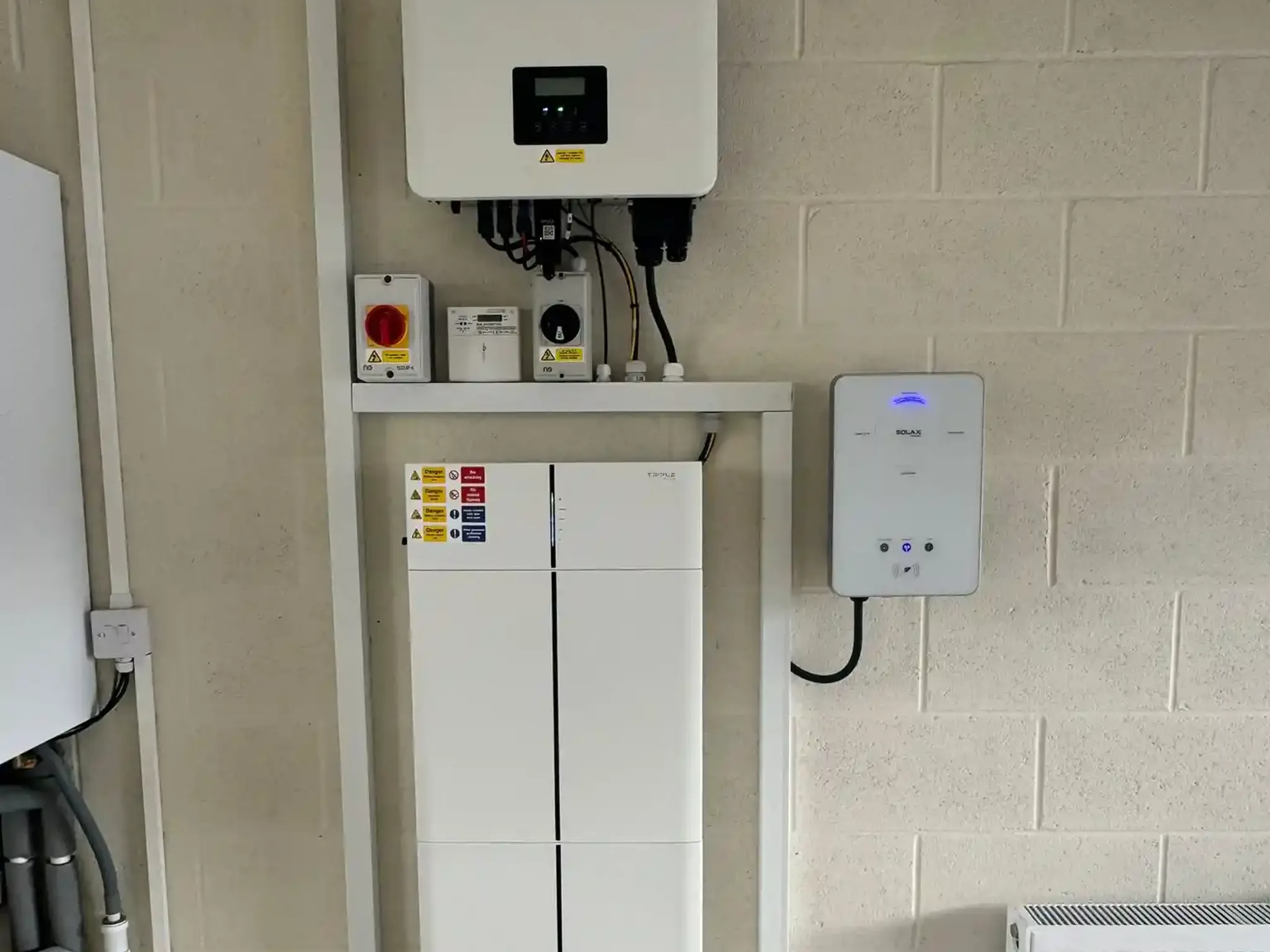
Yes, you can charge an electric car from your solar panels, but how much of the car's charge the sun provides depends on three things. The car has to be plugged in at home while the panels are generating, the panels have to be producing more than the house is using, and the charger has to be able to follow that surplus up and down. In a Lincolnshire summer a typical 4kW home system makes more than enough on a sunny day to cover an average day's driving. In December the same system makes roughly a quarter of that, and most of it goes on the house.
So solar charging works best for a car that is parked on the drive in the daytime, with a charger set to use surplus solar, and with an overnight tariff covering the winter and the days the car is out. Whether it saves money compared with charging overnight also depends on what your supplier pays you for the electricity you export, because every unit that goes into the car is a unit you no longer sell.
How much a Lincolnshire solar system makes
The European Commission's PVGIS solar database gives a south facing system near Skegness, at a 35 degree pitch, about 1,040 units of electricity a year for every kilowatt of panels. That figure is an average over many years of satellite weather data, and it moves a great deal with the season.
- In June each kilowatt of panels makes about 4.2 units a day.
- In March and September it is about 2.9 and 3.3 units a day.
- In December it falls to about 1.1 units a day.
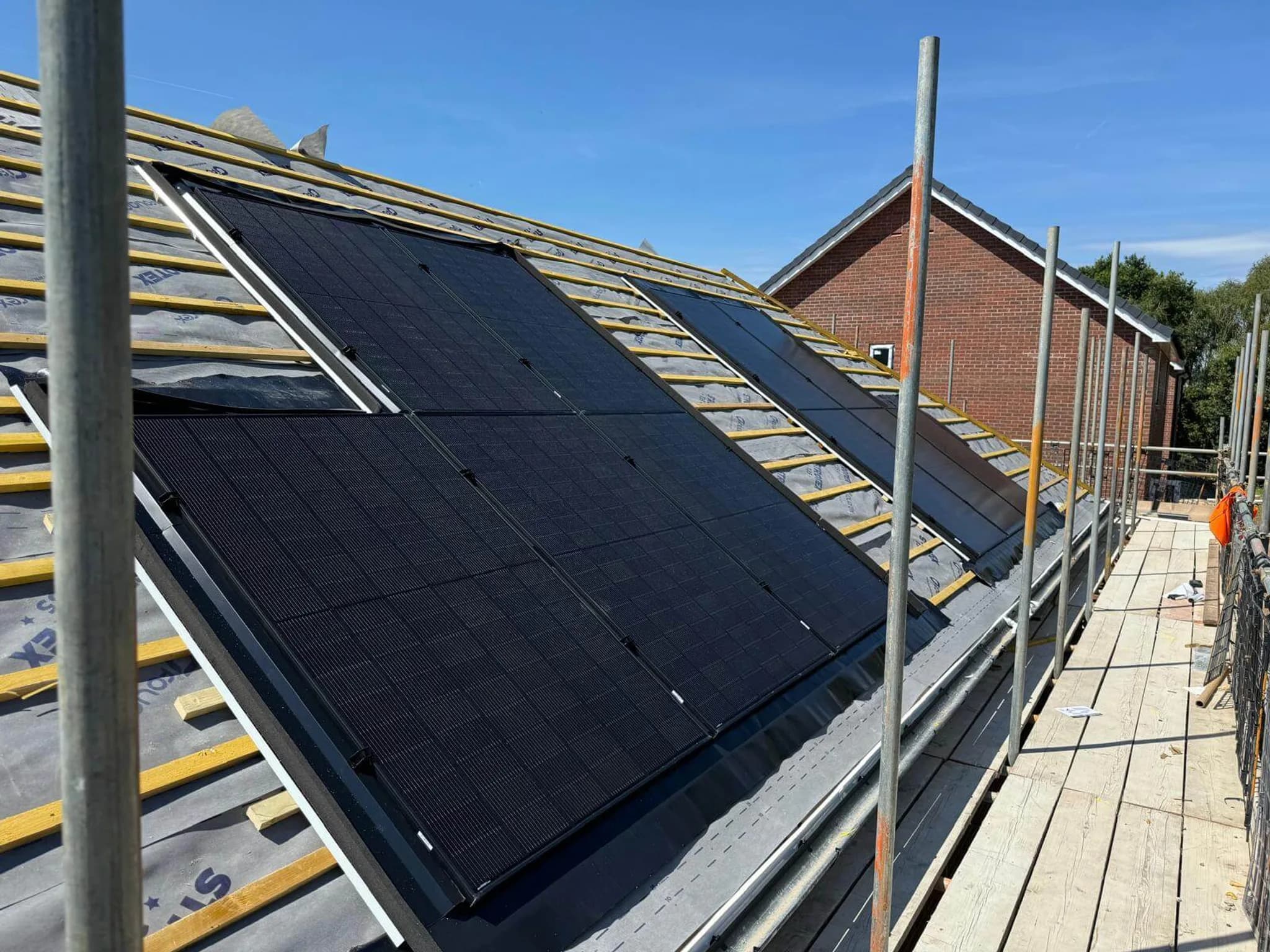
A 4kW system therefore averages around 17 units a day in June and around 4 in December, before the house has taken anything. Our 6.8kW flat roof installation, with its 9kWh battery, is a good example of a larger home system, and the same arithmetic puts it at about 28 units on an average June day. The panels still work in winter, as daylight rather than heat is what they run on, but the short days are what limit them.
How much electricity a car actually needs
The government's National Travel Survey found that a battery electric car in England covered about 9,400 miles in 2025, against about 7,100 for the average car of any kind. HMRC's advisory fuel rates assume about 3.6 miles for every unit of electricity, averaged across the electric cars sold, and real figures move with the size of the car, the speed and the weather, with winter at the lower end.
At three and a half miles a unit, 9,400 miles a year needs around 2,700 units, or a little over seven units a day on average. Set that against the figures above and the shape of the answer is clear. On a sunny day from late spring to early autumn, a 4kW system can cover an average day's driving with some left over for the house. In the depths of winter it cannot come close.
The total over a year is not really the point, because the car does not need a little charge every day. It needs a large charge whenever it is low, and the question is how much of that can be timed to land when the panels are producing a surplus.
The charger has to follow the sun
A home charger runs at up to about 7kW. A solar system rarely has 7kW spare, and the spare amount changes every time a cloud passes or somebody puts the kettle on. A charger set to solar or eco mode watches the electricity flowing to and from the grid and adjusts the charging rate to match the surplus, so the car soaks up what would otherwise be exported.
There is a floor. Under the charging standard most cars will not charge at less than six amps, which on a normal single phase supply is about 1.4kW, as the documentation for one open source charging controller explains. When the surplus drops below that, the charger either pauses or tops up from the grid, depending on how it is set. On a bright day that hardly matters. On a dull one it means the car may charge only in short bursts, or not at all.
Every home charger sold in Great Britain also has to meet the smart charge point regulations, which means it comes set to charge outside peak hours by default. That is a sensible default for grid charging, and it is one of the settings to change if you want the charger to follow your solar instead.
Is charging from solar cheaper than charging overnight?
This is the part most people do not expect. A unit of solar that goes into the car is a unit you do not export, so its real cost is whatever your export tariff would have paid you for it.
If you are on a standard tariff, the comparison is easy. Under the Ofgem price cap from October to December 2026 a unit from the grid costs about 26 pence, and the basic export tariffs pay a few pence. Every unit of solar in the car saves you far more than it would have earned.
If you are on an EV tariff, the sums change. Intelligent Octopus Go, for example, charges 6.5 pence a unit for smart charging overnight, while Outgoing Octopus pays 12 pence for every unit exported. Where a household can hold an import and an export tariff like those together, a unit of daytime solar is worth more sold to the grid than put into the car, and the cheapest plan is to export by day and charge overnight. Suppliers only allow certain import and export tariffs to be paired, so check what yours permits before you set the charger up either way. The rates for getting paid for what you export vary a lot between suppliers.
The honest answer for most households is a mix. Use surplus solar when the car happens to be at home on a sunny day, and let a cheap overnight rate do the rest.
Where a home battery fits in
A home battery and a car battery do different jobs. A typical home battery holds somewhere between 5 and 15 units, while a car battery can hold several times that, so a home battery cannot fill a car in any meaningful way. Moving energy from one battery to the other also loses some in each conversion and uses up the home battery's working life.
Where the two work well together is in sharing out the surplus. On a good day the home battery fills first, the car takes what comes after, and the house runs on the home battery through the evening. Getting that order right is a question of settings on the inverter and the charger, and it is worth deciding when the system is designed. Sizing the battery around the house's evening use, rather than the car, keeps the cost sensible.
Making the most of solar charging
A few things make a real difference.
- Plug the car in whenever it is at home in daylight, even if it does not need a charge, so the charger can use whatever surplus comes along.
- Set a minimum charge level in the car or the app, so a run of grey days never leaves you short for a journey.
- Run the dishwasher and the washing machine at a different time from the car, because they compete for the same surplus.
- Check the charger can see the grid connection. Solar mode needs a measuring clamp on the incoming supply or a link to the inverter, which is usually fitted at installation.
Fitting solar and a charger together
If you are thinking about both, fitting them together saves a visit and lets the charger, the inverter and any battery be set up to work as one system from the start. How many panels you need is worth looking at again with a car in the picture, because a larger array produces a usable surplus on more days of the year.
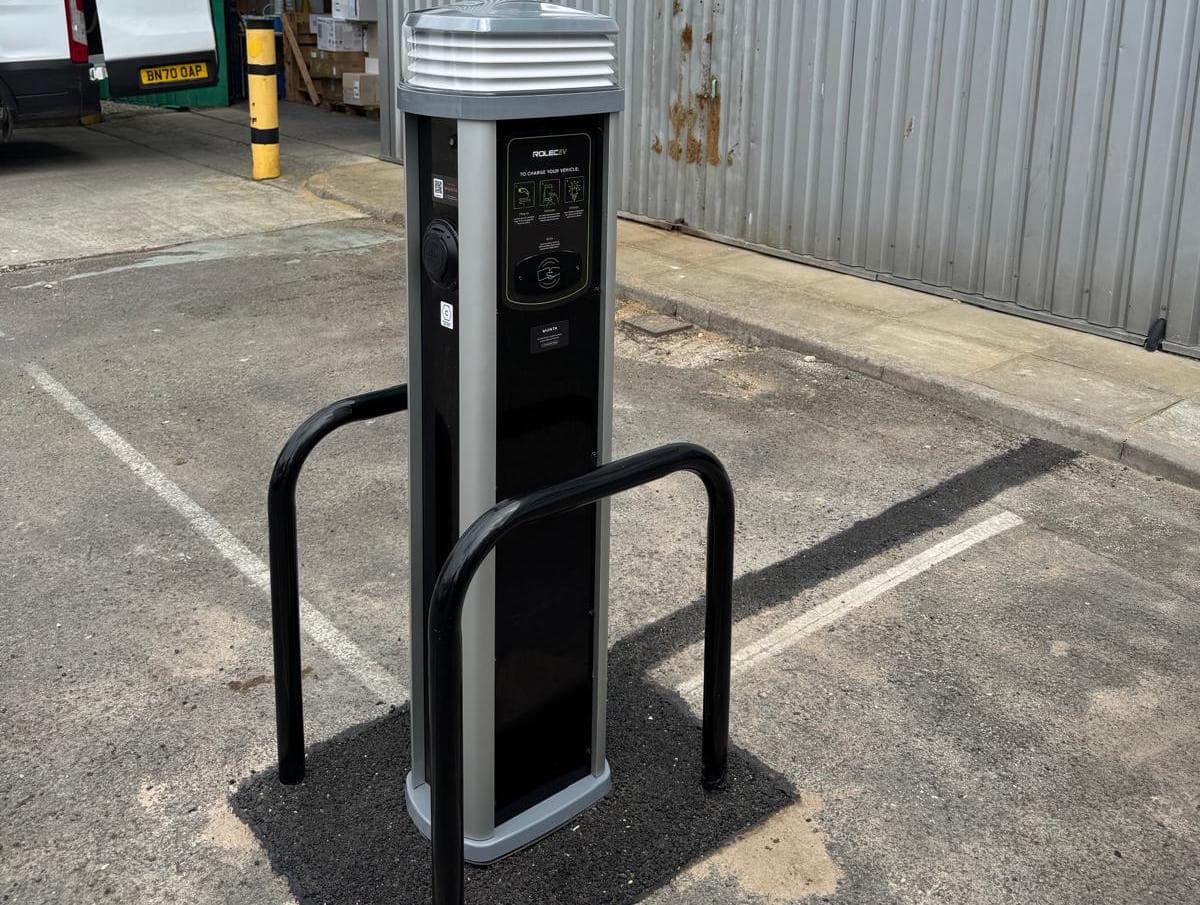
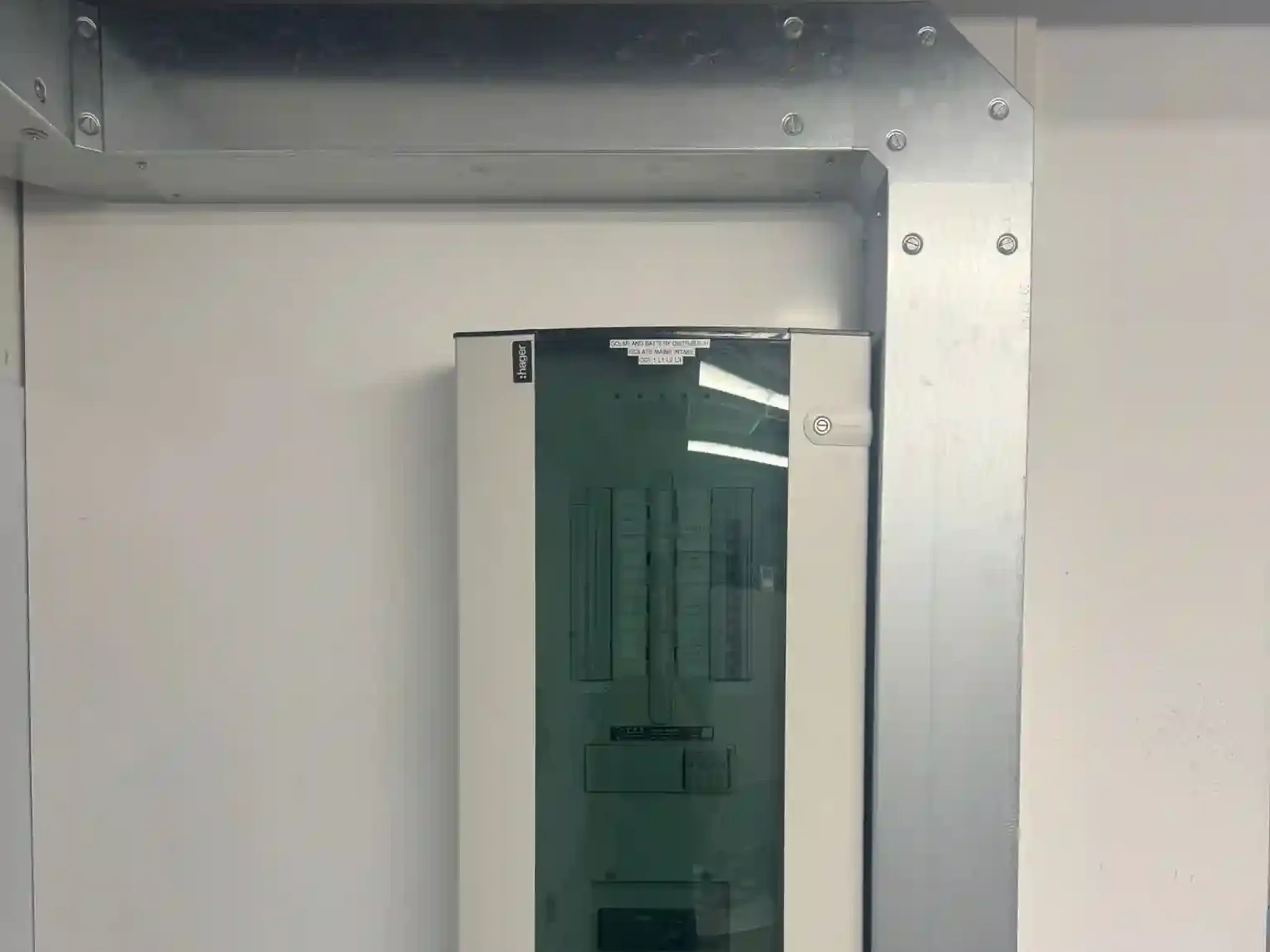
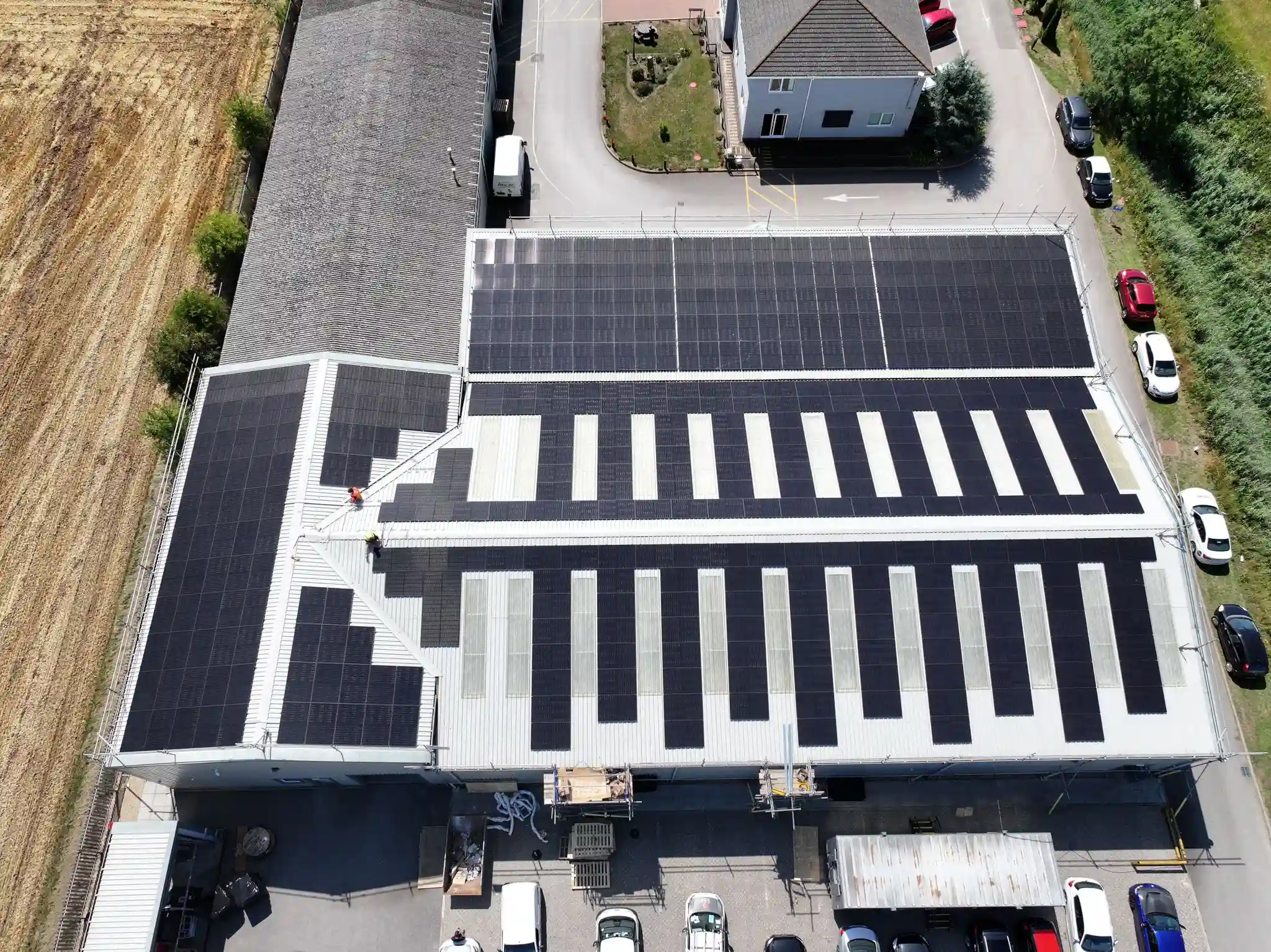
The same logic applies on a bigger scale for businesses. A firm with solar on the roof and vans in the yard can charge them in the middle of the day from its own generation. For Micron-Clean we installed a dual 22kW commercial charger after load assessments at the building's mains intake, and we built a 200kW solar array with 200kWh of battery storage for Rolec Services, the Boston company that makes Rolec EV chargers.
We install solar panels, batteries and EV chargers across Lincolnshire from our base in Skegness. If you are weighing up solar charging, the cost of the charger itself is a sensible place to start. Get in touch with CES, or answer a few questions on our free quote form.