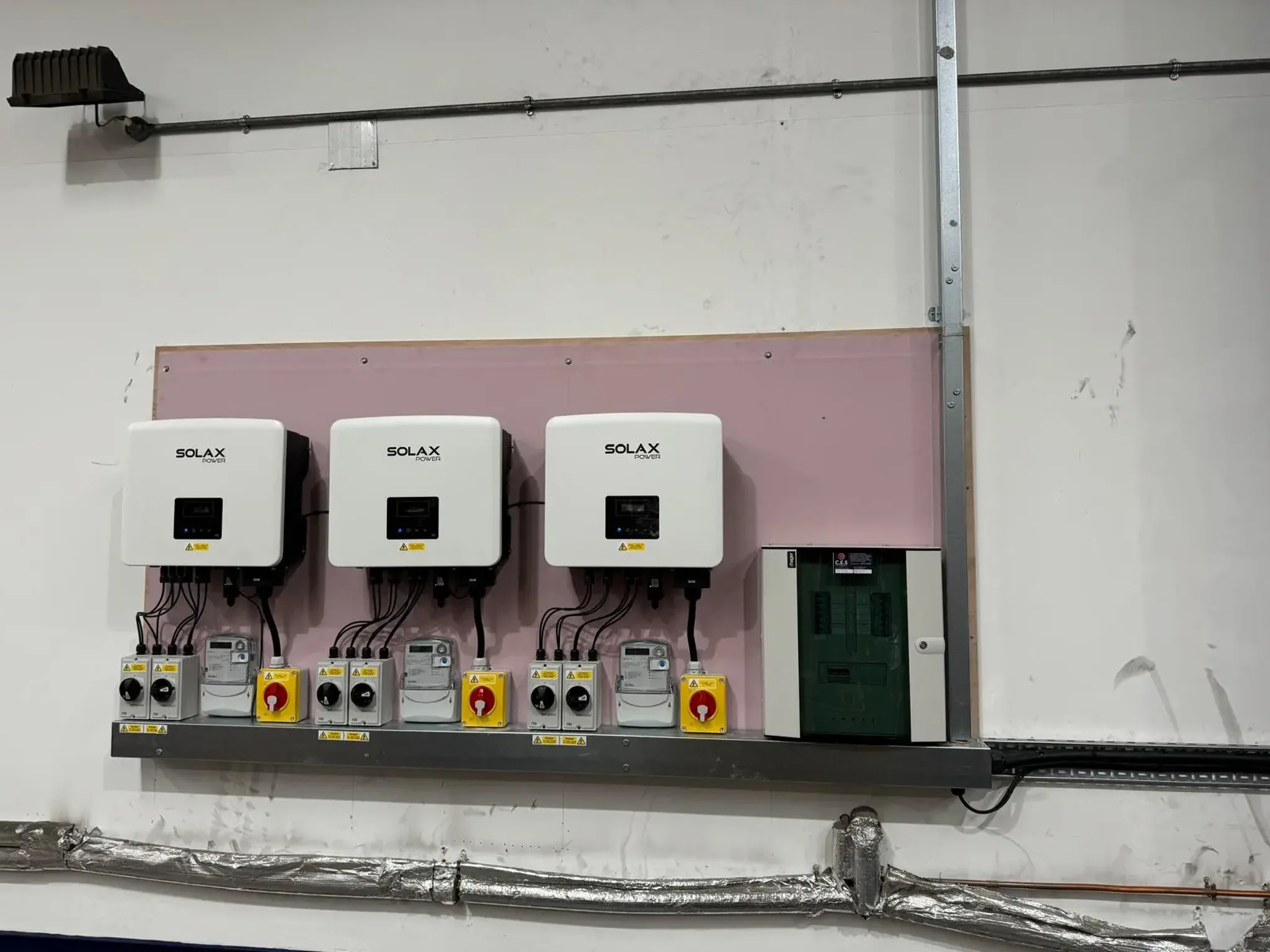
For a home you own, the MCS solar standard suggests checking the system yourself once a year, an intermediate maintenance visit by an MCS installer every ten years, and a full visit with specialist testing every fifteen. For a rented home it suggests the installer visits every five and ten years instead, and for commercial systems every year and every two years. Those intervals are advisory rather than legal requirements, and the standard itself says they should move with the size of the system, how easy the roof is to reach and what the owner and their insurer need.
So no, solar panels do not need an annual service the way a gas boiler does, and anybody who rings to tell you a yearly check is a government requirement is wrong. What a system does need is a quick look and a glance at its generation figures every so often, and a professional visit sooner than the standard's interval if anything changes. On an exposed site near the coast, that sooner is more likely.
What the MCS standard actually recommends
MIS 3002, the standard every MCS certified solar installer works to, includes a maintenance schedule in its final appendix. It splits the work into three levels.
- Customer checks, which are visual only and need no tools or ladders.
- An intermediate visit by an MCS contractor, covering the isolators, connectors, cabling, inverter and labelling, and testing the DC circuits.
- A full visit, which adds checks on the mounting and module clamps, insulation and series resistance tests on each string, and a thermal imaging survey for faulty cells and components.
Its suggested frequencies are as follows.
- A privately owned home, customer checks every year, an intermediate visit every 10 years and a full visit every 15.
- A rented home, intermediate every 5 years and full every 10.
- A public building such as a school, customer checks every six months, intermediate yearly and full every 5 years.
- A commercial or industrial building, customer checks monthly, intermediate yearly and full every 2 years.
The standard also requires the installer to leave you handover documents that set out the checks you should carry out yourself, how often, and what to do if something looks wrong. If you have those papers, they are the first place to look.
The checks you can do yourself
The customer checks in the MCS schedule are all done from the ground or from the inverter, never from the roof.
- Look at the panels from the ground for anything slipped, cracked or heavily soiled.
- Check the inverter, where it is safe to reach, for a fault light or a message on its display.
- Make sure the generation total is still going up, on the meter or in the app.
- Look for any sign of the roof or the mounting sagging, particularly after heavy snow or a storm.
- Keep trees and hedges from growing into the shade line.
The most useful habit of all is comparing this year's generation with the same month last year. Panels lose only a small fraction of their output each year, so a sudden drop almost always means something else, such as an isolator that has tripped or a string of panels that has stopped feeding the inverter. Monitoring apps make this easy, provided the inverter is still connected to your broadband after a router change.
What an installer looks at that you cannot
The parts most likely to cause trouble are not the panels. When the Building Research Establishment investigated fires involving solar systems for the government, its report on fire incidents involving solar panels found DC isolators to be the component most often implicated, and where the reason could be traced, most of those failures came down to how they had been fitted. In seven of the incidents, water had got into isolators through cable glands facing upwards on an exposed outside wall. DC connectors, the plugs that join panels and cables together, were the next most likely source.
That is why an intermediate visit concentrates on exactly those parts. An installer checks that each isolator works and is free of water and damage, that the connectors are secure and are not lying in pooling water, that cables are supported and undamaged, that the inverter is ventilated and its fault log is clear, and that the DC circuits test as they should. None of that can be seen from the ground, and most of it cannot be seen at all without opening an enclosure.
Why the coast can shorten the interval
The MCS intervals assume an average site. Along this stretch of Lincolnshire, plenty of sites are not average. Salt in the air works on fixings and enclosures, wind loads mounting systems on exposed roofs, and isolators and inverters fitted on outside walls take the weather that the BRE report describes. Sea fret, gulls and the way coastal weather affects solar panels all point the same way, towards a closer look on exposed roofs.
Birds matter too. Gulls and pigeons can nest under panels on roofs near the sea, and the nests, droppings and chewed cables they bring are worth catching early. If birds have settled under an array, a visit every few years rather than every ten makes sense.
Soiling is the other factor. The MCS schedule includes cleaning the modules as part of a contractor visit, particularly on a shallow pitch or in a dusty setting, and both are common in this county, from flat roofs on the coast to farm buildings inland. A panel on a decent pitch gets most of its cleaning from the rain.
Batteries and inverters need their own attention
A solar system with a battery has more to look after. The inverter is the part with a finite life, usually somewhere around ten to twelve years, and its fault log and ventilation are worth checking at any visit. Battery systems also depend on firmware and settings that can drift out of step with your tariff, so it is worth checking the battery is still charging and discharging when it should. How long a solar battery lasts depends a good deal on where it is fitted and how hard it is worked.
How servicing fits with an EICR
A solar system is also part of your electrical installation. An EICR on the house concentrates on the AC side, the circuit from the inverter to the consumer unit and its protective devices, and it is no substitute for the DC tests and roof checks in a solar service. For a rented home, where an EICR is needed every five years anyway, it often makes sense to line up the solar visit with it, so the whole installation is checked in one go.
When not to wait for the schedule
Call an installer sooner if any of the following happens.
- Generation drops noticeably and does not recover on a sunny day.
- The inverter shows a fault or an earth fault warning, or keeps switching off.
- You see scorch marks, melting or water inside an isolator or enclosure.
- A storm has lifted tiles near the array or moved a panel.
- You hear crackling or buzzing near the inverter or isolators.
And be wary of the opposite. Which? has warned about cold callers telling solar owners that annual checks are a government requirement, which they are not.
Booking a service
Our solar panel servicing and repairs covers annual checks, fault diagnosis and inverter replacement across Lincolnshire, from our base in Skegness. We are MCS certified and NICEIC approved, so the electrical tests are carried out and recorded properly. If your system is due a visit, or its generation has fallen and you cannot see why, get in touch with CES.